John Sewell – författare
Visar alla böcker från författaren John Sewell. Handla med fri frakt och snabb leverans.
7 produkter
7 produkter
Häftad, Engelska, 1993
374 kr
Skickas inom 5-8 vardagar
Critics have long voiced concerns about the wisdom of living in cities and the effects of city life on physical and mental health. For a century, planners have tried to meet these issues. John Sewell traces changes in urban planning, from the pre-Depression garden cities to postwar modernism and a revival of interest in the streetscape grid.In this far-ranging review, Sewell recounts the arrival of modern city planning with its emphasis on lower densities, limited access streets, segregated uses, and considerable green space. He makes Toronto a case history, with its pioneering suburban development in Don Mills and its other planned communities, including Regent Park, St Jamestown, Thorncrest Village, and Bramalea.The heyday of the modern planning movement was in the 1940s to the 1960s, and the Don Mills concept was repeated in spirit and in style across Canada. Eventually, strong public reaction brought modern planning almost to a halt within the city of Toronto. The battles centred on saving the Old City Hall and stopping the Spadina Expressway. Sewell concludes that although the modernist approach remains ascendant in the suburbs, the City of Toronto has begun to replace it with alternatives that work.This is a reflective but vigorous statement by a committed urban reformer. Few Canadians are better suited to point the way towards city planning for the future.
Häftad, Engelska, 2009
347 kr
Skickas inom 5-8 vardagar
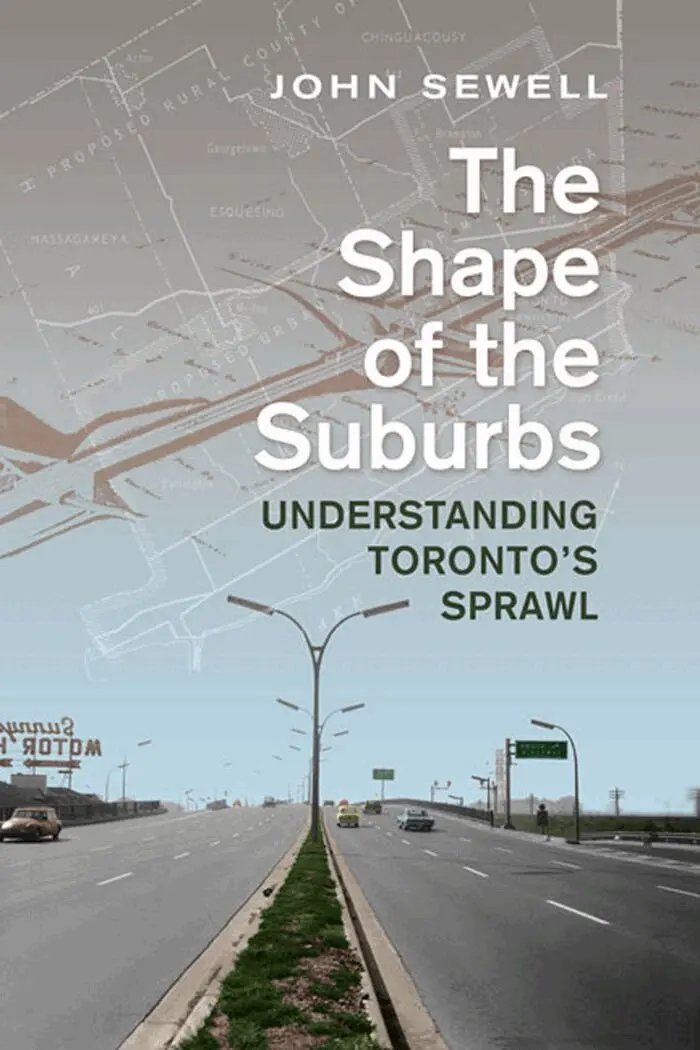
It is now impossible to understand major North American cities without considering the seemingly never-ending and ever-growing sprawl of their surrounding suburbs. In The Shape of the Suburbs, activist, urban affairs columnist, and former Toronto mayor John Sewell examines the relationship between the development of suburbs, water and sewage systems, highways, and the decision-making of Toronto-area governments to show how the suburbs spread, and how they have in turn shaped the city.Using his wealth of knowledge of the city of Toronto and new information gathered from municipal archives, Sewell describes the major movements and forces that allowed for rapid development of the suburbs, while considering the options that were available to planners at the time. Discussing proposals to curb suburban sprawl from the 1960s to the recently adopted plan for the Greater Toronto area, Sewell combines insightful and accessible commentary with rigorous research on the debate between urban and suburban. Concerned not only with sprawl, The Shape of the Suburbs also demonstrates the ways in which suburban political, economic, and cultural influences have impacted the older, central city, culminating in the forced Megacity amalgamation of 1998.Rich in detail and full of useful visual illustrations, The Shape of the Suburbs is a lively look at the construction of the suburban era.
E-bok
PDF, Engelska, 1993458 kr
Läs direkt efter köp
Critics have long voiced concerns about the wisdom of living in cities and the effects of city life on physical and mental health. For a century, planners have tried to meet these issues. John Sewell traces changes in urban planning, from the pre-Depression garden cities to postwar modernism and a revival of interest in the streetscape grid.In this far-ranging review, Sewell recounts the arrival of modern city planning with its emphasis on lower densities, limited access streets, segregated uses, and considerable green space. He makes Toronto a case history, with its pioneering suburban development in Don Mills and its other planned communities, including Regent Park, St Jamestown, Thorncrest Village, and Bramalea.The heyday of the modern planning movement was in the 1940s to the 1960s, and the Don Mills concept was repeated in spirit and in style across Canada. Eventually, strong public reaction brought modern planning almost to a halt within the city of Toronto. The battles centred on saving the Old City Hall and stopping the Spadina Expressway. Sewell concludes that although the modernist approach remains ascendant in the suburbs, the City of Toronto has begun to replace it with alternatives that work.This is a reflective but vigorous statement by a committed urban reformer. Few Canadians are better suited to point the way towards city planning for the future.
E-bok
Engelska, 1993458 kr
Läs direkt efter köp
Critics have long voiced concerns about the wisdom of living in cities and the effects of city life on physical and mental health. For a century, planners have tried to meet these issues. John Sewell traces changes in urban planning, from the pre-Depression garden cities to postwar modernism and a revival of interest in the streetscape grid.In this far-ranging review, Sewell recounts the arrival of modern city planning with its emphasis on lower densities, limited access streets, segregated uses, and considerable green space. He makes Toronto a case history, with its pioneering suburban development in Don Mills and its other planned communities, including Regent Park, St Jamestown, Thorncrest Village, and Bramalea.The heyday of the modern planning movement was in the 1940s to the 1960s, and the Don Mills concept was repeated in spirit and in style across Canada. Eventually, strong public reaction brought modern planning almost to a halt within the city of Toronto. The battles centred on saving the Old City Hall and stopping the Spadina Expressway. Sewell concludes that although the modernist approach remains ascendant in the suburbs, the City of Toronto has begun to replace it with alternatives that work.This is a reflective but vigorous statement by a committed urban reformer. Few Canadians are better suited to point the way towards city planning for the future.
E-bok
PDF, Engelska, 2016428 kr
Läs direkt efter köp
It is now impossible to understand major North American cities without considering the seemingly never-ending and ever-growing sprawl of their surrounding suburbs. In The Shape of the Suburbs, activist, urban affairs columnist, and former Toronto mayor John Sewell examines the relationship between the development of suburbs, water and sewage systems, highways, and the decision-making of Toronto-area governments to show how the suburbs spread, and how they have in turn shaped the city.Using his wealth of knowledge of the city of Toronto and new information gathered from municipal archives, Sewell describes the major movements and forces that allowed for rapid development of the suburbs, while considering the options that were available to planners at the time. Discussing proposals to curb suburban sprawl from the 1960s to the recently adopted plan for the Greater Toronto area, Sewell combines insightful and accessible commentary with rigorous research on the debate between urban and suburban. Concerned not only with sprawl, The Shape of the Suburbs also demonstrates the ways in which suburban political, economic, and cultural influences have impacted the older, central city, culminating in the forced Megacity amalgamation of 1998.Rich in detail and full of useful visual illustrations, The Shape of the Suburbs is a lively look at the construction of the suburban era.
E-bok
Engelska, 2009428 kr
Läs direkt efter köp
It is now impossible to understand major North American cities without considering the seemingly never-ending and ever-growing sprawl of their surrounding suburbs. In The Shape of the Suburbs, activist, urban affairs columnist, and former Toronto mayor John Sewell examines the relationship between the development of suburbs, water and sewage systems, highways, and the decision-making of Toronto-area governments to show how the suburbs spread, and how they have in turn shaped the city.Using his wealth of knowledge of the city of Toronto and new information gathered from municipal archives, Sewell describes the major movements and forces that allowed for rapid development of the suburbs, while considering the options that were available to planners at the time. Discussing proposals to curb suburban sprawl from the 1960s to the recently adopted plan for the Greater Toronto area, Sewell combines insightful and accessible commentary with rigorous research on the debate between urban and suburban. Concerned not only with sprawl, The Shape of the Suburbs also demonstrates the ways in which suburban political, economic, and cultural influences have impacted the older, central city, culminating in the forced Megacity amalgamation of 1998.Rich in detail and full of useful visual illustrations, The Shape of the Suburbs is a lively look at the construction of the suburban era.
Häftad, Engelska, 2021
172 kr
Skickas inom 5-8 vardagar