John Tyler Bonner – författare
Visar alla böcker från författaren John Tyler Bonner. Handla med fri frakt och snabb leverans.
34 produkter
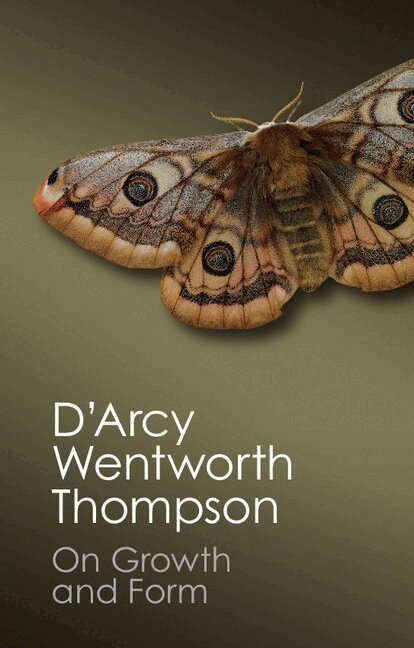
On Growth and Form
Av D'Arcy Wentworth Thompson, John Tyler Bonner
Häftad, 2014
286 kr
Lägg i varukorg
Why do living things and physical phenomena take the form they do? D'Arcy Thompson's classic On Growth and Form looks at the way things grow and the shapes they take. Analysing biological processes in their mathematical and physical aspects, this historic work, first published in 1917, has also …
Evolution of Culture in Animals
Häftad, 1983
321 kr
Lägg i varukorg
Animals do have culture, maintains this delightfully illustrated and provocative book, which cites a number of fascinating instances of animal communication and learning. John Bonner traces the origins of culture back to the early biological evolution of animals and provides examples of five …
Lives of a Biologist
Adventures in a Century of Extraordinary Science
Inbunden, 2002
531 kr
Lägg i varukorg
Beginning with the discovery of genes on chromosomes and culminating with the unmasking of the most minute genetic mysteries, the twentieth century saw astounding and unprecedented progress in the science of biology. In an illustrious career that spanned most of the century, biologist John Bonner …
On Development
The Biology of Form
Häftad, 1974
360 kr
Lägg i varukorg
On Development is, as John Tyler Bonner says, “a book on ideas,” the ideas at stake in the contest to unravel the mechanisms of life. This fluent discussion of developmental biology synthesizes decades of intensive progress in specialized areas of the science: from the dramatic deciphering of the …
First Signals
The Evolution of Multicellular Development
Häftad, 2001
797 kr
Lägg i varukorg
The enormous recent success of molecular developmental biology has yielded a vast amount of new information on the details of development. So much so that we risk losing sight of the underlying principles that apply to all development. To cut through this thicket, John Tyler Bonner ponders a moment …
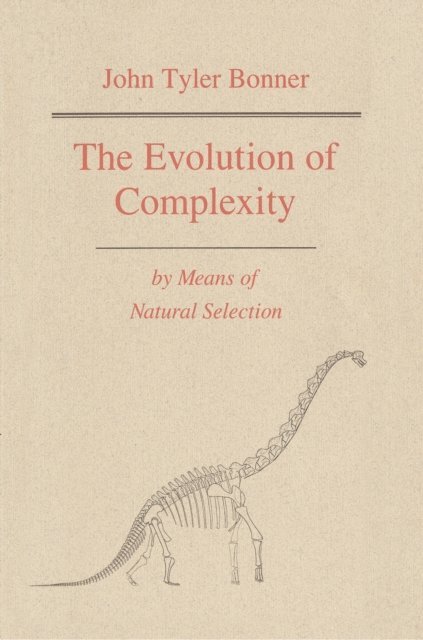
Evolution of Complexity by Means of Natural Selection
Häftad, 1988
1297 kr
Lägg i varukorg
John Tyler Bonner makes a new attack on an old problem: the question of how progressive increase in the size and complexity of animals and plants has occurred. "How is it," he inquires, "that an egg turns into an elaborate adult? How is it that a bacterium, given many millions of years, could have …
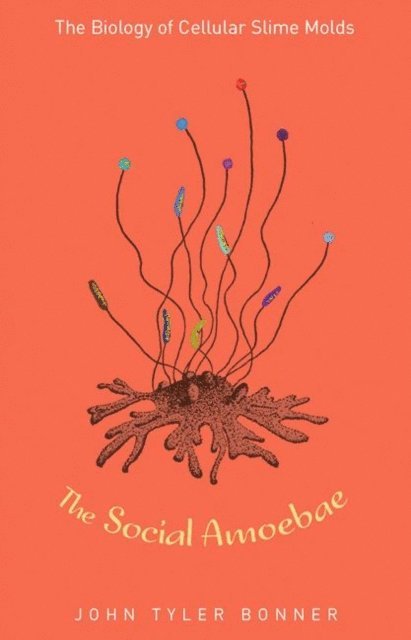
Social Amoebae
The Biology of Cellular Slime Molds
Inbunden, 2009
648 kr
Lägg i varukorg
Noted biologist and author John Tyler Bonner has experimented with cellular slime molds for more than sixty years, and he has done more than anyone else to raise these peculiar collections of amoebae from a minor biological curiosity to a major model organism--one that is widely studied for clues …
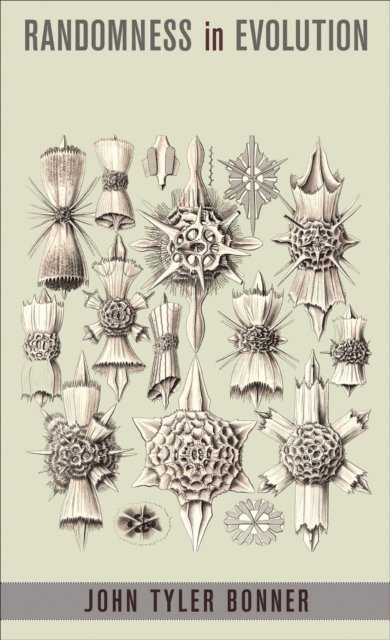
Randomness in Evolution
Inbunden, 2013
355 kr
Lägg i varukorg
John Tyler Bonner, one of our most distinguished and insightful biologists, here challenges a central tenet of evolutionary biology. In this concise, elegantly written book, he makes the bold and provocative claim that some biological diversity may be explained by something other than natural …
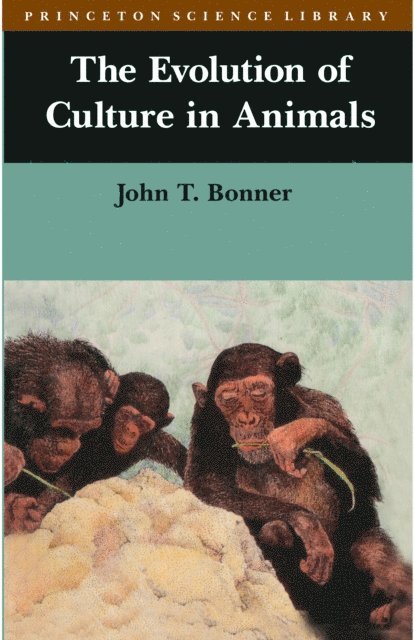
Evolution of Culture in Animals
E-bok, 2018
419 kr
Lägg i varukorg
Animals do have culture, maintains this delightfully illustrated and provocative book, which cites a number of fascinating instances of animal communication and learning. John Bonner traces the origins of culture back to the early biological evolution of animals and provides examples of five …
Evolution of Complexity by Means of Natural Selection
E-bok, 2020
1027 kr
Lägg i varukorg
John Tyler Bonner makes a new attack on an old problem: the question of how progressive increase in the size and complexity of animals and plants has occurred. "How is it," he inquires, "that an egg turns into an elaborate adult? How is it that a bacterium, given many millions of years, could have …
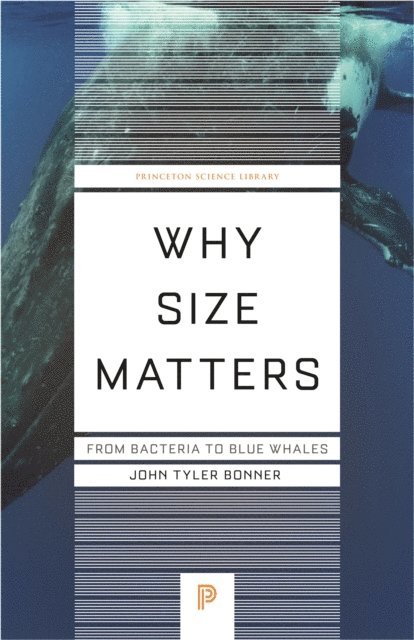
Why Size Matters
From Bacteria to Blue Whales
Häftad, 2024
160 kr
Lägg i varukorg
John Tyler Bonner, one of our most distinguished and creative biologists, here offers a completely new perspective on the role of size in biology. In his hallmark friendly style, he explores the universal impact of being the right size. By examining stories ranging from Alice in Wonderland to …
Why Size Matters
From Bacteria to Blue Whales
E-bok, 2024
214 kr
Lägg i varukorg
John Tyler Bonner, one of our most distinguished and creative biologists, here offers a completely new perspective on the role of size in biology. In his hallmark friendly style, he explores the universal impact of being the right size. By examining stories ranging from Alice in Wonderland to …
Life Cycles
Reflections of an Evolutionary Biologist
Häftad, 2015
881 kr
Lägg i varukorg
Within a single captivating narrative, John Bonner combines an intensely personal memoir of scientific progress and an overview of what we now know about living things. Bonner, a major participant in the development of biology as an experimental science, draws on his life-long study of slime molds …
Sixty Years of Biology
Essays on Evolution and Development
Häftad, 2017
678 kr
Lägg i varukorg
John Tyler Bonner, a major participant in the development of biology as an experimental science, is the author not only of important monographs but also of a wonderfully readable book, Life Cycles, which is both a personal memoir and a profound commentary on the central themes of biology. This …
Cellular Slime Molds
Häftad, 2015
432 kr
Lägg i varukorg
Professor Bonner has rewritten more than half of this standard treatise to take account of the great amount of recent research on the cellular slime molds. He has included a larger selection of material, more figures and new plates. The bibliography has been greatly enlarged. Originally published …
Size and Cycle
An Essay on the Structure of Biology
Häftad, 2015
491 kr
Lägg i varukorg
A discussion of life cycles and individual size in organisms, and of the relationships between the two, and of their conjoint role in evolution. Originally published in 1965. The Princeton Legacy Library uses the latest print-on-demand technology to again make available previously out-of-print …
Cells and Societies
Häftad, 2015
881 kr
Lägg i varukorg
The howling monkeys of Barro Colorado Island in Panama have a rudimentary language which serves the needs of their social activities. The red deer of Scotland, the seals of the Pribilof Islands, the beavers, the social insects, the army ants and termites, and lastly the colonial and single-celled …
Sixty Years of Biology
Essays on Evolution and Development
Inbunden, 2017
1423 kr
Lägg i varukorg
John Tyler Bonner, a major participant in the development of biology as an experimental science, is the author not only of important monographs but also of a wonderfully readable book, Life Cycles, which is both a personal memoir and a profound commentary on the central themes of biology. This …
Life Cycles
Reflections of an Evolutionary Biologist
Inbunden, 2016
1901 kr
Lägg i varukorg
Within a single captivating narrative, John Bonner combines an intensely personal memoir of scientific progress and an overview of what we now know about living things. Bonner, a major participant in the development of biology as an experimental science, draws on his life-long study of slime molds …
Cellular Slime Molds
Inbunden, 2016
1901 kr
Lägg i varukorg
Professor Bonner has rewritten more than half of this standard treatise to take account of the great amount of recent research on the cellular slime molds. He has included a larger selection of material, more figures and new plates. The bibliography has been greatly enlarged. Originally published …
Size and Cycle
An Essay on the Structure of Biology
Inbunden, 2016
2309 kr
Lägg i varukorg
A discussion of life cycles and individual size in organisms, and of the relationships between the two, and of their conjoint role in evolution. Originally published in 1965. The Princeton Legacy Library uses the latest print-on-demand technology to again make available previously out-of-print …
Cells and Societies
Inbunden, 2016
2076 kr
Lägg i varukorg
The howling monkeys of Barro Colorado Island in Panama have a rudimentary language which serves the needs of their social activities. The red deer of Scotland, the seals of the Pribilof Islands, the beavers, the social insects, the army ants and termites, and lastly the colonial and single-celled …
First Signals
The Evolution of Multicellular Development
E-bok, 2009
1113 kr
Lägg i varukorg
The enormous recent success of molecular developmental biology has yielded a vast amount of new information on the details of development. So much so that we risk losing sight of the underlying principles that apply to all development. To cut through this thicket, John Tyler Bonner ponders a moment …
Social Amoebae
The Biology of Cellular Slime Molds
E-bok, 2008
428 kr
Lägg i varukorg
Noted biologist and author John Tyler Bonner has experimented with cellular slime molds for more than sixty years, and he has done more than anyone else to raise these peculiar collections of amoebae from a minor biological curiosity to a major model organism--one that is widely studied for clues …
Randomness in Evolution
E-bok, 2013
500 kr
Lägg i varukorg
The important role that randomness plays in evolutionary change John Tyler Bonner, one of our most distinguished and insightful biologists, here challenges a central tenet of evolutionary biology. In this concise, elegantly written book, he makes the bold and provocative claim that some biological …
Life Cycles
Reflections of an Evolutionary Biologist
E-bok, 2015
628 kr
Lägg i varukorg
Within a single captivating narrative, John Bonner combines an intensely personal memoir of scientific progress and an overview of what we now know about living things. Bonner, a major participant in the development of biology as an experimental science, draws on his life-long study of slime molds …
Cells and Societies
E-bok, 2015
642 kr
Lägg i varukorg
The howling monkeys of Barro Colorado Island in Panama have a rudimentary language which serves the needs of their social activities. The red deer of Scotland, the seals of the Pribilof Islands, the beavers, the social insects, the army ants and termites, and lastly the colonial and single-celled …
Size and Cycle
An Essay on the Structure of Biology
E-bok, 2015
670 kr
Lägg i varukorg
A discussion of life cycles and individual size in organisms, and of the relationships between the two, and of their conjoint role in evolution. Originally published in 1965. The Princeton Legacy Library uses the latest print-on-demand technology to again make available previously out-of-print …
Cellular Slime Molds
E-bok, 2015
599 kr
Lägg i varukorg
Professor Bonner has rewritten more than half of this standard treatise to take account of the great amount of recent research on the cellular slime molds. He has included a larger selection of material, more figures and new plates. The bibliography has been greatly enlarged.Originally published in …
Sixty Years of Biology
Essays on Evolution and Development
E-bok, 2017
500 kr
Lägg i varukorg
John Tyler Bonner, a major participant in the development of biology as an experimental science, is the author not only of important monographs but also of a wonderfully readable book, Life Cycles, which is both a personal memoir and a profound commentary on the central themes of biology. This …