John V. Fesko – författare
Visar alla böcker från författaren John V. Fesko. Handla med fri frakt och snabb leverans.
4 produkter
4 produkter
Häftad, Tyska, 2014
911 kr
Skickas inom 3-6 vardagar
E-bok
PDF, Engelska, 20151 169 kr
Läs direkt efter köp
The covenant of redemption (pactum salutis), the eternal intra-trinitarian covenant, was a common staple within Early Modern Reformed theology, yet there are very few historical works that examine this doctrine. J. V. Fesko''s study, The Covenant of Redemption: Origins, Development, and Reception, seeks to address this lacuna.In the contemporary period the covenant of redemption has been derided as speculative, mythological, a declension from trinitarianism, or erroneously derived from one or two biblical proof-texts. Yet seldom have critics carefully engaged the primary sources to examine the different formulations, supporting exegesis, and ways in which the doctrine was employed.Far from speculation, sub-trinitarian, or a cold business transaction, proponents of the covenant of redemption constructed this doctrine based upon a web of interconnected biblical texts and were very sensitive to maintaining a robust doctrine of the trinity, as they employed this doctrine as a bulwark against the anti-trinitarian claims of Socinian theologians. Proponents of the doctrine also saw this pre-temporal covenant as the embodiment of intra-trinitarian love that overflows unto those chosen in Christ for their salvation and ultimate fellowship with the triune God.John V. Fesko explores the historical origins of the doctrine and then surveys its development in the seventeenth- through nineteenth-centuries, examining key advocates of the doctrine including, David Dickson, Herman Witsius, Johannes Cocceius, Francis Turretin, Patrick Gillespie, John Gill, Jonathan Edwards, Charles Hodge, and A. A. Hodge. He then examines the contemporary reception of the doctrine in the twentieth century with a survey of the doctrine''s critics, including Karl Barth, Herman Hoeksema, Klaas Schilder, and John Murray. After exploring the claims of the critics, the study moves to examine the views of twentieth-century proponents, including Geerhardus Vos, Herman Bavinck, Abraham Kuyper, Louis Berkhof, and G. C. Berkouwer.
E-bok
PDF, Engelska, 20121 372 kr
Läs direkt efter köp
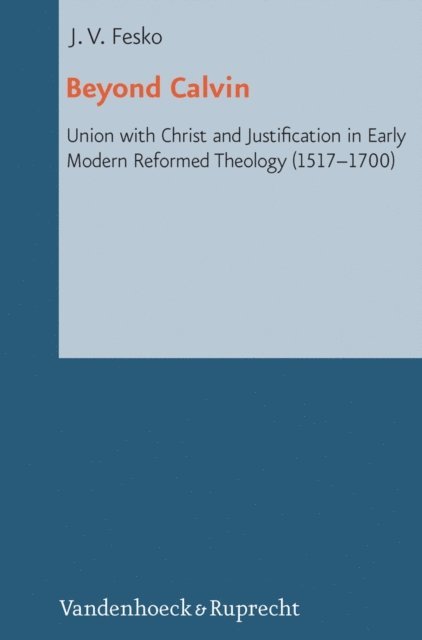
The investigation of union with Christ and justification has been dominated by the figure of John Calvin. Calvin''s influence, however, has been exaggerated in our own day. Theologians within the Early Modern Reformed tradition contributed to the development of these doctrines and did not view Calvin as the normative theologian of the tradition. John V. Fesko, therefore, goes beyond Calvin and explores union with Christ and justification in the Reformation, Early Orthodox, and High Orthodox periods of the Reformed tradition and covers lesser known but equally important figures such as Juan de Valdes, Peter Martyr Vermigli, Girolamo Zanchi, William Perkins, John Owen, Francis Turretin, and Herman Witsius. The study also covers theologians that either lie outside or transgress the Reformed tradition, such as Martin Luther, Philip Melanchthon, Faustus Socinus, Jacob Arminius, and Richard Baxter. By treating this diverse body of figures the study reveals areas of agreement and diversity on these two doctrines. The author demonstrates that among the diverse formulations, all surveyed Reformed theologians accord justification priority over sanctification within the broader rubric of union with Christ. Fesko shows that Reformed theologians affirm both union with Christ and the golden chain of salvation, ideas that moderns find incompatible. In sum, rather than reading an individual theologian isolated from his context, this study provides a contextual reading of union with Christ and justification in the Early Modern Reformed context.
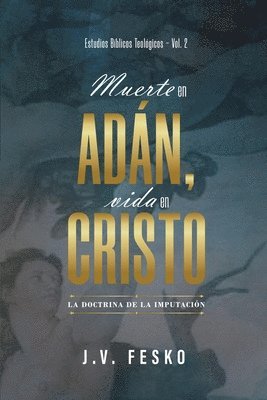
Del 2 - Estudios Biblicos Teologicos
Muerte en Adan, vida en Cristo
La doctrina de la imputacion
Häftad, Spanska, 2020
250 kr
Skickas inom 5-8 vardagar