John Van Oudenaren - Böcker
Visar alla böcker från författaren John Van Oudenaren. Handla med fri frakt och snabb leverans.
4 produkter
4 produkter
675 kr
Skickas inom 10-15 vardagar
With the 2004 enlargement, the European Union (EU) has expanded to twenty-five member states and a total population of 450 million. The new Union faces a daunting policy agenda that includes finalizing the controversial European Constitution, managing further enlargement to countries in southeastern Europe, deciding whether to offer membership to Turkey, overcoming strains over trade, environmental issues, and policy toward the Middle East to build a new, post Cold War relationship with the United States, and making sure that the enlargement itself is a success. In this timely and accessible text, John Van Oudenaren explores how a political and economic union this large and diverse can hold together and accomplish the policy tasks that matter to its citizens: sustaining economic growth, dealing with aging populations and the costs of pensions and health care, raising living standards in poorer regions, preserving the environment, coping with the problems of immigration and political instability on Europe's borders, and facing the challenges of globalization. To reach these goals, the author argues that the EU must build on its existing achievements: the single market, the common currency, and harmonized policies. At the same time, the Union must reform its decision-making processes and find ways to balance the needs of its member states and the competing demands of different interest groups. How the EU will evolve is still unclear; there is no precise blueprint for its future. But the historic attempt to unite Europe will have enormous implications not only for Europe itself, but for the United States as a key ally, trading partner, and, on occasion, rival. By providing an overview of the Union's institutions, laws, and policies, Van Oudenaren provides a solid foundation for understanding its history and emergence as a global economic and political power.
742 kr
Skickas inom 10-15 vardagar
The extent of Europe's influence in the twenty-first century is one of the fundamental questions in a rapidly changing world order. How much does Europe still matter in geostrategic affairs? Will the Europeans seek more international clout and be willing to pay the price for it? Above all, will the European-American partnership prosper or weaken? In the only comprehensive study available on the subject, leading international experts explore these vital questions for global peace and security. The book includes authoritative chapters on the foreign policies of the major European countries, of the European Union, and of Europe toward key regions and countries—especially the United States, Russia, China, and the Middle East.Contributions by: Krzysztof Bobinski, Mark Gilbert, David Shambaugh, Philip Stephens, Paul Taylor, Ronald Tiersky, Nathalie Tocci, John Van Oudenaren, Benedetta Voltolini, and Helga A. Welsh.
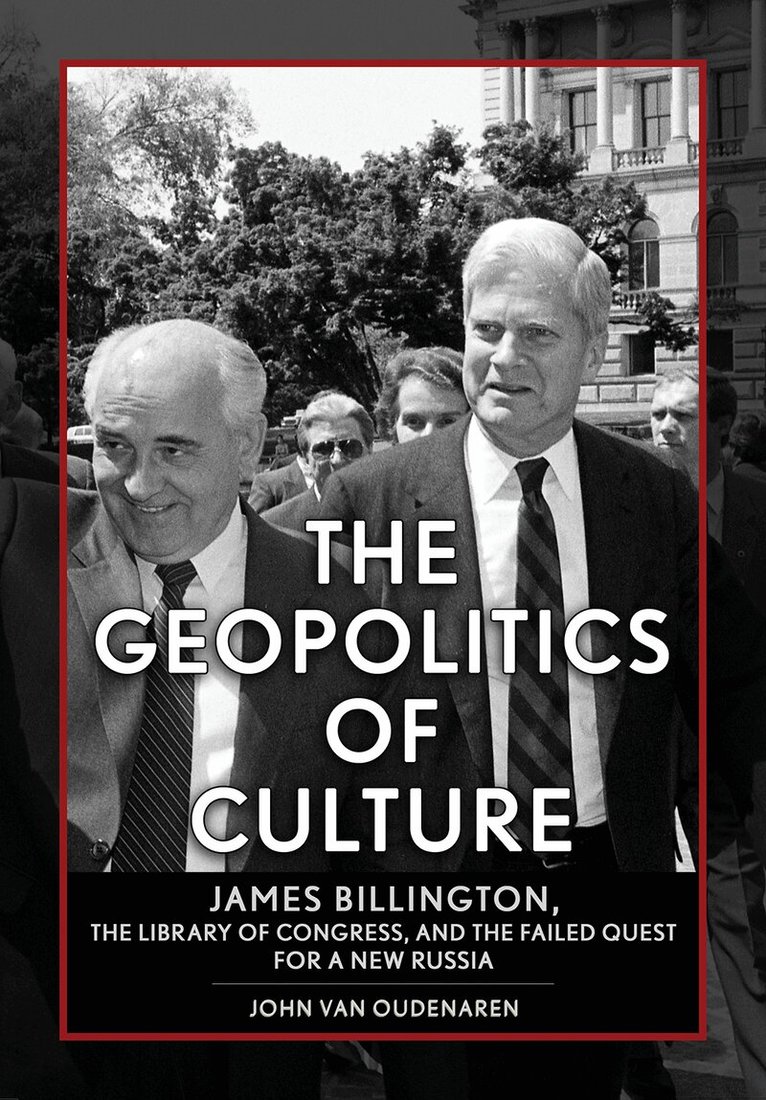
Geopolitics of Culture
James Billington, the Library of Congress, and the Failed Quest for a New Russia
Inbunden, Engelska, 2024
663 kr
Skickas inom 10-15 vardagar
Through the lens of James Billington and the institution he led as Librarian of Congress during a key period of US-Russian relations, The Geopolitics of Culture examines culture as a neglected area of US foreign policy. Billington advised presidents and members of Congress and mobilized the resources of the Library of Congress to promote reform in Russia. He believed that rather than preaching to the Russians, the United States should expose the rising generation of Russian leaders to what was best in America and encourage them to rediscover positive elements in pre-Bolshevik Russian culture.The Geopolitics of Culture is the first book to chronicle Billington's influence on US engagement with Russia as it transitioned from communism to democracy under Gorbachev and Yeltsin and back to authoritarianism under Yeltsin and Putin. Drawing on published and archival sources (including recently released papers) and interviews with current and retired Library of Congress staff members, John Van Oudenaren casts new light on this era.Billington's efforts led to a remarkable degree of cooperation between the Library of Congress and Russian cultural and political institutions. Yet these efforts ultimately failed as Putin turned back toward authoritarianism. The experience of the Library of Congress during this period nonetheless holds important lessons for today. Billington believed that a transition to democracy in Russia was essential if the United States was to head off the geopolitical nightmare of a Eurasia dominated by an alliance of hostile authoritarian powers. The "geopolitics of culture" thus remains a challenge for US foreign policy.
595 kr
Skickas inom 10-15 vardagar
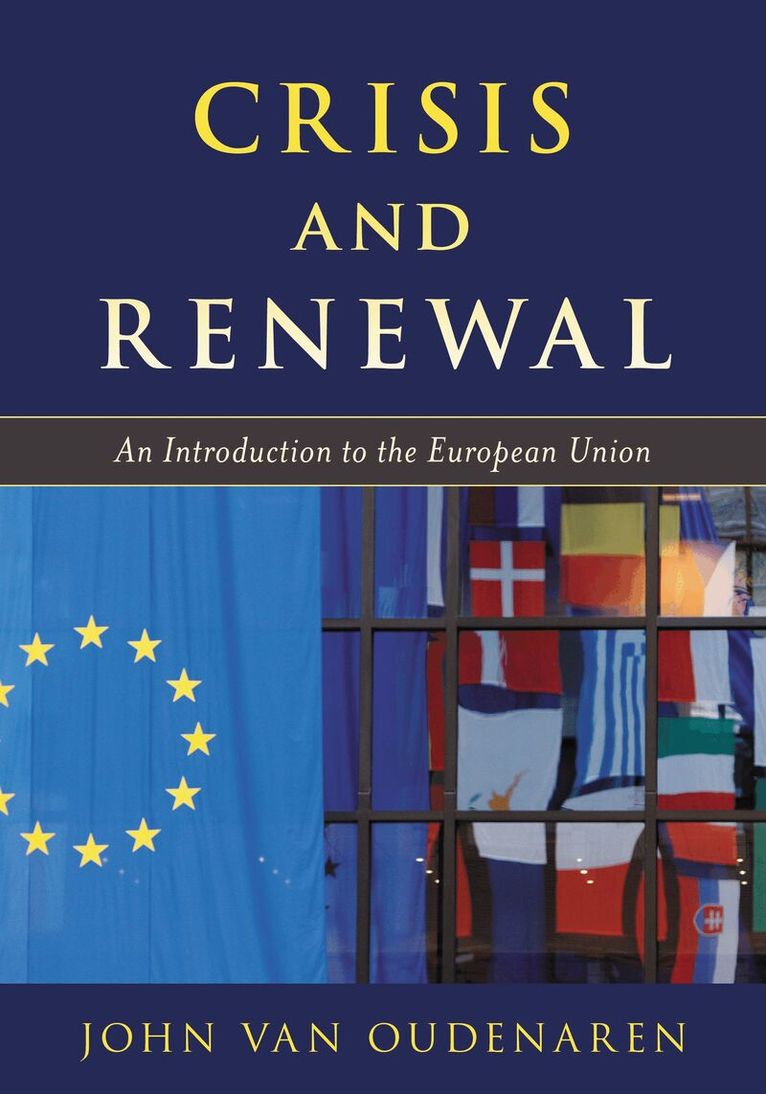
This clear and comprehensive introduction to the European Union considers its development through the theme of crisis and renewal. John Van Oudenaren describes EU institutions and policies, both historically and as they relate to current events. He traces the renewal of the EU that was underway at the end of the 2010s following the euro, migration, and Brexit crises and the health, economic, and political crisis that subsequently hit the Union with unexpected force in the coronavirus pandemic of 2020–2021. Exploring how institutions and policies are adapting to unprecedented political, economic, and geopolitical challenges, the author focuses on two key EU priorities—digitization and the transition to a carbon neutral future. These, he argues, are both intrinsic policy goals and the means by which the Union hopes to ensure its revitalization and its emergence as a “sovereign” power, taking its place alongside the United States and China as one of the big three players in global politics. Explaining the different theoretical perspectives used to understand the EU, the book gives students the tools they need to assess whether the Union is on a path to recovery and renewal.