John W. Arthur – författare
Visar alla böcker från författaren John W. Arthur. Handla med fri frakt och snabb leverans.
13 produkter
13 produkter
Inbunden, Engelska, 2022
326 kr
Skickas inom 5-8 vardagar
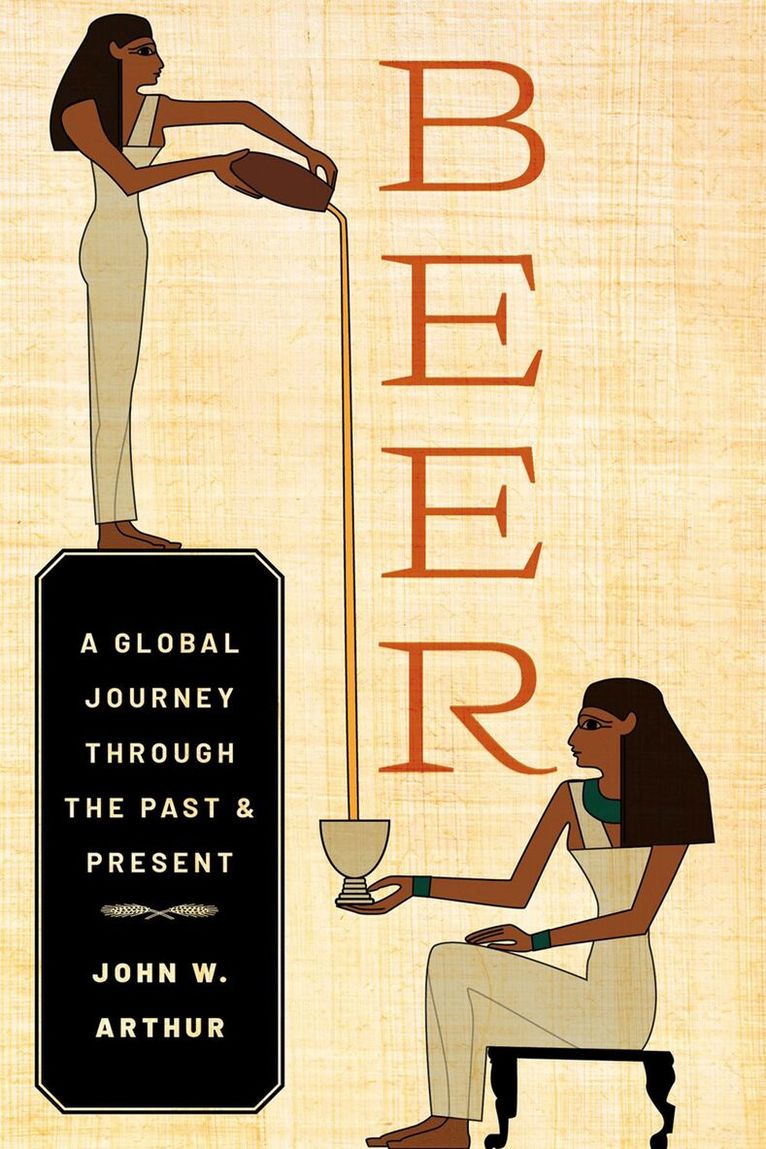
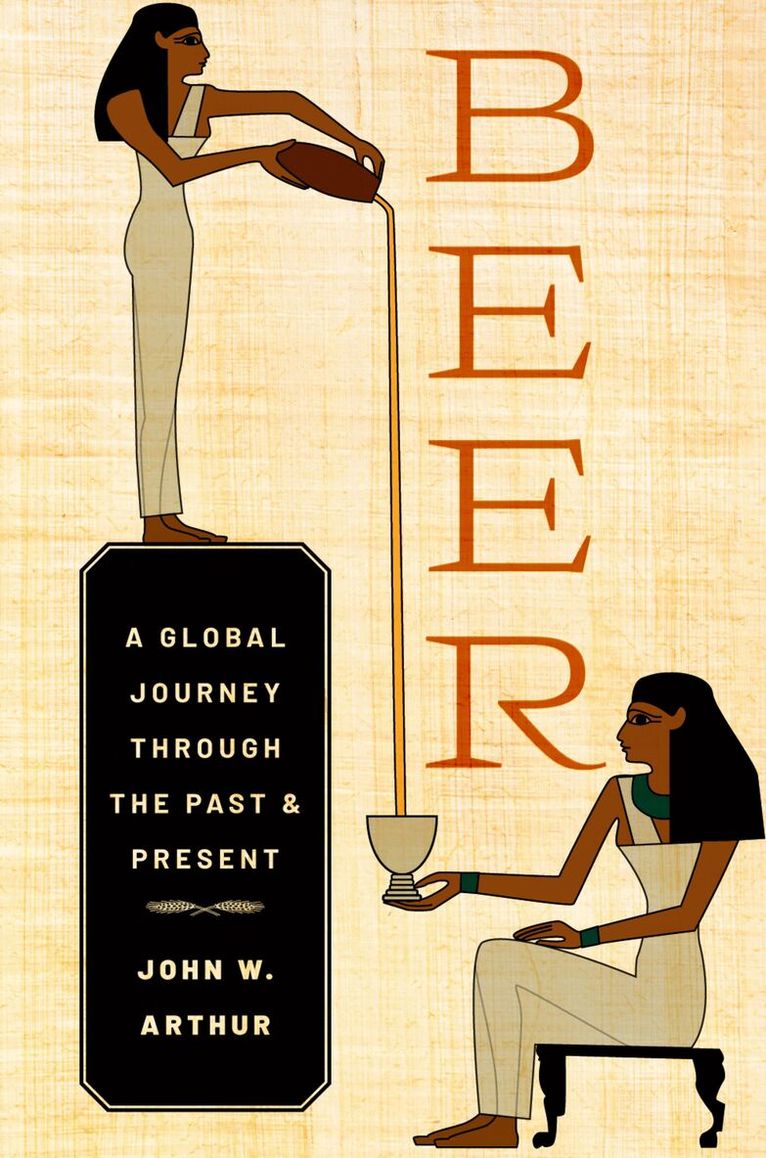
A fascinating exploration of beer, ancient and contemporary, and its role in shaping human societyBeer is and has always been more than an intoxicating beverage. Ancient beer produced in the Near East, Asia, Africa, Europe, and the Americas was a food that had a remarkable role in shaping the development of agriculture and some of the earliest state-level societies. Its invention 13,000 years ago was one of the fundamental motivations for the domestication of grains around the world. In early states, the control over the technological knowledge and resources to produce beer contributed to social hierarchies. Beer even likely provided the capital to motivate laborers to construct the ancient pyramids and other large-scale public works. The fermentation of beer also provided a healthy and safe alternative to the contaminated drinking water in early states and it continues to do so among rural Indigenous populations today. Beer is a social lubricant that brings people together and, in many Indigenous societies both past and present, is a gift connecting people to their ancestors. The same innovations pioneered by ancient brewers are transforming the types of ingredients and flavors produced by the global craft beer industry.In Beer, archaeologist John W. Arthur takes readers on an exciting global journey to explore the origins, development, and recipes of ancient beer. This unique book focuses on past and present non-industrial beers, highlighting their significance in peoples' lives through four themes: innovating new technologies, ensuring health and well-being, building economic and political statuses, and imbuing life with ritual and religious connections. As this book amply illustrates, beer has shaped our world in remarkable ways for the past 13,000 years.
E-bok
PDF, Engelska, 2022189 kr
Läs direkt efter köp
A fascinating exploration of beer, ancient and contemporary, and its role in shaping human societyBeer is and has always been more than an intoxicating beverage. Ancient beer produced in the Near East, Asia, Africa, Europe, and the Americas was a food that had a remarkable role in shaping the development of agriculture and some of the earliest state-level societies. Its invention 13,000 years ago was one of the fundamental motivations for the domestication of grains around the world. In early states, the control over the technological knowledge and resources to produce beer contributed to social hierarchies. Beer even likely provided the capital to motivate laborers to construct the ancient pyramids and other large-scale public works. The fermentation of beer also provided a healthy and safe alternative to the contaminated drinking water in early states and it continues to do so among rural Indigenous populations today. Beer is a social lubricant that brings people together and, in many Indigenous societies both past and present, is a gift connecting people to their ancestors. The same innovations pioneered by ancient brewers are transforming the types of ingredients and flavors produced by the global craft beer industry.In Beer, archaeologist John W. Arthur takes readers on an exciting global journey to explore the origins, development, and recipes of ancient beer. This unique book focuses on past and present non-industrial beers, highlighting their significance in peoples'' lives through four themes: innovating new technologies, ensuring health and well-being, building economic and political statuses, and imbuing life with ritual and religious connections. As this book amply illustrates, beer has shaped our world in remarkable ways for the past 13,000 years.
E-bok
Engelska, 2022189 kr
Läs direkt efter köp
A fascinating exploration of beer, ancient and contemporary, and its role in shaping human societyBeer is and has always been more than an intoxicating beverage. Ancient beer produced in the Near East, Asia, Africa, Europe, and the Americas was a food that had a remarkable role in shaping the development of agriculture and some of the earliest state-level societies. Its invention 13,000 years ago was one of the fundamental motivations for the domestication of grains around the world. In early states, the control over the technological knowledge and resources to produce beer contributed to social hierarchies. Beer even likely provided the capital to motivate laborers to construct the ancient pyramids and other large-scale public works. The fermentation of beer also provided a healthy and safe alternative to the contaminated drinking water in early states and it continues to do so among rural Indigenous populations today. Beer is a social lubricant that brings people together and, in many Indigenous societies both past and present, is a gift connecting people to their ancestors. The same innovations pioneered by ancient brewers are transforming the types of ingredients and flavors produced by the global craft beer industry.In Beer, archaeologist John W. Arthur takes readers on an exciting global journey to explore the origins, development, and recipes of ancient beer. This unique book focuses on past and present non-industrial beers, highlighting their significance in peoples'' lives through four themes: innovating new technologies, ensuring health and well-being, building economic and political statuses, and imbuing life with ritual and religious connections. As this book amply illustrates, beer has shaped our world in remarkable ways for the past 13,000 years.
Häftad, Engelska, 2024
186 kr
Skickas inom 5-8 vardagar
A fascinating exploration of beer, ancient and contemporary, and its role in shaping human societyBeer is and has always been more than an intoxicating beverage. Ancient beer produced in the Near East, Asia, Africa, Europe, and the Americas was a food that had a remarkable role in shaping the development of agriculture and some of the earliest state-level societies. Its invention 13,000 years ago was one of the fundamental motivations for the domestication of grains around the world. In early states, the control over the technological knowledge and resources to produce beer contributed to social hierarchies. Beer even likely provided the capital to motivate laborers to construct the ancient pyramids and other large-scale public works. The fermentation of beer also provided a healthy and safe alternative to the contaminated drinking water in early states and it continues to do so among rural Indigenous populations today. Beer is a social lubricant that brings people together and, in many Indigenous societies both past and present, is a gift connecting people to their ancestors. The same innovations pioneered by ancient brewers are transforming the types of ingredients and flavors produced by the global craft beer industry.In Beer, archaeologist John W. Arthur takes readers on an exciting global journey to explore the origins, development, and recipes of ancient beer. This unique book focuses on past and present non-industrial beers, highlighting their significance in peoples' lives through four themes: innovating new technologies, ensuring health and well-being, building economic and political statuses, and imbuing life with ritual and religious connections. As this book amply illustrates, beer has shaped our world in remarkable ways for the past 13,000 years.
Del 38 - IEEE Press Series on Electromagnetic Wave Theory
Understanding Geometric Algebra for Electromagnetic Theory
Inbunden, Engelska, 2011
1 637 kr
Skickas inom 5-8 vardagar
This book aims to disseminate geometric algebra as a straightforward mathematical tool set for working with and understanding classical electromagnetic theory. It's target readership is anyone who has some knowledge of electromagnetic theory, predominantly ordinary scientists and engineers who use it in the course of their work, or postgraduate students and senior undergraduates who are seeking to broaden their knowledge and increase their understanding of the subject. It is assumed that the reader is not a mathematical specialist and is neither familiar with geometric algebra or its application to electromagnetic theory. The modern approach, geometric algebra, is the mathematical tool set we should all have started out with and once the reader has a grasp of the subject, he or she cannot fail to realize that traditional vector analysis is really awkward and even misleading by comparison. Professors can request a solutions manual by email: pressbooks@ieee.org
Häftad, Engelska, 2010
196 kr
Skickas inom 5-8 vardagar
Inbunden, Engelska, 2010
342 kr
Skickas inom 5-8 vardagar
Inbunden, Engelska, 2022
359 kr
Skickas inom 5-8 vardagar
Häftad, Engelska, 2022
207 kr
Skickas inom 5-8 vardagar
E-bok
PDF, Engelska, 20111 832 kr
Läs direkt efter köp
This book aims to disseminate geometric algebra as a straightforward mathematical tool set for working with and understanding classical electromagnetic theory. It''s target readership is anyone who has some knowledge of electromagnetic theory, predominantly ordinary scientists and engineers who use it in the course of their work, or postgraduate students and senior undergraduates who are seeking to broaden their knowledge and increase their understanding of the subject. It is assumed that the reader is not a mathematical specialist and is neither familiar with geometric algebra or its application to electromagnetic theory. The modern approach, geometric algebra, is the mathematical tool set we should all have started out with and once the reader has a grasp of the subject, he or she cannot fail to realize that traditional vector analysis is really awkward and even misleading by comparison.
Professors can request a solutions manual by email: pressbooks@ieee.org
E-bok
Engelska, 20111 832 kr
Läs direkt efter köp
This book aims to disseminate geometric algebra as a straightforward mathematical tool set for working with and understanding classical electromagnetic theory. It''s target readership is anyone who has some knowledge of electromagnetic theory, predominantly ordinary scientists and engineers who use it in the course of their work, or postgraduate students and senior undergraduates who are seeking to broaden their knowledge and increase their understanding of the subject. It is assumed that the reader is not a mathematical specialist and is neither familiar with geometric algebra or its application to electromagnetic theory. The modern approach, geometric algebra, is the mathematical tool set we should all have started out with and once the reader has a grasp of the subject, he or she cannot fail to realize that traditional vector analysis is really awkward and even misleading by comparison.
Professors can request a solutions manual by email: pressbooks@ieee.org
Häftad, Engelska, 2014
290 kr
Skickas inom 5-8 vardagar
E-bok
Engelska, 2016134 kr
Läs direkt efter köp
"In compiling and editing this history of the Chamber of Commerce Battalion, the aim of the editors has been to present such a narrative as will provide a detailed but not overburdened account of the Battalion''s movements and operations throughout the years of its existence, and at the same time give a representative impression of the various outstanding events which have built up the character and the traditions of the unit.In accordance with the wishes of the History Committee, the narrative dealing with Field service has been kept within the limits of the Battalion''s share in the campaign, and accordingly no attempt has been made to give any picture of the relative positions of the various other units operating with the 17th, or of the general strategic import of the actions described."This book is part of the World War One Centenary series; creating, collating and reprinting new and old works of poetry, fiction, autobiography and analysis. The series forms a commemorative tribute to mark the passing of one of the world''s bloodiest wars, offering new perspectives on this tragic yet fascinating period of human history. Each publication also includes brand new introductory essays and a timeline to help the reader place the work in its historical context.