John W. Baldwin – författare
Visar alla böcker från författaren John W. Baldwin. Handla med fri frakt och snabb leverans.
7 produkter
7 produkter
Inbunden, Engelska, 1994
719 kr
Skickas inom 5-8 vardagar
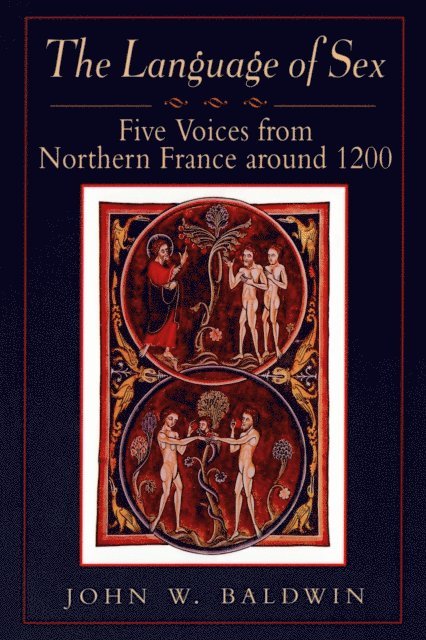
This study brings together widely divergent discourses to fashion a comprehensive picture of sexual language and attitudes at a particular time and place in the medieval world. John Baldwin introduces five representative voices from the turn of the 12th century in northern France: Pierre the Chanter speaks for the theological doctrine of Augustine; the "Prose Salernitan Questions", for the medical theories of Galen; Andre the Chaplain, for the Ovidian literature of the schools; Jean Renart, for the contemporary romances; and Jean Bodel, for the emerging voices of the fabliaux. Baldwin juxtaposes their views on a range of essential subjects, including social position, the sexual body, desire and act, and procreation. The result is a dialogue of how they agreed or disagreed with, ignored, imitated, or responded to each other at a critical moment in the development of European ideas about sexual desire, fulfillment, morality and gender. These spokesmen allow us into the discussion of sexuality inside the church and schools of the clergy, in high and popular culture of the leity.This heterogeneous discussion also offers a startling glimpse into the construction of gender specific to this moment, when men and women enjoyed equal status in sexual matters, if nowhere else. Taken together, these voices extend their reach, encompass their subject, and point to a centre where social reality lies. By articulating reality at its varied depths, this study takes its place alongside works by James Brundage, John Boswell and Leah Otis in extending our understanding of sexuality and sexual behaviour in the Middle Ages.
Häftad, Engelska, 1996
348 kr
Skickas inom 5-8 vardagar
This study brings together widely divergent discourses to fashion a comprehensive picture of sexual language and attitudes at a particular time and place in the medieval world. John Baldwin introduces five representative voices from the turn of the 12th century in northern France: Pierre the Chanter speaks for the theological doctrine of Augustine; the Prose Salernitan Questions, for the medical theories of Galen; Andre the Chaplain, for the Ovidian literature of the schools; Jean Renart, for the contemporary romances; and Jean Bodel, for the emerging voices of the fabliaux. Baldwin juxtaposes their views on a range of essential subjects, including social position, the sexual body, desire and act, and procreation. The result is a dialogue of how they agreed or disagreed with, ignored, imitated, or responded to each other at a critical moment in the development of European ideas about sexual desire, fulfillment, morality and gender. These spokesmen allow us into the discussion of sexuality inside the church and schools of the clergy, in high and popular culture of the leity.This heterogeneous discussion also offers a glimpse into the construction of gender specific to this moment, when men and women enjoyed equal status in sexual matters, if nowhere else. Taken together, these voices extend their reach, encompass their subject, and point to a centre where social reality lies. By articulating reality at its varied depths, this study takes its place alongside groundbreaking works by James Brundage, John Boswell, and Leah Otis in extending the understanding of sexuality and sexual behaviour in the Middle Ages.
E-bok
Engelska, 2015758 kr
Läs direkt efter köp
This study brings together widely divergent discourses to fashion a comprehensive picture of sexual language and attitudes at a particular time and place in the medieval world. John Baldwin introduces five representative voices from the turn of the twelfth century in northern France: Pierre the Chanter speaks for the theological doctrine of Augustine; the Prose Salernitan Questions, for the medical theories of Galen; Andre the Chaplain, for the Ovidian literature of the schools; Jean Renart, for the contemporary romances; and Jean Bodel, for the emerging voices of the fabliaux. Baldwin juxtaposes their views on a range of essential subjects, including social position, the sexual body, desire and act, and procreation. The result is a fascinating dialogue of how they agreed or disagreed with, ignored, imitated, or responded to each other at a critical moment in the development of European ideas about sexual desire, fulfillment, morality, and gender. These spokesmen allow us into the discussion of sexuality inside the church and schools of the clergy, in high and popular culture of the leity. This heterogeneous discussion also offers a startling glimpse into the construction of gender specific to this moment, when men and women enjoyed equal status in sexual matters, if nowhere else. Taken together, these voices extend their reach, encompass their subject, and point to a center where social reality lies. By articulating reality at its varied depths, this study takes its place alongside groundbreaking works by James Brundage, John Boswell, and Leah Otis in extending our understanding of sexuality and sexual behavior in the Middle Ages. "Superb work. . . . These five kinds of discourse are not often treated together in scholarly writing, let alone compared and contrasted so well."—Edward Collins Vacek, Theological Studies "[Baldwin] has made the five voices speak to us in a language that is at one and the same time familiar and alien in its resonance and accents. This is a truly exceptional book, interdisciplinary in the real sense of the word, which is surely destined to become a landmark in medieval studies."—Keith Busby, Bryn Mawr Reviews "[Baldwin''s] attempt to ''listen'' to these distant voices and translate their language of sex into our own raises challenging methodological questions that will be of great interest to historians and literary scholars alike."—John P. Dalton, Comitatus
Häftad, Engelska, 1991
634 kr
Skickas inom 5-8 vardagar
In the thirteenth century the French kings won ascendancy over France, while France achieved political and cultural supremacy over western Europe. Based on French sources, this meticulously documented study provides an account of how Philip Augustus (1179-1223) brought about this transformation of royal power.
Häftad, Engelska, 2002
570 kr
Skickas inom 5-8 vardagar
Modern historians have generally approached the study of medieval society through chronicles, charters, and other documents composed in Latin by members of the clergy. Although these records may be satisfactory for studying the affairs of ecclesiastics, kings, and high barons, they are inadequate for assessing the major preoccupations of the aristocracy-living extravagantly, fighting, making love, entertaining, eating and dressing ostentatiously, and, generally, earning the disapproval of the clergy. In Aristocratic Life in Medieval France, the respected medieval scholar John Baldwin undertakes a study of this segment of society using, for the first time in nearly a century, the vernacular romances written exclusively for the amusement of aristocratic audiences. Rather than attempting to encompass all of Middle Age Europe, this study selects two writers, Jean Renart and Gerbert de Montreuil, and their four romances. It focuses with depth and specificity on the discrete area of northern France during a precise period, 1190-1230.Since Jean and Gerbert framed their fictional stories with contemporary and realistic features that could be recognized by their audiences, their works provide a wealth of detail on aristocratic living. Employing such literary techniques as "reality effects" and "horizons of expectations," Baldwin successfully discerns the historical content in these romance narratives.
1 258 kr
Läs direkt efter köp
At the beginning of the twelfth century, the region around Paris had a reputation for being the land of unruly aristocrats. Entrenched within their castles, the nobles were viewed as quarrelling among themselves, terrorizing the countryside, harassing churchmen and peasants, pillaging, and committing unspeakable atrocities. By the end of the century, during the reign of Philip Augustus, the situation was dramatically different. The king had created the principal governmental organs of the Capetian monarchy and replaced the feudal magnates at the royal court with loyal men of lesser rank. The major castles had been subdued and peace reigned throughout the countryside. The aristocratic families remain the same, but no longer brigands, they had now been recruited for royal service.In his final book, the distinguished historian John Baldwin turned to church charters, royal inventories of fiefs and vassals, aristocratic seals and documents, vernacular texts, and archaeological evidence to create a detailed picture of the transformation of aristocratic life in the areas around Paris during the four decades of Philip Augustus's reign. Working outward from the reconstructed biographies of seventy-five individuals from thirty-three noble families, Baldwin offers a rich description of their domestic lives, their horses and war gear, their tourneys and crusades, their romantic fantasies, and their penances and apprehensions about final judgment.Knights, Lords, and Ladies argues that the aristocrats who inhabited the region of Paris over the turn of the twelfth century were important not only because they contributed to Philip Augustus's increase of royal power and to the wealth of churches and monasteries, but also for their own establishment as an elite and powerful social class.
Häftad, Engelska, 1959
994 kr
Skickas inom 10-15 vardagar