John W. Davis – författare
Visar alla böcker från författaren John W. Davis. Handla med fri frakt och snabb leverans.
21 produkter
21 produkter
Häftad, Engelska, 2005
245 kr
Skickas inom 10-15 vardagar
In late March 1909, five sheepmen headed east from the town of Worland, in north-central Wyoming, driving five thousand sheep. A few days later the men and their sheep camped on the banks of Spring Creek, where they thought they had brought the herd to safe grazing. That evening, however, seven cowboys raided the camp and brutally murdered three of the sheepmen. In A Vast Amount of Trouble, John W. Davis recounts the events leading up to this crime, the gripping trial that followed, and the trial's aftermath, which was no less than to bring an end to Wyoming's violent range wars.
Häftad, Engelska, 2005
205 kr
Skickas inom 5-8 vardagar
The big Horn Basin of northern Wyoming was one of the last frontiers in the continental United States. With settlers did not arrive until 1879, when cattlemen poured into the Basin to capture empty grasslands. In their haste to seize opportunity, the new residents did not establish an effective criminal justice system, and the consequence was rampant violence. In Goodbye, Judge Lynch, John W. Davis tells the fascinating story of how lawlessness finally came to an end in this remote corner of the West.The cattlemen who arrived in the Big Horn Basin in the 1880s were almost all young men, hardworking but impulsive. Without a legal system to control them, extralegal practices, such as lynching and sheep raids, grew at an alarming rate.Davis examines murders, assaults, and thefts in the region over the course of three decades, when the problems of prosecution were overwhelming. He highlights the infamous 1902 case of State v. Jim Gormon, in which Gormon, infatuated with his sister-in-law, killed his brother. Although Gormon received a first-degree murder conviction, a shocking breakdown of order ensued, when a mob attacked the Big Horn County jail and killed Gormon, another prisoner, and a deputy sheriff. Six years later, in another infamous case, raiders murdered three sheepherders. Impunity was the immediate result, and the defeat of law and order in the region seemed complete. But authorities fought the odds and finally gained guilty verdicts, the first convictions of sheep raiders in Wyoming. This legal victory marked the end of a brief but powerful vigilante tradition.The first in-depth assessment of vigilantism and justice in the region, Goodbye, Judge Lynch reveals the unique challenges faced by a western society attempting to build a social system from scratch.
Häftad, Engelska, 2012
217 kr
Skickas inom 5-8 vardagar
Wyoming attorney John W. Davis retells the story of the West's most notorious range war. Having delved more deeply than previous writers into land and census records, newspapers, and trial transcripts, Davis has produced an all-new interpretation. He looks at the conflict from the perspective of Johnson County residents - those whose home territory was invaded and many of whom the invaders targeted for murder - and finds that, contrary to the received explanation, these people were not thieves and rustlers but legitimate citizens.The broad outlines of the conflict are familiar: some of Wyoming's biggest cattlemen, under the guise of eliminating livestock rustling on the open range, hire two-dozen Texas cowboys and, with range detectives and prominent members of the Wyoming Stock Growers Association, ""invade"" north-central Wyoming to clean out rustlers and other undesirables. While the invaders kill two suspected rustlers, citizens mobilize and eventually turn the tables, surrounding the intruders at a ranch where they intend to capture them by force. An appeal for help convinces President Benjamin Harrison to call out the army from nearby Fort McKinley, and after an all-night ride the soldiers arrive just in time to stave off the invaders' annihilation. Though taken prisoner, they later avoid prosecution.The cattle barons' powers of persuasion in justifying their deeds have colored accounts of the war for more than a century. Wyoming Range War tells a compelling story that redraws the lines between heroes and villains.
Inbunden, Engelska, 2016
431 kr
Skickas inom 5-8 vardagar
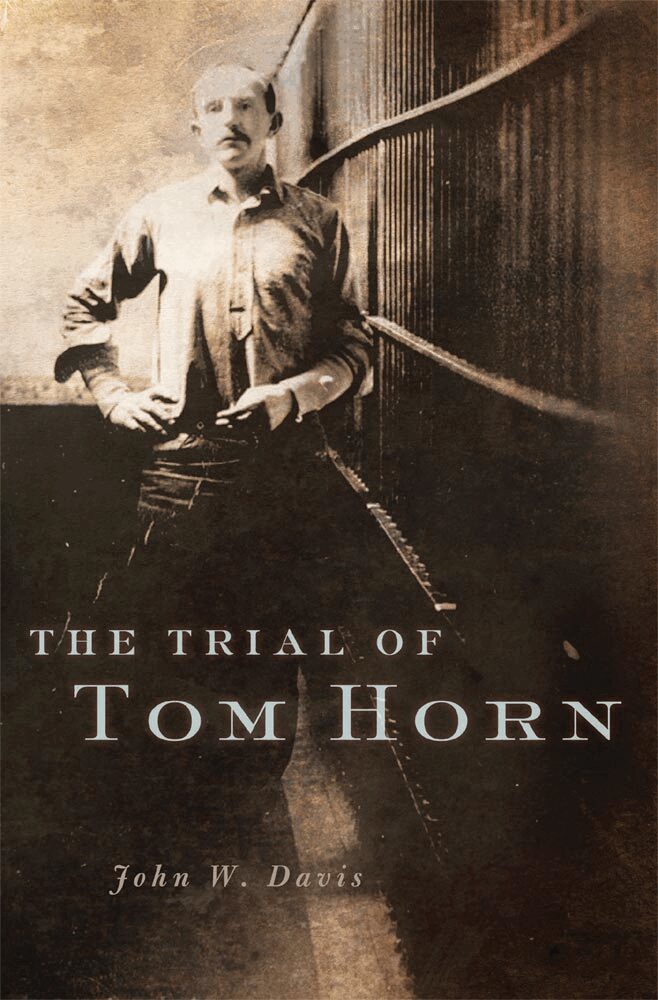
For weeks in 1902 it commanded headlines. All of Wyoming and much of the West followed the trial of Tom Horn for the murder of a fourteen-year-old boy. John W. Davis's book, the only full-length account of the trial, places it in perspective as part of a larger struggle for control of Wyoming's grazing land. Davis also portrays an enigmatic defendant who, more than a century after his conviction and hanging, perplexes us still.Tom Horn was one of the most fascinating figures in the history of the West. Employed as a Pinkerton and then as a range detective, he had a reputation as a loner and a braggart with a brutal approach to law enforcement even before he was accused of murdering young Willie Nickell. Cattlemen saw Horn as protecting their way of life, but most people in Wyoming saw him as a hired assassin, an instrument of oppression by cattle barons willing to use violent intimidation to protect their assets.The story began on July 18, 1901, when Willie Nickell was shot by a gunman lying in ambush; the killer was apparently after Willie's father, who had brought sheep into the area. Six months later Tom Horn was arrested. The trial pitted the Laramie County district attorney against a crack team of defense lawyers hired by big cattlemen. Against all predictions, the jury found Horn guilty of first-degree murder. Despite appeals that went all the way to the state supreme court and the governor, Horn was hanged in Cheyenne in 1903.The trial and conviction of Tom Horn marked a major milestone in the hard-fought battle against vigilantism in Wyoming. Davis, himself a trial lawyer, has mined court documents and newspaper articles to dissect the trial strategies of the participating attorneys. His detailed account illuminates a larger narrative of conflict between the power of wealth and the forces of law and order in the West.
Häftad, Engelska, 2020
228 kr
Skickas inom 5-8 vardagar
For weeks in 1902 it commanded headlines. All of Wyoming and much of the West followed the trial of Tom Horn for the murder of a fourteen-year-old boy. John W. Davis's book, the only full-length account of the trial, places it in perspective as part of a larger struggle for control of Wyoming's grazing land. Davis also portrays an enigmatic defendant who, more than a century after his conviction and hanging, perplexes us still.Tom Horn was one of the most fascinating figures in the history of the West. Employed as a Pinkerton and then as a range detective, he had a reputation as a loner and a braggart with a brutal approach to law enforcement even before he was accused of murdering young Willie Nickell. Cattlemen saw Horn as protecting their way of life, but most people in Wyoming saw him as a hired assassin, an instrument of oppression by cattle barons willing to use violent intimidation to protect their assets.The story began on July 18, 1901, when Willie Nickell was shot by a gunman lying in ambush; the killer was apparently after Willie's father, who had brought sheep into the area. Six months later Tom Horn was arrested. The trial pitted the Laramie County district attorney against a crack team of defense lawyers hired by big cattlemen. Against all predictions, the jury found Horn guilty of first-degree murder. Despite appeals that went all the way to the state supreme court and the governor, Horn was hanged in Cheyenne in 1903.The trial and conviction of Tom Horn marked a major milestone in the hard-fought battle against vigilantism in Wyoming. Davis, himself a trial lawyer, has mined court documents and newspaper articles to dissect the trial strategies of the participating attorneys. His detailed account illuminates a larger narrative of conflict between the power of wealth and the forces of law and order in the West.
Inbunden, Engelska, 1979
1 114 kr
Skickas inom 10-15 vardagar
Not long ago, a colleague chided me for using the term "the biological revolution. " Like many others, I have employed it as an umbrella term to refer to the seemingly vast, rapidly-moving, and fre quently bewildering developments of contemporary biomedicine: psy chosurgery, genetic counseling and engineering, artificial heart-lung machines, organ transplants-and on and on. The real "biological revo lution," he pointed out, began back in the nineteenth century in Europe. For it was then that death rates and infant mortality began to decline, the germ theory of disease was firmly established, Darwin took his famous trip on the Beagle, and Gregor Mendel stumbled on to some fundamental principles of heredity. My friend, I think, was both right and wrong. The biological revolution did have its roots in the nineteenth century; that is when it first began to unfold. Yet, like many intellectual and scientific upheav als, its force was not felt for decades. Indeed, it seems fair to say that it was not until after the Second World War that the full force of the earlier discoveries in biology and medicine began to have a major impact, an impact that was all the more heightened by the rapid bi omedical developments after the war.
Inbunden, Engelska, 2019
2 714 kr
Skickas inom 10-15 vardagar
This book addresses how to make Kaizen a formidable competitive weapon. It serves as reinforcement for the key role the Lean coordinator holds in training and leading change that serves to make and keep a manufacturing firm world competitive.
Häftad, Engelska, 2011
237 kr
Skickas inom 5-8 vardagar
Häftad, Engelska
345 kr
Skickas inom 3-6 vardagar
Häftad, Engelska, 2011
505 kr
Skickas inom 10-15 vardagar
This book addresses how to make Kaizen a formidable competitive weapon. It serves as reinforcement for the key role the Lean coordinator holds in training and leading change that serves to make and keep a manufacturing firm world competitive.
Häftad, Engelska, 2011
544 kr
Skickas inom 10-15 vardagar
Not long ago, a colleague chided me for using the term "the biological revolution. " Like many others, I have employed it as an umbrella term to refer to the seemingly vast, rapidly-moving, and fre quently bewildering developments of contemporary biomedicine: psy chosurgery, genetic counseling and engineering, artificial heart-lung machines, organ transplants-and on and on. The real "biological revo lution," he pointed out, began back in the nineteenth century in Europe. For it was then that death rates and infant mortality began to decline, the germ theory of disease was firmly established, Darwin took his famous trip on the Beagle, and Gregor Mendel stumbled on to some fundamental principles of heredity. My friend, I think, was both right and wrong. The biological revolution did have its roots in the nineteenth century; that is when it first began to unfold. Yet, like many intellectual and scientific upheav als, its force was not felt for decades. Indeed, it seems fair to say that it was not until after the Second World War that the full force of the earlier discoveries in biology and medicine began to have a major impact, an impact that was all the more heightened by the rapid bi omedical developments after the war.
Inbunden, Engelska, 2001
862 kr
Skickas inom 10-15 vardagar
In his latest offering, John Davis tackles the "human" side of a lean initiative -- cultivating a lean culture and gaining employee buy-in. How managers deal with these issues will ultimately determine their success.Leading the Lean Initiative: Straight Talk on Cultivating Support and Buy-in shows you how to lead a lean effort and effectively manage change. It is a practical manual for the new manager. Though directed at plant managers, and specifically those new to their jobs, this book benefits anyone taking on a leadership role. Davis provides complete direction on the crucial first steps and advise on competently responding to the "unknown and unexpected."In addition the book covers how to:Gain the respect and active support of the workforce.Work effectively with unions and customers.Create a culture for change.Actively seek out key people in your organization.Diplomatically buck the system.Extend lean to the entire enterprise.Develop and effectively earmark your plan for operation.Cultivate a winning relationship with your boss.Deal with major setbacks in business conditions.Throughout the text, Davis weaves the story of Jim Warring, a plant manager who is new to the job, detailing his frustrations, challenges, and accomplishments, and how he handles the daily responsibilities of a plant manager. At the end of each chapter, Davis rates Warring on how he performed in his role as plant manager and as a leader of the plant's lean initiative by presenting "The Warring Scorecard." Davis points out where he succeeded, and where he made some serious mistakes.Leading the Lean Initiative: Straight Talk on Cultivating Support and Buy-in, is a valuable resource or all managers in any industry. This book will show you how to effectively lead in your organization and how to cultivate a cooperative environment.
Häftad, Engelska, 2014
515 kr
Skickas inom 5-8 vardagar
Inbunden, Engelska, 2018
331 kr
Skickas inom 5-8 vardagar
Häftad, Engelska, 2021
220 kr
Skickas inom 5-8 vardagar
Inbunden, Engelska, 2016
1 446 kr
Skickas inom 10-15 vardagar
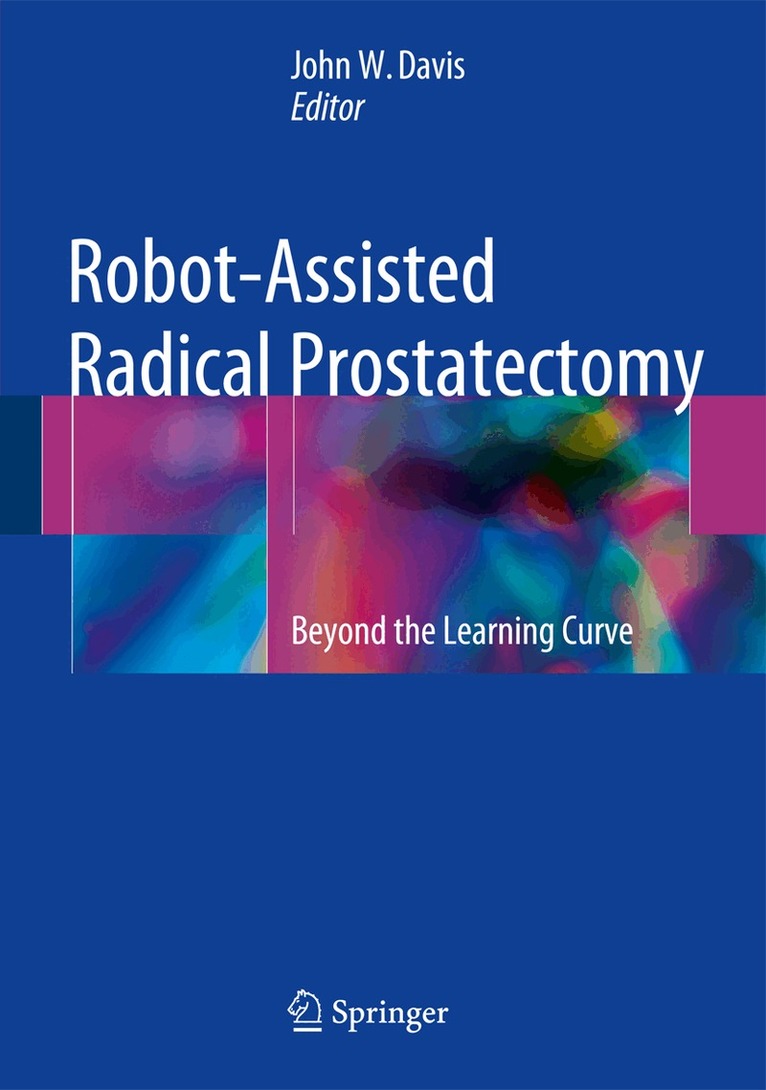
This book addresses knowledge gaps in RARP in 3 key sections: 1) Step-by-step approach including multiple technique options and innovations, 2) Patient selection, safety, outcomes, and 3) Preparing the patient for surgery. The order is more based upon knowledge priority rather than a chronologic sequence in which part 3 would go first. Part two allows more summary and commentary on evidence and part three allows some creative content that is otherwise hard to find in one place—medical evaluations, imaging, clinical trials, patient education, etc. This textbook emphasizes content for the advanced skills surgeon in that multiple techniques are presented as well as state of the art evidence. The learning curve is addressed and the authors clarify how this text is useful for learners. The caveat is that they should be careful in patient selection and stick with what their mentors are showing them. With experience, they can then branch out into the many techniques presented here. Robot-Assisted Radical Prostatectomy: Beyond the Learning Curve will also have cross-over appeal for surgical assistants, physician assistants, nurses, and anyone else involved in the surgical care of prostate cancer.
Häftad, Engelska, 2018
1 003 kr
Skickas inom 10-15 vardagar
This book addresses knowledge gaps in RARP in 3 key sections: 1) Step-by-step approach including multiple technique options and innovations, 2) Patient selection, safety, outcomes, and 3) Preparing the patient for surgery.
Häftad, Engelska, 2025
376 kr
Skickas inom 3-6 vardagar
Häftad, Spanska, 2025
368 kr
Skickas inom 3-6 vardagar
Inbunden, Spanska, 2025
493 kr
Skickas inom 3-6 vardagar
Inbunden, Engelska, 1999
686 kr
Tillfälligt slut
Manufacturing in the United States is currently undergoing a major transition, yet large numbers of manufacturers simply do not recognize what it is all about. Many still operate under out dated manufacturing practices and do not see that the enemy is not the competition, but rather their own system of production.