John Weisweiler – författare
Visar alla böcker från författaren John Weisweiler. Handla med fri frakt och snabb leverans.
5 produkter
5 produkter
Inbunden, Engelska, 2016
1 342 kr
Skickas inom 5-8 vardagar
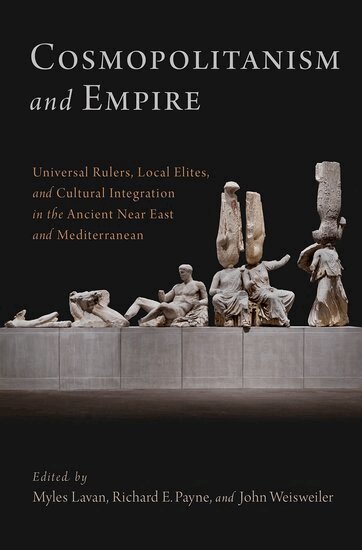
The empires of the ancient Near East and Mediterranean invented cosmopolitan politics. In the first millennia BCE and CE, a succession of territorially extensive states incorporated populations of unprecedented cultural diversity. Cosmopolitanism and Empire traces the development of cultural techniques through which empires managed difference in order to establish effective, enduring regimes of domination. It focuses on the relations of imperial elites with culturally distinct local elites, offering a comparative perspective on the varying depth and modalities of elite integration in five empires of the ancient Near East and Mediterranean. If cosmopolitanism has normally been studied apart from the imperial context, the essays gathered here show that theories and practices that enabled ruling elites to transcend cultural particularities were indispensable for the establishment and maintenance of trans-regional and trans-cultural political orders. As the first cosmopolitans, imperial elites regarded ruling over culturally disparate populations as their vocation, and their capacity to establish normative frameworks across cultural boundaries played a vital role in the consolidation of their power. Together with an introductory chapter which offers a theory and history of the relationship between empire and cosmopolitanism, the volume includes case studies of Assyrian, Seleukid, Ptolemaic, Roman, and Iranian empires that analyze encounters between ruling classes and their subordinates in the domains of language and literature, religion, and the social imaginary. The contributions combine to illustrate the dilemmas of difference that imperial elites confronted as well as their strategies for resolving the cultural contradictions that their regimes precipitated.
E-bok
PDF, Engelska, 20161 203 kr
Läs direkt efter köp
The empires of the ancient Near East and Mediterranean invented cosmopolitan politics. In the first millennia BCE and CE, a succession of territorially extensive states incorporated populations of unprecedented cultural diversity. Cosmopolitanism and Empire traces the development of cultural techniques through which empires managed difference in order to establish effective, enduring regimes of domination. It focuses on the relations of imperial elites with culturally distinct local elites, offering a comparative perspective on the varying depth and modalities of elite integration in five empires of the ancient Near East and Mediterranean. If cosmopolitanism has normally been studied apart from the imperial context, the essays gathered here show that theories and practices that enabled ruling elites to transcend cultural particularities were indispensable for the establishment and maintenance of trans-regional and trans-cultural political orders. As the first cosmopolitans, imperial elites regarded ruling over culturally disparate populations as their vocation, and their capacity to establish normative frameworks across cultural boundaries played a vital role in the consolidation of their power. Together with an introductory chapter which offers a theory and history of the relationship between empire and cosmopolitanism, the volume includes case studies of Assyrian, Seleukid, Ptolemaic, Roman, and Iranian empires that analyze encounters between ruling classes and their subordinates in the domains of language and literature, religion, and the social imaginary. The contributions combine to illustrate the dilemmas of difference that imperial elites confronted as well as their strategies for resolving the cultural contradictions that their regimes precipitated.
Inbunden, Engelska, 2022
1 218 kr
Skickas inom 5-8 vardagar
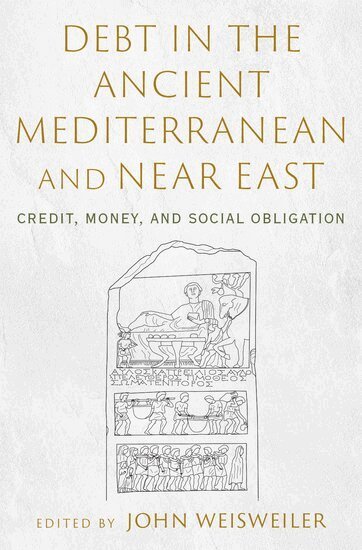
In his Debt: The First 5000 Years, the anthropologist David Graeber put forward a new grand narrative of world history. From the Late Bronze Age onwards, all across the Near East and Mediterranean, relationships of mutual obligation were transformed into quantifiable and legally enforceable debts. Graeber suggests that this transformation made possible new economic institutions, such as IOUs, coinage, and chattel slavery. It also led to the emergence of modes of thought that have shaped Eurasian philosophical and religious traditions ever since. Debt in the Ancient Mediterranean and the Near East explores the implications of this theory for the history of the Mediterranean and Near East. A distinguished group of ancient historians assesses how well Graeber's interpretations fit current understandings of ancient and late antique economies. At the same time, this volume offers a history of premodern credit systems which takes seriously the dual nature of debt as both quantifiable economic reality and immeasurable social obligation. By exploring the diverse ways in which social relationships were quantified in different ancient and late antique societies, the work introduces a method of writing the history of premodern systems of exchange that departs from the currently dominant paradigm of neo-institutional economics.
E-bok
PDF, Engelska, 2022973 kr
Läs direkt efter köp
In his Debt: The First 5000 Years, the anthropologist David Graeber put forward a new grand narrative of world history. From the Late Bronze Age onwards, all across the Near East and Mediterranean, relationships of mutual obligation were transformed into quantifiable and legally enforceable debts. Graeber suggests that this transformation made possible new economic institutions, such as IOUs, coinage, and chattel slavery. It also led to the emergence of modes of thought that have shaped Eurasian philosophical and religious traditions ever since. Debt in the Ancient Mediterranean and the Near East explores the implications of this theory for the history of the Mediterranean and Near East. A distinguished group of ancient historians assesses how well Graeber''s interpretations fit current understandings of ancient and late antique economies. At the same time, this volume offers a history of premodern credit systems which takes seriously the dual nature of debt as both quantifiable economic reality and immeasurable social obligation. By exploring the diverse ways in which social relationships were quantified in different ancient and late antique societies, the work introduces a method of writing the history of premodern systems of exchange that departs from the currently dominant paradigm of neo-institutional economics.
E-bok
Engelska, 2022973 kr
Läs direkt efter köp
In his Debt: The First 5000 Years, the anthropologist David Graeber put forward a new grand narrative of world history. From the Late Bronze Age onwards, all across the Near East and Mediterranean, relationships of mutual obligation were transformed into quantifiable and legally enforceable debts. Graeber suggests that this transformation made possible new economic institutions, such as IOUs, coinage, and chattel slavery. It also led to the emergence of modes of thought that have shaped Eurasian philosophical and religious traditions ever since. Debt in the Ancient Mediterranean and the Near East explores the implications of this theory for the history of the Mediterranean and Near East. A distinguished group of ancient historians assesses how well Graeber''s interpretations fit current understandings of ancient and late antique economies. At the same time, this volume offers a history of premodern credit systems which takes seriously the dual nature of debt as both quantifiable economic reality and immeasurable social obligation. By exploring the diverse ways in which social relationships were quantified in different ancient and late antique societies, the work introduces a method of writing the history of premodern systems of exchange that departs from the currently dominant paradigm of neo-institutional economics.