Jon M. Spencer - Böcker
Visar alla böcker från författaren Jon M. Spencer. Handla med fri frakt och snabb leverans.
4 produkter
4 produkter
As the Black School Sings
Black Music Collections at Black Universities and Colleges with a Union List of Book Holdings
Inbunden, Engelska, 1987
731 kr
Skickas inom 10-15 vardagar
Product information not available.
833 kr
Skickas inom 10-15 vardagar
The first and only collection of its kind, Sacred Symphony contains 100 transcriptions of muscial excerpts from the chanted sermons of contemporary black preachers. In his introduction to the pieces that follow, author John Michael Spencer argues that there is an observable correlation between the chanted sermons of today's black preachers and the antebellum spiritual. He shows that the pieces collected here, each of which spontaneously evolved during the course of a sermon or prayer service, are themselves spirituals containing similar musical components--melody, rhythm, call and response, counterpoint, harmony, form, and improvisation.
918 kr
Skickas inom 10-15 vardagar
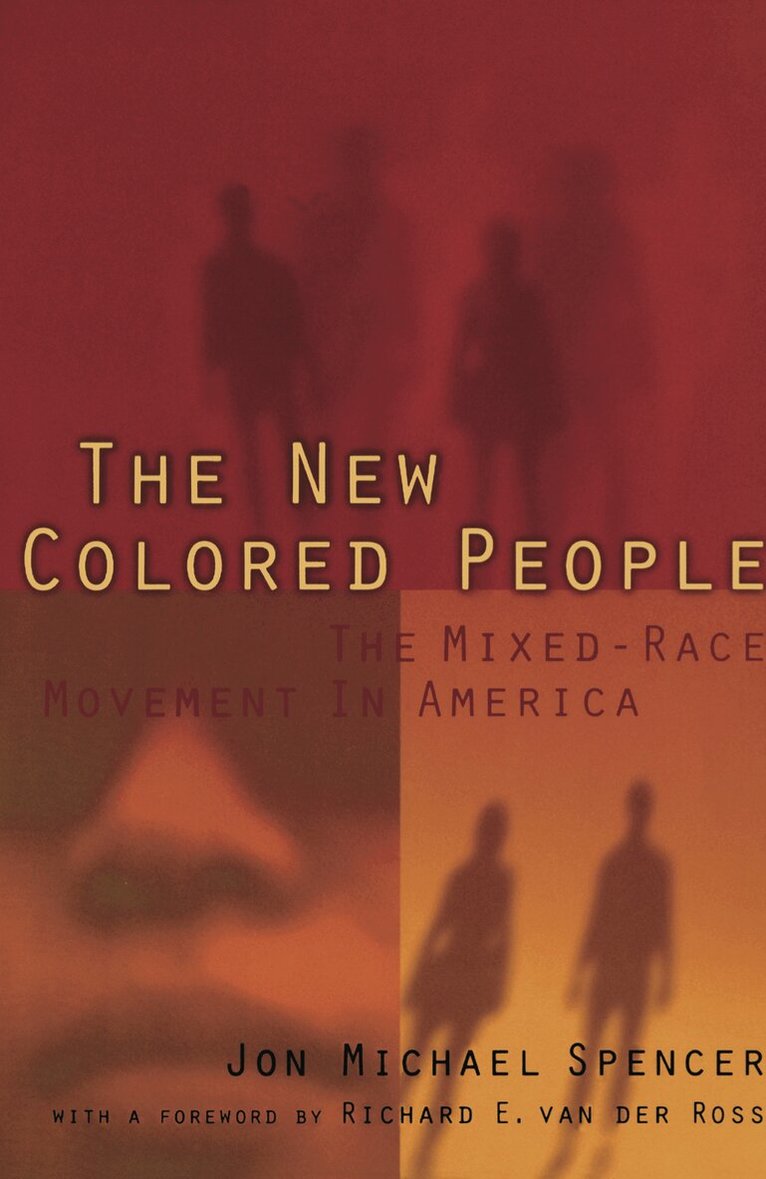
With a foreword by Richard E. Vander RossIn recent years, dramatic increases in racial intermarriage have given birth to a generation who refuse to be shoehorned into neat, pre-existing racial categories. Energized by a refusal to allow mixed-race people to be rendered invisible, this movement lobbies aggressively to have the category multiracial added to official racial classifications.While applauding the self-awareness and activism at the root of this movement, Jon Michael Spencer questions its ultimate usefulness, deeply concerned that it will unintentionally weaken minority power. Focusing specifically on mixed-race blacks, Spencer argues that the mixed-race movement in the United States would benefit from consideration of how multiracial categories have evolved in South Africa. Americans, he shows us, are deeply uninformed about the tragic consequences of the former white South African government's classification of mixed-race people as Coloured. Spencer maintains that a multiracial category in the U.S. could be equally tragic, not only for blacks but formultiracials themselves.Further, splintering people of color into such classifications of race and mixed race aggravates race relations among society's oppressed. A group that can attain some privilege through a multiracial identity is unlikely to identify with the lesser status group, blacks. It may be that the undoing of racial classification will come not by initiating a new classification, but by our increased recognition that there are millions of people who simply defy easy classification.
364 kr
Skickas inom 7-10 vardagar
With a foreword by Richard E. Vander RossIn recent years, dramatic increases in racial intermarriage have given birth to a generation who refuse to be shoehorned into neat, pre-existing racial categories. Energized by a refusal to allow mixed-race people to be rendered invisible, this movement lobbies aggressively to have the category multiracial added to official racial classifications.While applauding the self-awareness and activism at the root of this movement, Jon Michael Spencer questions its ultimate usefulness, deeply concerned that it will unintentionally weaken minority power. Focusing specifically on mixed-race blacks, Spencer argues that the mixed-race movement in the United States would benefit from consideration of how multiracial categories have evolved in South Africa. Americans, he shows us, are deeply uninformed about the tragic consequences of the former white South African government's classification of mixed-race people as Coloured. Spencer maintains that a multiracial category in the U.S. could be equally tragic, not only for blacks but formultiracials themselves.Further, splintering people of color into such classifications of race and mixed race aggravates race relations among society's oppressed. A group that can attain some privilege through a multiracial identity is unlikely to identify with the lesser status group, blacks. It may be that the undoing of racial classification will come not by initiating a new classification, but by our increased recognition that there are millions of people who simply defy easy classification.