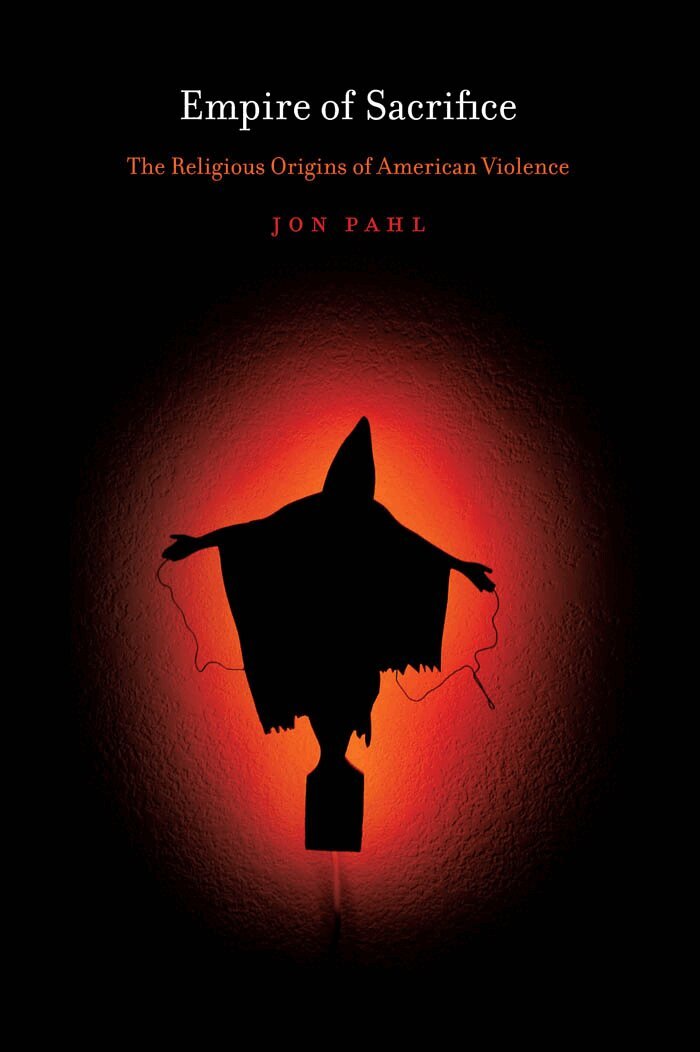
It is widely recognized that American culture is both exceptionally religious and exceptionally violent. Americans participate in religious communities in high numbers, yet American citizens also own guns at rates far beyond those of citizens in other industrialized nations. Since 9/11, United States scholars have understandably discussed religious violence in terms of terrorist acts, a focus that follows United States policy. Yet, according to Jon Pahl, to identify religious violence only with terrorism fails to address the long history of American violence rooted in religion throughout the country's history. In essence, Americans have found ways to consider blessed some very brutal attitudes and behaviors both domestically and globally.In Empire of Sacrifice, Pahl explains how both of these distinctive features of American culture work together by exploring how constructions along the lines of age, race, and gender have operated to centralize cultural power across American civil or cultural religions in ways that don't always appear to be "religious" at all. Pahl traces the development of these forms of systemic violence throughout American history, using evidence from popular culture, including movies such as Rebel without a Cause and Reefer Madness and works of literature such as The Narrative of the Life of Frederick Douglass and The Handmaid's Tale, to illuminate historical events. Throughout, Pahl focuses an intense light on the complex and durable interactions between religion and violence in American history, from Puritan Boston to George W. Bush's Baghdad.
In this first critical biography of Fethullah Gulen in English, historian Jon Pahl takes us on a journey where we discover wisdom and controversy, from 1940's Turkey to the U.S. in the twenty-first century. Pahl tells the story of a pious Muslim boy from a tiny and remote Turkish village who on the one hand has inspired a global movement of millions of individuals dedicated to literacy, social enterprise, and interreligious dialogue, but who on the other hand has been monitored by Turkish police, seen as a threat by autocrats, and recently declared number one enemy by the current Turkish dictator. With lively prose and extensive research, Pahl traces Fethullah Gulen's life and thought in its contexts, states clearly his own positions, and then lets readers draw their own conclusions from the evidence about this undeniably significant historical figure.
Christian historian Sidney Mead has observed: "e;In America space has played the part that time has played in older cultures of the world."e; In Shopping Malls and Other Sacred Spaces, Jon Pahl examines this provocative statement in conversation with what he calls the "e;spatial character"e; of American theology. He argues that places are always imaginatively constructed by the human beings who inhabit them. Sometimes this spatial theology works to our benefit; other times it poses spiritual risks. What happens when our banal "e;clothing of the sacred"e; violates our genuine need for comfort and intimacy? Or when we remember that the fleeting pleasures of a shopping trip or a Disneyland escape are designed to fill someone else's pocket rather than the spiritual emptiness in our own hearts?Pahl develops several ways to "e;clothe the divine from within the Christian tradition."e; He introduces a theology of place that reveals aspects of God's character through biblical metaphors drawn from physical spaces, such as the true vine, the rock, and the living water. Accessible and thought provoking, this enlightening book provides a better grasp of our particularly American way of lending religious significance to spaces of all kinds.