Jonathan Arnold - Böcker
Visar alla böcker från författaren Jonathan Arnold. Handla med fri frakt och snabb leverans.
8 produkter
8 produkter
2 181 kr
Skickas inom 10-15 vardagar
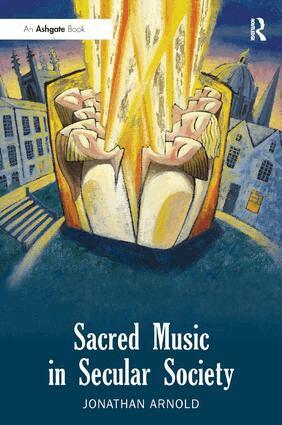
If music has ever given you 'a glimpse of something beyond the horizons of our materialism or our contemporary values' (James MacMillan), then you will find this book essential reading. Sacred Music in Secular Society is a new and challenging work asking why Christian sacred music is now appealing afresh to a wide and varied audience, both religious and secular. Jonathan Arnold offers unique insights as a professional singer of sacred music in liturgical and concert settings worldwide, as an ordained Anglican priest and as a senior research fellow. Blending scholarship, theological reflection and interviews with some of the greatest musicians and spiritual leaders of our day, including James MacMillan and Rowan Williams, Arnold suggests that the intrinsically theological and spiritual nature of sacred music remains an immense attraction particularly in secular society. Intended by the composer and inspired by religious intentions this theological and spiritual heart reflects our inherent need to express our humanity and search for the mystical or the transcendent. Offering a unique examination of the relationship between sacred music and secular society, this book will appeal to readers interested in contemporary spirituality, Christianity, music, worship, faith and society, whether believers or not, including theologians, musicians and sociologists.
618 kr
Skickas inom 10-15 vardagar
If music has ever given you 'a glimpse of something beyond the horizons of our materialism or our contemporary values' (James MacMillan), then you will find this book essential reading. Sacred Music in Secular Society is a new and challenging work asking why Christian sacred music is now appealing afresh to a wide and varied audience, both religious and secular. Jonathan Arnold offers unique insights as a professional singer of sacred music in liturgical and concert settings worldwide, as an ordained Anglican priest and as a senior research fellow. Blending scholarship, theological reflection and interviews with some of the greatest musicians and spiritual leaders of our day, including James MacMillan and Rowan Williams, Arnold suggests that the intrinsically theological and spiritual nature of sacred music remains an immense attraction particularly in secular society. Intended by the composer and inspired by religious intentions this theological and spiritual heart reflects our inherent need to express our humanity and search for the mystical or the transcendent. Offering a unique examination of the relationship between sacred music and secular society, this book will appeal to readers interested in contemporary spirituality, Christianity, music, worship, faith and society, whether believers or not, including theologians, musicians and sociologists.
475 kr
Skickas inom 10-15 vardagar
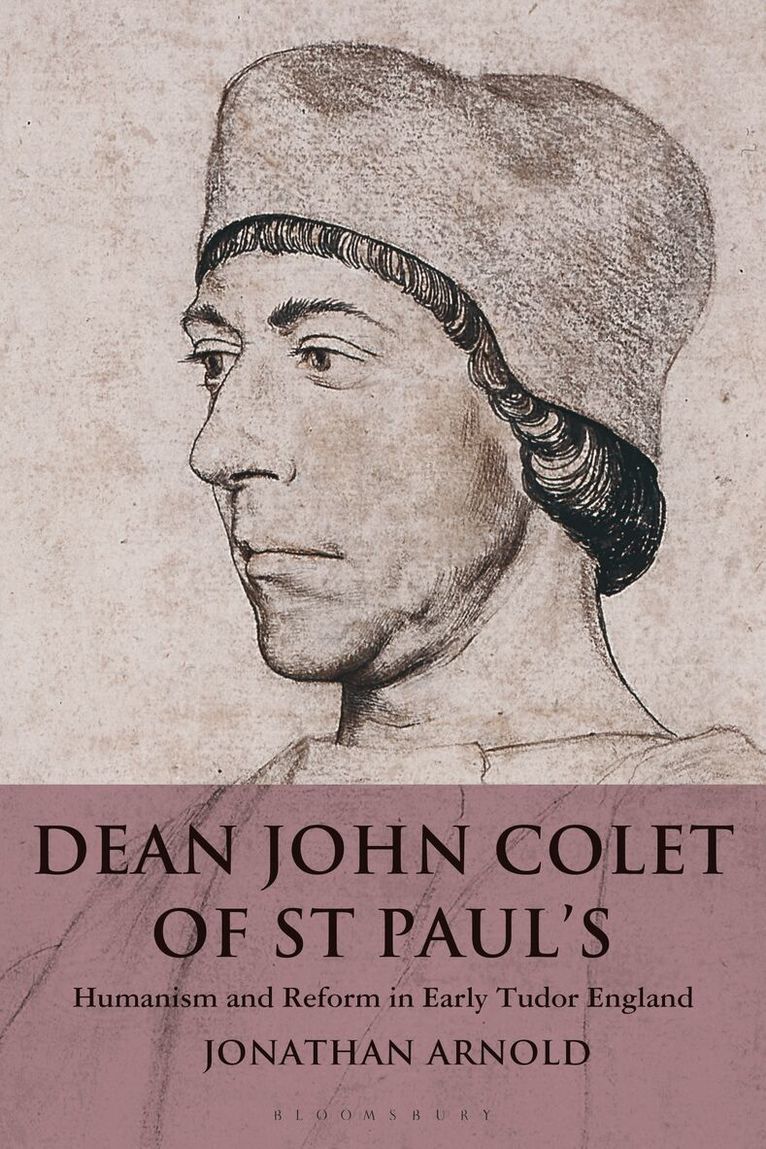
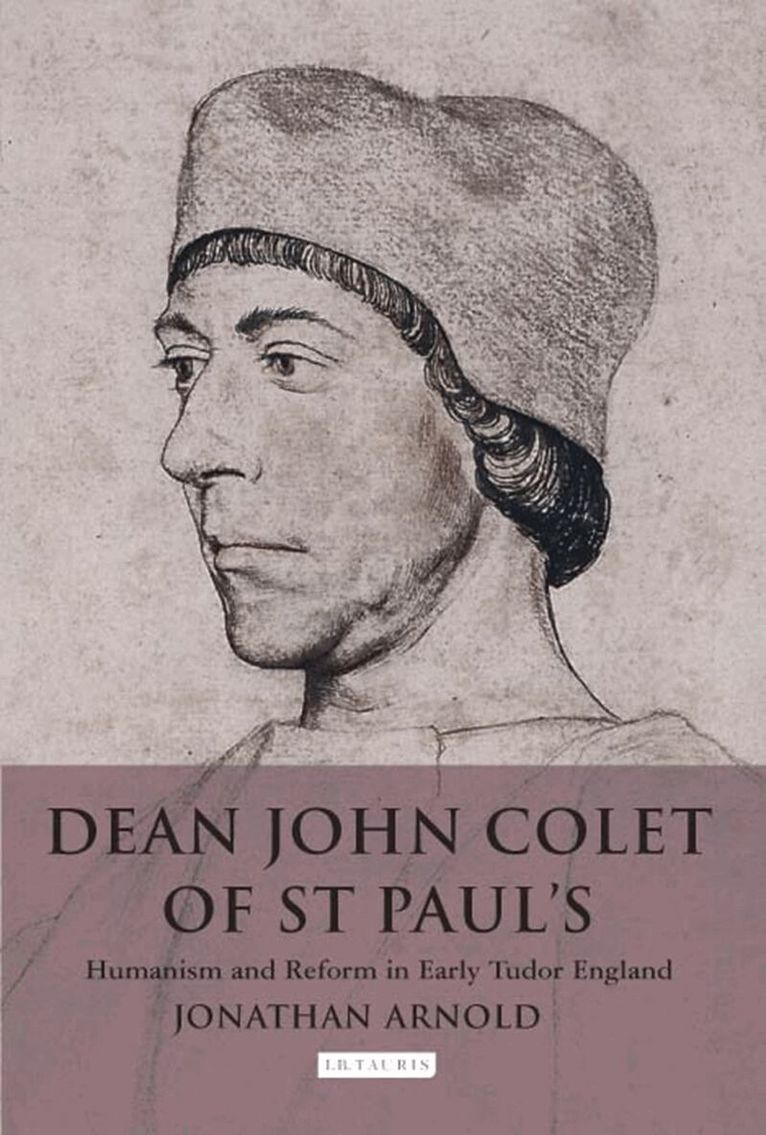
This is an important and original biography of John Colet, the leading humanist theologian in early Tudor England and the founder of St Paul's School in London. The facts of John Colet's life, spanning the late fifteenth and early sixteenth centuries, appear to portray a successful, humanist clerical reformer, active in London on the eve of the English Reformation. In reality, as a cleric, John Colet was neither successful nor a reformer, nor were the reforms he attempted particularly welcome. His greatest achievement, and lasting legacy, was the foundation of his school. Thus, in the sphere of Christian humanist education, Colet was a success. However, in all his dealings, Colet considered the spiritual life to be of paramount importance and his ultimate aim was the deification of sinful humanity, not just for a few exceptional individuals, but for the entire Church. In this respect, Colet's ecclesiastical vision did not effect any significant change in the early sixteenth-century Church, although it nevertheless pointed to the possibility of a more spiritual, unified and holy Church.Colet was a passionate and pious man who does not fall easily into any historical, intellectual or ecclesiastical category. Ultimately, he escapes identification with any other set of contemporaneous idealists because his vision was his own. This study offers a timely re-assessment of the life of a complex religious figure of pre-Reformation England.
446 kr
Skickas inom 7-10 vardagar
How do contemporary audiences engage with sacred music and what are its effects?This book explores examples of how the Christian story is still expressed in music and how it is received by those who experience that art form, whether in church or not. Through conversations with a variety of writers, artists, scientists, historians, atheists, church laity and clergy, the term post-secular emerges as an accurate description of the relationship between faith, religion, spirituality, agnosticism and atheism in the west today. In this context, faith does not just mean belief; as the book demonstrates, the temporal, linear, relational and communal process of experiencing faith is closely related to music.Music and Faith is centred on those who, by-and-large, are not professional musicians, philosophers or theologians, but who find that music and faith are bound up with each other and with their own lives. Very often, as the conversations reveal, the results of this 'binding' are transformative, whether it be in outpourings of artistic expression of another kind, or greater involvement with issues of social justice, or becoming ordained to serve within the Church. Even those who do not have a Christianfaith find that sacred music has a transformative effect on the mind and the body and even, to use a word deliberately employed by Richard Dawkins, the 'soul'.JONATHAN ARNOLD is Dean of Divinity and Fellow of MagdalenCollege, Oxford. Before being ordained, he was a professional singer and made numerous recordings with The Sixteen, Polyphony, the Gabrielli Consort and The Tallis Scholars, among others. He has previously published Sacred Music in Secular Society (2014), The Great Humanists: An Introduction (2011) and John Colet of St. Paul's: Humanism and Reform in Pre-Reformation England (2007).
138 kr
Kommande
Adrian Bawtree and Jonathan Arnold explore how music can help transform society and individuals through its power to inspire, heal and galvanise social cohesion and action. Drawing on their wealth of experience in community engagement through music and the arts, Bawtree and Arnold demonstrate how the biblical imperative to love one’s neighbour through practical and applied theology is evident through the use of music. Projects with the homeless, refugees, the imprisoned and the marginalised, as well as those suffering from dementia, are just some of the contexts in which they have brought the gift of music into the realm of social justice, with inspiring results.
1 754 kr
Skickas inom 10-15 vardagar
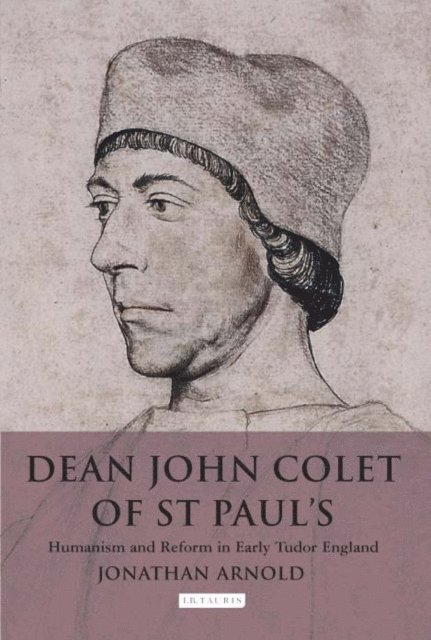
This is an important and original biography of John Colet, the leading humanist theologian in early Tudor England and the founder of St Paul's School in London. Taken at face value, the facts of John Colet's life, spanning the late 15th and early 16th centuries, appear to portray a successful, humanist clerical reformer, active in London on the eve of the English Reformation. In fact, as a cleric, John Colet was neither successful nor a reformer, nor were the reforms he attempted particularly welcome. His greatest achievement, and lasting legacy, was the foundation of his school. Thus, in the sphere of Christian humanist education, Colet was a success. However, in all his dealings, Colet considered the spiritual life to be of paramount importance and his ultimate aim was the deification of sinful humanity, not just for a few exceptional individuals, but for the entire Church. In this respect, Colet's ecclesiastical vision did not effect any significant change in the early sixteenth-century Church, although it nevertheless pointed to the possibility of a more spiritual, unified and holy Church.Colet was a passionate and pious man who does not fall easily into any historical, intellectual or ecclesiastical category. Ultimately, he escapes identification with any other set of contemporaneous idealists because his vision was his own. This study offers a timely re-assessment of the life of a complex religious figure of pre-Reformation England.
368 kr
Skickas inom 10-15 vardagar
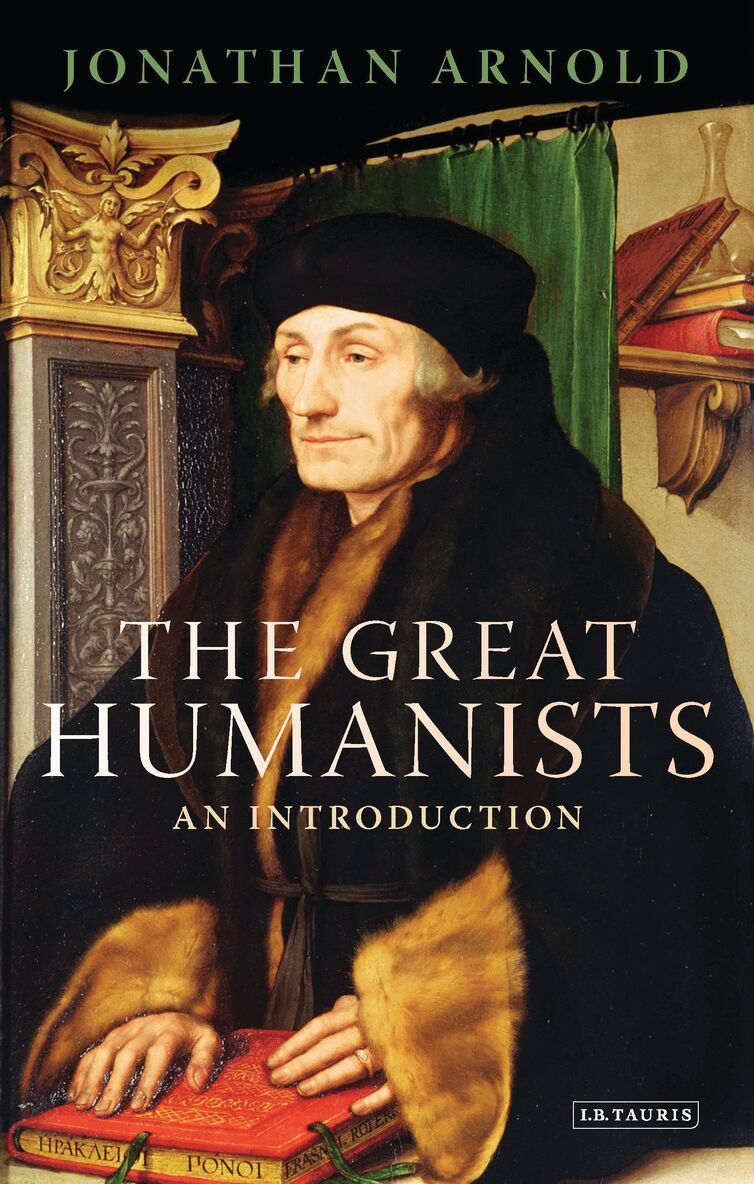
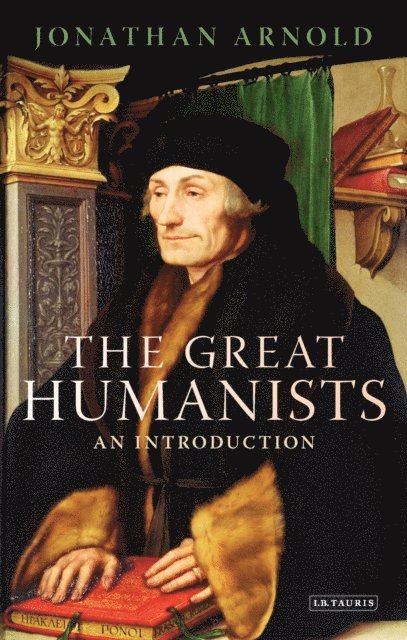
Born out of a love of language, text, classical learning, art, philosophy and philology, the Christian Humanist project lasted beyond the turmoil of sixteenth-century Europe to survive in a new form in post-Reformation thought. Jonathan Arnold here explores the finest intellects of late-Renaissance Europe, providing an essential guide to the most important scholars, priests, theologians and philosophers of the period, now collectively known as the Christian Humanists. "The Great Humanists" provides an invaluable context to the philosophical, political and spiritual state of Europe on the eve of the Reformation through inter-related biographical sketches of Erasmus, Thomas More, Marsilio Ficino, Petrarch, Johann Reuchlin, Jacques Lefevre d'Etaples and many others. The legacy of these thinkers is still relevant and widely-studied today, and this book will make invaluable reading for scholars and students of philosophy and early-modern European history.
Del 9 - Brill's Companions to European History
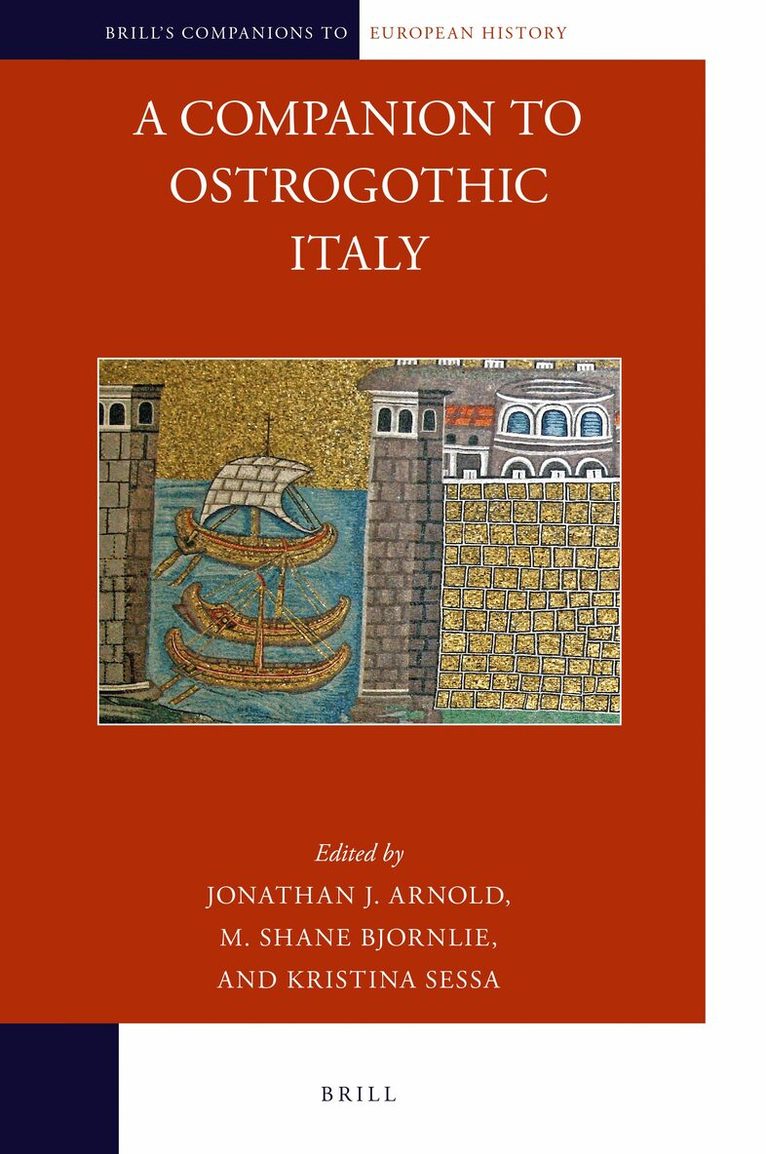
Companion to Ostrogothic Italy
Inbunden, Engelska, 2016
3 720 kr
Skickas inom 5-8 vardagar
A Companion to Ostrogothic Italy is a concise yet comprehensive cutting edge survey of the rise and fall of Italy’s first barbarian kingdom, the Ostrogothic state (ca. 489-554 CE). The volume’s 18 essays provide readers with probing syntheses of recent scholarship on key topics, from the Ostrogothic army and administration to religious diversity and ecclesiastical development, ethnicity, cultural achievements, urbanism, and the rural economy. Significantly, the volume also presents innovative studies of hitherto under-examined topics, including the Ostrogothic provinces beyond the Italian lands, gender and the Ostrogothic court, and Ostrogothic Italy’s environmental history. Featuring work by an international panel of scholars, the volume is designed for both new students and specialists in the field.Contributors are Jonathan Arnold, Shane Bjornlie, Samuel Cohen, Kate Cooper, Deborah Deliyannis, Cam Grey, Guy Halsall, Gerda Heydemann, Mark Johnson, Sean Lafferty, Natalia Lozovsky, Federico Marazzi, Christine Radtki, Kristina Sessa, Paolo Squatriti, Brian Swain, and Rita Lizzi Testa.