Jonathan B. Snape – författare
Visar alla böcker från författaren Jonathan B. Snape. Handla med fri frakt och snabb leverans.
2 produkter
2 produkter
E-bok
PDF, Engelska, 20084 509 kr
Läs direkt efter köp
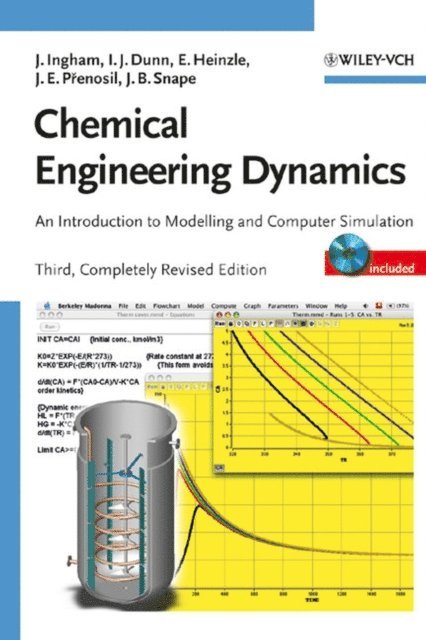
In this book, the modelling of dynamic chemical engineering processes is presented in a highly understandable way using the unique combination of simplified fundamental theory and direct hands-on computer simulation. The mathematics is kept to a minimum, and yet the nearly 100 examples supplied on www.wiley-vch.de illustrate almost every aspect of chemical engineering science. Each example is described in detail, including the model equations. They are written in the modern user-friendly simulation language Berkeley Madonna, which can be run on both Windows PC and Power-Macintosh computers. Madonna solves models comprising many ordinary differential equations using very simple programming, including arrays. It is so powerful that the model parameters may be defined as "sliders", which allow the effect of their change on the model behavior to be seen almost immediately. Data may be included for curve fitting, and sensitivity or multiple runs may be performed. The results can be seen simultaneously on multiple-graph windows or by using overlays. The resultant learning effect of this is tremendous. The examples can be varied to fit any real situation, and the suggested exercises provide practical guidance. The extensive experience of the authors, both in university teaching and international courses, is reflected in this well-balanced presentation, which is suitable for the teacher, the student, the chemist or the engineer. This book provides a greater understanding of the formulation and use of mass and energy balances for chemical engineering, in a most stimulating manner. This book is a third edition, which also includes biological, environmental and food process examples.
E-bok
PDF, Engelska, 20082 473 kr
Läs direkt efter köp
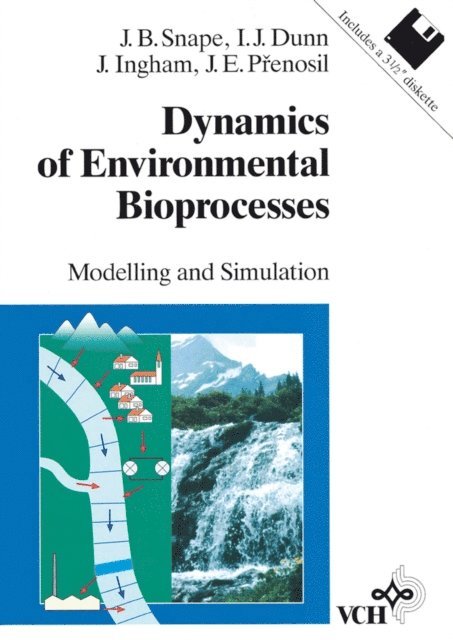
Dynamic environmental processes are complex; the easiest and most effective way to understanding them lies through the disciplines of dynamic modelling and computer simulation. The prerequisite modelling fundamentals are presented in the first chapter in a manner comprehensible to students as well as to practising scientists and engineers. The second chapter describes the many environmental processes that lend themselves to modelling, for example pollution and wastewater treatment. The third part of the book provides 65 simulation examples both on the page and on an accompanying diskette in the simulation language ISIM - the first time that this has been done with a teaching book in this field - ready-to-run on any DOS personal computer. Crucially, the simulation runs can be interrupted to allow rapid interactive parameter changes and easy plotting of results; this enables the reader to get a feel for the model and system behaviour.