Jonathan Baldo - Böcker
Visar alla böcker från författaren Jonathan Baldo. Handla med fri frakt och snabb leverans.
6 produkter
6 produkter
Memory in Shakespeare's Histories
Stages of Forgetting in Early Modern England
Inbunden, Engelska, 2011
2 632 kr
Skickas inom 10-15 vardagar
A distinguishing feature of Shakespeare’s later histories is the prominent role he assigns to the need to forget. This book explore the ways in which Shakespeare expanded the role of forgetting in histories from King John to Henry V, as England contended with what were perceived to be traumatic breaks in its history and in the fashioning of a sense of nationhood. For plays ostensibly designed to recover the past and make it available to the present, they devote remarkable attention to the ways in which states and individuals alike passively neglect or actively suppress the past and rewrite history. Two broad and related historical developments caused remembering and forgetting to occupy increasingly prominent and equivocal positions in Shakespeare’s history plays: an emergent nationalism and the Protestant Reformation. A growth in England’s sense of national identity, constructed largely in opposition to international Catholicism, caused historical memory to appear a threat as well as a support to the sense of unity. The Reformation caused many Elizabethans to experience a rupture between their present and their Catholic past, a condition that is reflected repeatedly in the history plays, where the desire to forget becomes implicated with traumatic loss. Both of these historical shifts resulted in considerable fluidity and uncertainty in the values attached to historical memory and forgetting. Shakespeare’s histories, in short, become increasingly equivocal about the value of their own acts of recovery and recollection.
1 420 kr
Skickas inom 5-8 vardagar
This book explores the role of literature as a means of mediating religious conflict in early modern England. Marking a new stage in the ‘religious turn’ that generated vigorous discussion of the changes and conflicts brought about by the Reformation, it unites new historicist readings with an interest in the ideological significance of aesthetic form. It proceeds from the assumption that confessional differences did not always erupt into hostilities but that people also had to arrange themselves with divided loyalties – between the old faith and the new, between religious and secular interests, between officially sanctioned and privately held beliefs. What role might literature have played here? Can we conceive of literary representations as possible sites of de-escalation? Do different discursive, aesthetic, or social contexts inflect or deflect the demands of religious loyalties? Such questions open a new perspective on post-Reformation English culture and literature.
356 kr
Skickas inom 7-10 vardagar
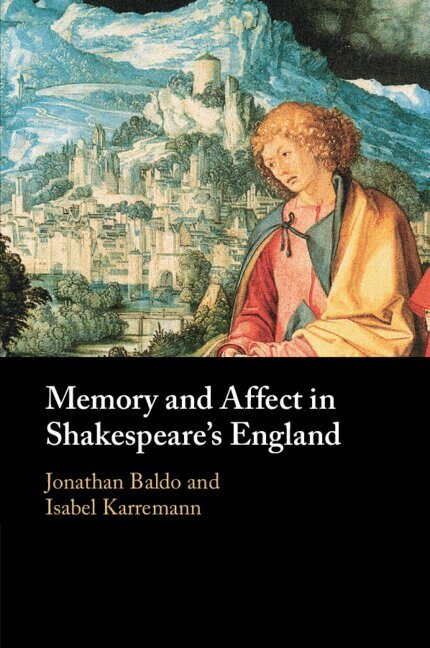
This is the first collection to systematically combine the study of memory and affect in early modern culture. Essays by leading and emergent scholars in the field of Shakespeare studies offer an innovative research agenda, inviting new, exploratory approaches to Shakespeare's work that embrace interdisciplinary cross-fertilization. Drawing on the contexts of Renaissance literature across genres and on various discourses including rhetoric, medicine, religion, morality, historiography, colonialism, and politics, the chapters bring together a broad range of texts, concerns, and methodologies central to the study of early modern culture. Stimulating for postgraduate students, lecturers, and researchers with an interest in the broader fields of memory studies and the history of the emotions - two vibrant and growing areas of research - it will also prove invaluable to teachers of Shakespeare, dramaturges, and directors of stage productions, provoking discussions of how convergences of memory and affect influence stagecraft, dramaturgy, rhetoric, and poetic language.
647 kr
Skickas inom 10-15 vardagar
A distinguishing feature of Shakespeare’s later histories is the prominent role he assigns to the need to forget. This book explore the ways in which Shakespeare expanded the role of forgetting in histories from King John to Henry V, as England contended with what were perceived to be traumatic breaks in its history and in the fashioning of a sense of nationhood. For plays ostensibly designed to recover the past and make it available to the present, they devote remarkable attention to the ways in which states and individuals alike passively neglect or actively suppress the past and rewrite history. Two broad and related historical developments caused remembering and forgetting to occupy increasingly prominent and equivocal positions in Shakespeare’s history plays: an emergent nationalism and the Protestant Reformation. A growth in England’s sense of national identity, constructed largely in opposition to international Catholicism, caused historical memory to appear a threat as well as a support to the sense of unity. The Reformation caused many Elizabethans to experience a rupture between their present and their Catholic past, a condition that is reflected repeatedly in the history plays, where the desire to forget becomes implicated with traumatic loss. Both of these historical shifts resulted in considerable fluidity and uncertainty in the values attached to historical memory and forgetting. Shakespeare’s histories, in short, become increasingly equivocal about the value of their own acts of recovery and recollection.
1 144 kr
Skickas
This is the first collection to systematically combine the study of memory and affect in early modern culture. Essays by leading and emergent scholars in the field of Shakespeare studies offer an innovative research agenda, inviting new, exploratory approaches to Shakespeare's work that embrace interdisciplinary cross-fertilization. Drawing on the contexts of Renaissance literature across genres and on various discourses including rhetoric, medicine, religion, morality, historiography, colonialism, and politics, the chapters bring together a broad range of texts, concerns, and methodologies central to the study of early modern culture. Stimulating for postgraduate students, lecturers, and researchers with an interest in the broader fields of memory studies and the history of the emotions - two vibrant and growing areas of research - it will also prove invaluable to teachers of Shakespeare, dramaturges, and directors of stage productions, provoking discussions of how convergences of memory and affect influence stagecraft, dramaturgy, rhetoric, and poetic language.
407 kr
Skickas inom 5-8 vardagar
This book explores the role of literature as a means of mediating religious conflict in early modern England. Marking a new stage in the ‘religious turn’ that generated vigorous discussion of the changes and conflicts brought about by the Reformation, it unites new historicist readings with an interest in the ideological significance of aesthetic form. It proceeds from the assumption that confessional differences did not always erupt into hostilities but that people also had to arrange themselves with divided loyalties – between the old faith and the new, between religious and secular interests, between officially sanctioned and privately held beliefs. What role might literature have played here? Can we conceive of literary representations as possible sites of de-escalation? Do different discursive, aesthetic, or social contexts inflect or deflect the demands of religious loyalties? Such questions open a new perspective on post-Reformation English culture and literature.