Jonathan Beller - Böcker
Visar alla böcker från författaren Jonathan Beller. Handla med fri frakt och snabb leverans.
5 produkter
5 produkter
248 kr
Skickas inom 7-10 vardagar
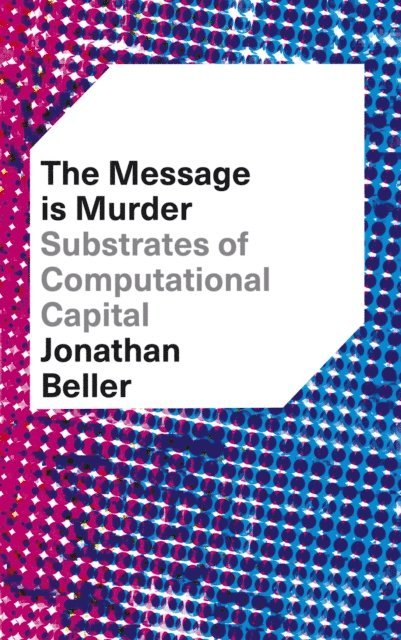
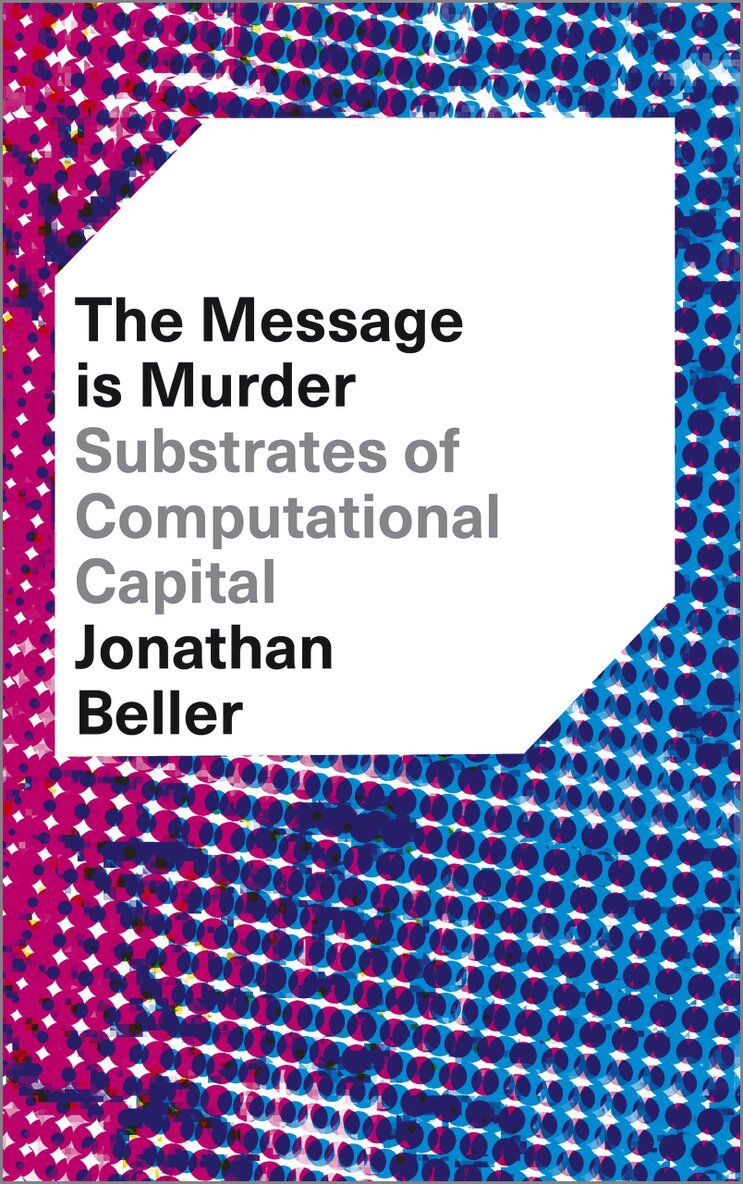
Written as a wake-up call to the field of media studies, The Message is Murder analyses the violence bound up in the everyday functions of digital media. At its core is the concept of 'computational capital' - the idea that capitalism itself is a computer, turning qualities into quantities, and that the rise of digital culture and technologies under capitalism should be seen as an extension of capitalism's bloody logic.Engaging with Borges, Turing, Claude Shannon, Hitchcock and Marx, this book tracks computational capital to reveal the lineages of capitalised power as it has restructured representation, consciousness and survival in the twentieth and twenty-first centuries. It argues that the global intensification of inequality relies on the discursive, informatic and screen-mediated production of social difference.Ultimately The Message is Murder makes the case for recognising media communications across all platforms - books, films, videos, photographs and even language itself - as technologies of political economy, entangled with the social contexts of a capitalism that is inherently racial, gendered and genocidal.
872 kr
Skickas inom 7-10 vardagar
Written as a wake-up call to the field of media studies, The Message is Murder analyses the violence bound up in the everyday functions of digital media. At its core is the concept of 'computational capital' - the idea that capitalism itself is a computer, turning qualities into quantities, and that the rise of digital culture and technologies under capitalism should be seen as an extension of capitalism's bloody logic.Engaging with Borges, Turing, Claude Shannon, Hitchcock and Marx, this book tracks computational capital to reveal the lineages of capitalised power as it has restructured representation, consciousness and survival in the twentieth and twenty-first centuries. It argues that the global intensification of inequality relies on the discursive, informatic and screen-mediated production of social difference.Ultimately The Message is Murder makes the case for recognising media communications across all platforms - books, films, videos, photographs and even language itself - as technologies of political economy, entangled with the social contexts of a capitalism that is inherently racial, gendered and genocidal.
1 143 kr
Skickas inom 7-10 vardagar
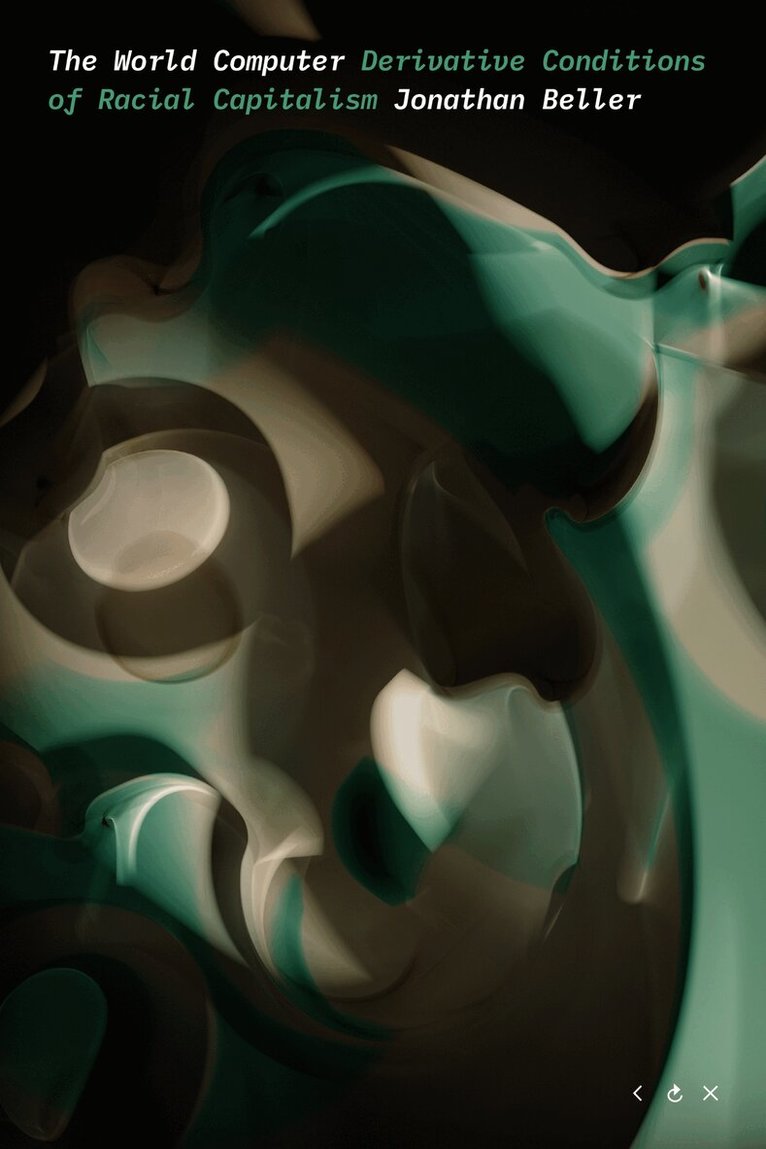
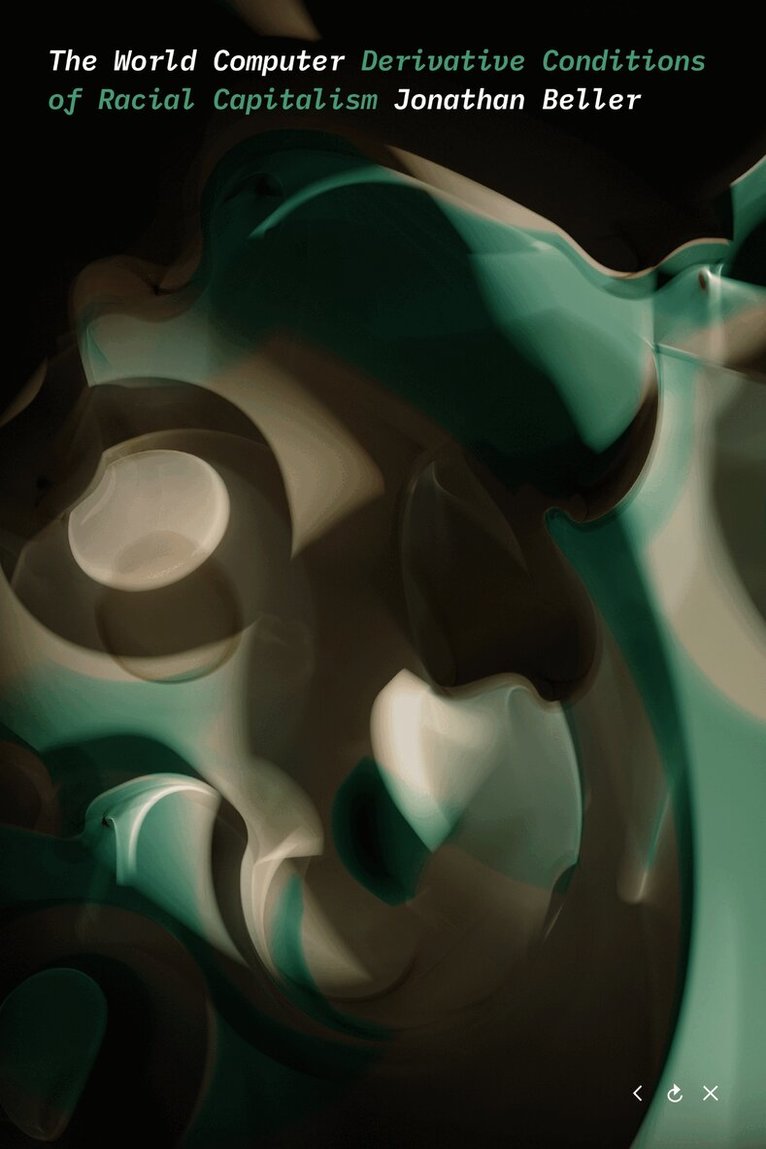
In The World Computer Jonathan Beller forcefully demonstrates that the history of commodification generates information itself. Out of the omnipresent calculus imposed by commodification, information emerges historically as a new money form. Investigating its subsequent financialization of daily life and colonization of semiotics, Beller situates the development of myriad systems for quantifying the value of people, objects, and affects as endemic to racial capitalism and computation. Built on oppression and genocide, capital and its technical result as computation manifest as racial formations, as do the machines and software of social mediation that feed racial capitalism and run on social difference. Algorithms, derived from for-profit management strategies, conscript all forms of expression-language, image, music, communication-into the calculus of capital such that even protest may turn a profit. Computational media function for the purpose of extraction rather than ameliorating global crises, and financialize every expressive act, converting each utterance into a wager. Repairing this ecology of exploitation, Beller contends, requires decolonizing information and money, and the scripting of futures wagered by the cultural legacies and claims of those in struggle.
311 kr
Skickas inom 7-10 vardagar
In The World Computer Jonathan Beller forcefully demonstrates that the history of commodification generates information itself. Out of the omnipresent calculus imposed by commodification, information emerges historically as a new money form. Investigating its subsequent financialization of daily life and colonization of semiotics, Beller situates the development of myriad systems for quantifying the value of people, objects, and affects as endemic to racial capitalism and computation. Built on oppression and genocide, capital and its technical result as computation manifest as racial formations, as do the machines and software of social mediation that feed racial capitalism and run on social difference. Algorithms, derived from for-profit management strategies, conscript all forms of expression-language, image, music, communication-into the calculus of capital such that even protest may turn a profit. Computational media function for the purpose of extraction rather than ameliorating global crises, and financialize every expressive act, converting each utterance into a wager. Repairing this ecology of exploitation, Beller contends, requires decolonizing information and money, and the scripting of futures wagered by the cultural legacies and claims of those in struggle.
541 kr
Skickas inom 3-6 vardagar
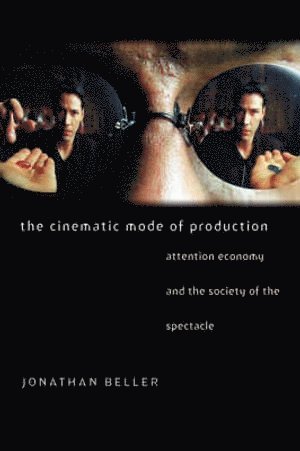
"Cinema brings the industrial revolution to the eye," writes Jonathan Beller, "and engages spectators in increasingly dematerialized processes of social production." In his groundbreaking critical study, cinema is the paradigmatic example of how the act of looking has been construed by capital as "productive labor." Through an examination of cinema over the course of the twentieth century, Beller establishes on both theoretical and historical grounds the process of the emergent capitalization of perception. This process, he says, underpins the current global economy.By exploring a set of films made since the late 1920s, Beller argues that, through cinema, capital first posits and then presupposes looking as a value-productive activity. He argues that cinema, as the first crystallization of a new order of media, is itself an abstraction of assembly-line processes, and that the contemporary image is a politico-economic interface between the body and capitalized social machinery. Where factory workers first performed sequenced physical operations on moving objects in order to produce a commodity, in the cinema, spectators perform sequenced visual operations on moving montage fragments to produce an image.Beller develops his argument by highlighting various innovations and film texts of the past century. These innovations include concepts and practices from the revolutionary Soviet cinema, behaviorism, Taylorism, psychoanalysis, and contemporary Hollywood film. He thus develops an analysis of what amounts to the global industrialization of perception that today informs not only the specific social functions of new media, but also sustains a violent and hierarchical global society.