Jonathan S. Gagliardi - Böcker
Visar alla böcker från författaren Jonathan S. Gagliardi. Handla med fri frakt och snabb leverans.
5 produkter
5 produkter
302 kr
Skickas inom 7-10 vardagar
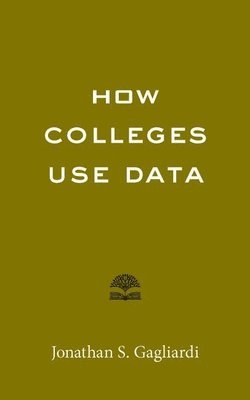
What does a culture of evidence really look like in higher education?The use of big data and the rapid acceleration of storage and analytics tools have led to a revolution of data use in higher education. Institutions have moved from relying largely on historical trends and descriptive data to the more widespread adoption of predictive and prescriptive analytics. Despite this rapid evolution of data technology and analytics tools, universities and colleges still face a number of obstacles in their data use. In How Colleges Use Data, Jonathan S. Gagliardi presents college and university leaders with an important resource to help cultivate, implement, and sustain a culture of evidence through the ethical and responsible use and adoption of data and analytics. Gagliardi provides a broad context for data use among colleges, including key concepts and use cases related to data and analytics. He also addresses the different dimensions of data use and highlights the promise and perils of the widespread adoption of data and analytics, in addition to important elements of implementing and scaling a culture of evidence.Demystifying data and analytics, the book helps faculty and administrators understand important topics, including:• How to define institutional aspirations using data• Equity and student success• Strategic finance and resource optimization• Academic quality and integrity• Data governance and utility• Implicit and explicit bias in data• Implementation and planning• How data will be used in the futureHow Colleges Use Data helps college and university leaders understand what a culture of evidence in higher education truly looks like.
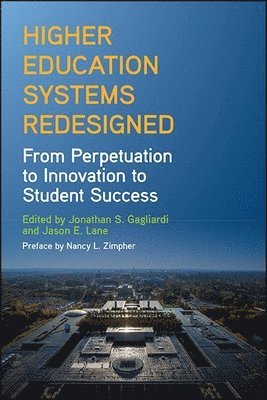
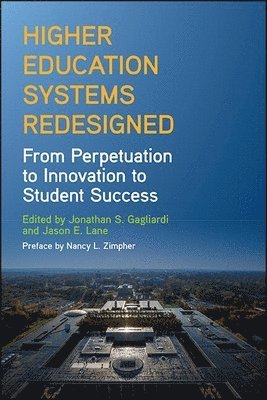
Higher Education Systems Redesigned
From Perpetuation to Innovation to Student Success
Inbunden, Engelska, 2022
1 415 kr
Skickas inom 3-6 vardagar
Brings together scholars and higher education system leaders to highlight concrete examples of system change and realignment to advance student success.Long an afterthought of the American higher education ecosystem, multi-campus systems have become more important than ever. In recent years, leading higher education systems have engaged in transforming the way they work, scaling best practices, leveraging data and analytics, and creating platforms to optimize and personalize these systems for increasingly diverse students. In Higher Education Systems Redesigned, leaders of these efforts share their insights into "systemness" and how to facilitate sustainable change in a system setting while navigating and leveraging tensions between campus and system priorities. Highlighting examples of successful realignment of these priorities with a focus on contextualized design and implementation, the book charts a shift in the aim of systems. Rather than perpetuating existing norms as they have traditionally done, systems are taking measures to spark innovation across campuses and use evidence-based practices to foster student access and completion rates, better serve communities, and drive social mobility and economic growth. Each chapter concludes with a list of takeaways to guide other system leaders and administrators. One of the few recent examinations of higher education systems, Higher Education Systems Redesigned offers a theoretical and practical framework for how systems can continually evolve.
Higher Education Systems Redesigned
From Perpetuation to Innovation to Student Success
Häftad, Engelska, 2022
343 kr
Skickas
Brings together scholars and higher education system leaders to highlight concrete examples of system change and realignment to advance student success.Long an afterthought of the American higher education ecosystem, multi-campus systems have become more important than ever. In recent years, leading higher education systems have engaged in transforming the way they work, scaling best practices, leveraging data and analytics, and creating platforms to optimize and personalize these systems for increasingly diverse students. In Higher Education Systems Redesigned, leaders of these efforts share their insights into "systemness" and how to facilitate sustainable change in a system setting while navigating and leveraging tensions between campus and system priorities. Highlighting examples of successful realignment of these priorities with a focus on contextualized design and implementation, the book charts a shift in the aim of systems. Rather than perpetuating existing norms as they have traditionally done, systems are taking measures to spark innovation across campuses and use evidence-based practices to foster student access and completion rates, better serve communities, and drive social mobility and economic growth. Each chapter concludes with a list of takeaways to guide other system leaders and administrators. One of the few recent examinations of higher education systems, Higher Education Systems Redesigned offers a theoretical and practical framework for how systems can continually evolve.
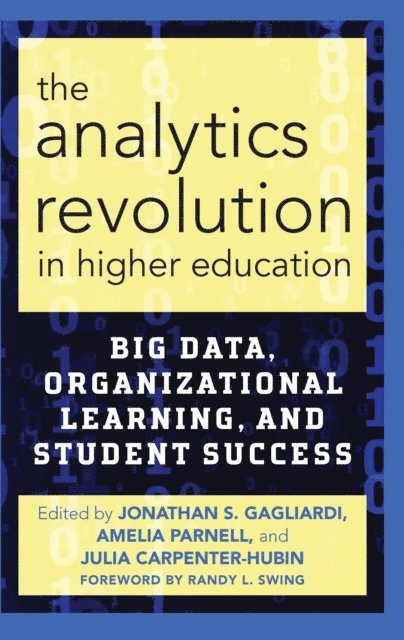
Analytics Revolution in Higher Education
Big Data, Organizational Learning, and Student Success
Inbunden, Engelska, 2018
2 029 kr
Skickas inom 10-15 vardagar
Co-published with and In this era of “Big Data,” institutions of higher education are challenged to make the most of the information they have to improve student learning outcomes, close equity gaps, keep costs down, and address the economic needs of the communities they serve at the local, regional, and national levels. This book helps readers understand and respond to this “analytics revolution,” examining the evolving dynamics of the institutional research (IR) function, and the many audiences that institutional researchers need to serve.Internally, there is a growing need among senior leaders, administrators, faculty, advisors, and staff for decision analytics that help craft better resource strategies and bring greater efficiencies and return-on-investment for students and families. Externally, state legislators, the federal government, and philanthropies demand more forecasting and more evidence than ever before. These demands require new and creative responses, as they are added to previous demands, rather than replacing them, nor do they come with additional resources to produce the analysis to make data into actionable improvements. Thus the IR function must become that of teacher, ensuring that data and analyses are accurate, timely, accessible, and compelling, whether produced by an IR office or some other source. Despite formidable challenges, IR functions have begun to leverage big data and unlock the power of predictive tools and techniques, contributing to improved student outcomes.
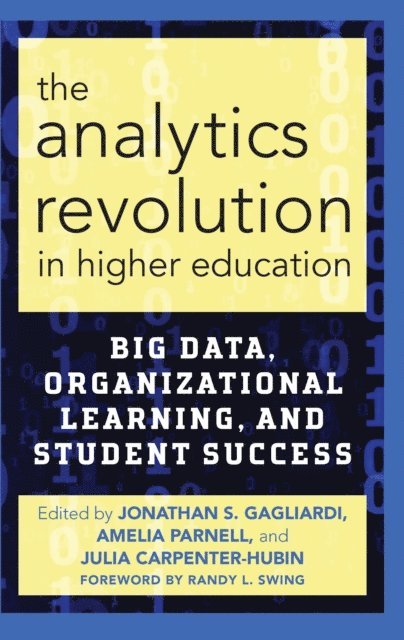
Analytics Revolution in Higher Education
Big Data, Organizational Learning, and Student Success
Häftad, Engelska, 2018
481 kr
Skickas inom 10-15 vardagar
Co-published with and In this era of “Big Data,” institutions of higher education are challenged to make the most of the information they have to improve student learning outcomes, close equity gaps, keep costs down, and address the economic needs of the communities they serve at the local, regional, and national levels. This book helps readers understand and respond to this “analytics revolution,” examining the evolving dynamics of the institutional research (IR) function, and the many audiences that institutional researchers need to serve.Internally, there is a growing need among senior leaders, administrators, faculty, advisors, and staff for decision analytics that help craft better resource strategies and bring greater efficiencies and return-on-investment for students and families. Externally, state legislators, the federal government, and philanthropies demand more forecasting and more evidence than ever before. These demands require new and creative responses, as they are added to previous demands, rather than replacing them, nor do they come with additional resources to produce the analysis to make data into actionable improvements. Thus the IR function must become that of teacher, ensuring that data and analyses are accurate, timely, accessible, and compelling, whether produced by an IR office or some other source. Despite formidable challenges, IR functions have begun to leverage big data and unlock the power of predictive tools and techniques, contributing to improved student outcomes.