Jonathan Strauss - Böcker
Visar alla böcker från författaren Jonathan Strauss. Handla med fri frakt och snabb leverans.
7 produkter
7 produkter
1 174 kr
Skickas inom 10-15 vardagar
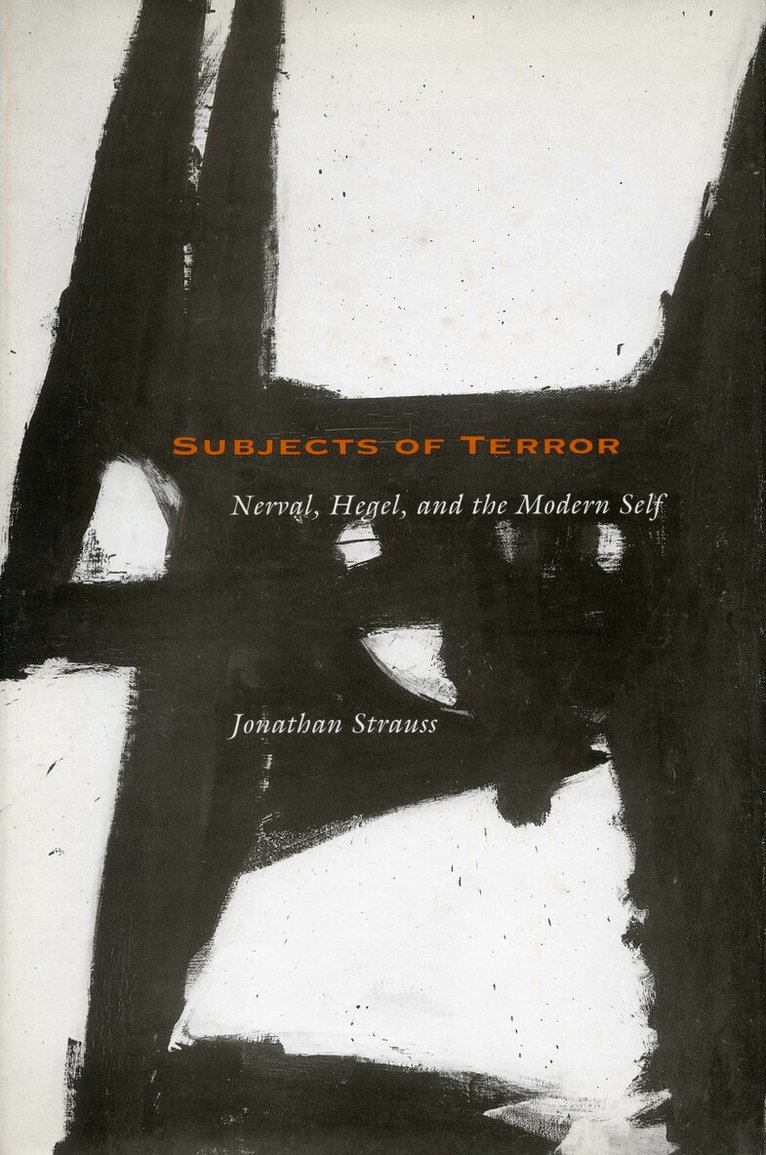
Subjects of Terror uses a reading of the French Romantic poet Gérard de Nerval to elucidate and critique a death-based ideology of subjectivity that has remained in force from Kant to Lacan. This model, despite variations, is distinguished by three principal characteristics: that the subject is the self-sameness of individual experience, that as such it functions like language (or, more specifically, like writing), and that this self-sameness is the annihilation of all individual experiences.Theorized by Hegel, Heidegger, Kojève, and Lacan, this abstract and ultimately impersonal notion of the self was not merely theoretical, however. It was, for example, long instantiated and enforced by the guillotine. Even in its more intimate and less spectacular forms, it provoked strong affective responses, as is evidenced by writers of the Romantic period, from Hugo to Mallarmé, Zola, and Nietzsche. As part of this affective reaction, Nerval's writings exemplify not only how this negative self-construction determines self-understanding but also how it determines self-experience, or, in other words, the way it feels to be a self in this cultural and historical context. That feeling is, fundamentally, terror, and the context is still in many ways our own.The book demonstrates that Nerval's works constitute an aesthetic resistance to that ideology of terror and as such helped open the way for the ethical models of subjectivity that will appear in Kristeva, Aulagnier, and Levinas. Although for two centuries, social, theoretical, and aesthetic forces have coerced individuals into experiencing the world through the morbid filter of their own absolute destruction, the author argues through Nerval for the possibility of an alternate, open-ended model of experience based on the libidinization of language itself.
1 127 kr
Skickas inom 10-15 vardagar
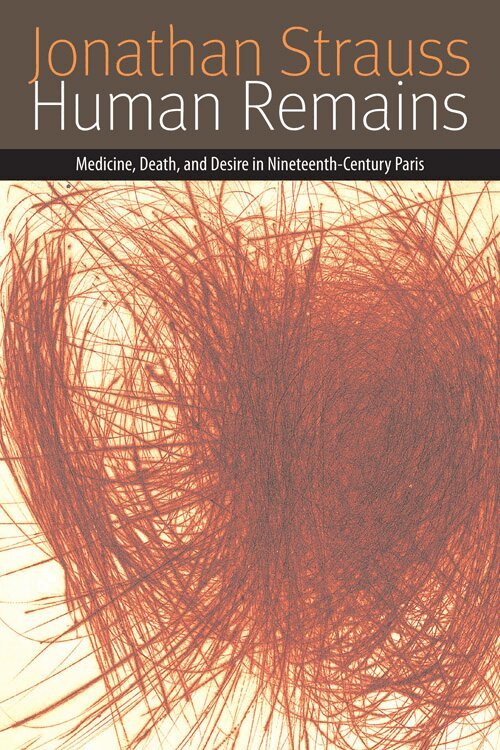
The living and the dead cohabited Paris until the late eighteenth century, when, in the name of public health, measures were taken to drive the latter from the city. Cemeteries were removed from urban space, and corpses started to be viewed as terrifyingly noxious substances.The dead had fallen victim to a sustained reflection on the notions of life and death that emerged from the two new medical fields of biology and hygiene. In large part, the Paris of the nineteenth century—the Paris of modernity—arose, both theoretically and physically, out of this concern over the relations between the animate and the inanimate.As the dead became a source of pervasive and intense anxiousness, they also became an object of fascination that at once exceeded and guided the medical imagination attempting to control them. Human Remains examines that exuberant anxiety to discover the irrational, indeed erotic, forces motivating the medicalization of death.Working across a broad range of disciplines, including history, literature, the visual arts, philosophy, and psychoanalysis, the book seeks to understand the meaning of the dead and their role in creating one of the most important cities of the contemporary world.
420 kr
Skickas inom 10-15 vardagar
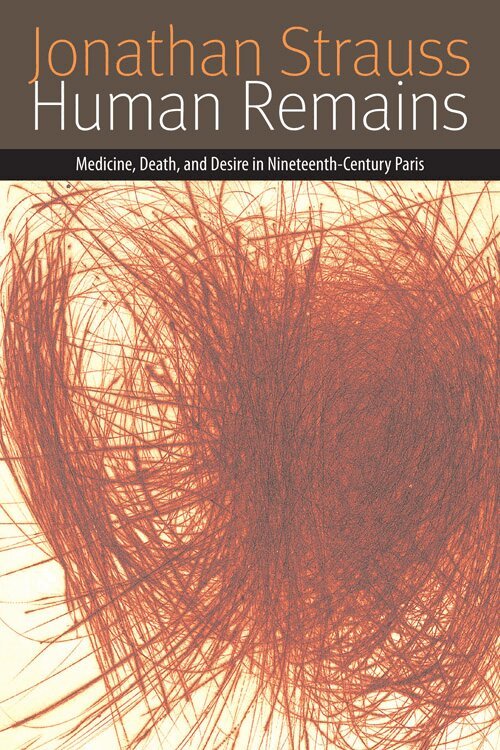
The living and the dead cohabited Paris until the late eighteenth century, when, in the name of public health, measures were taken to drive the latter from the city. Cemeteries were removed from urban space, and corpses started to be viewed as terrifyingly noxious substances.The dead had fallen victim to a sustained reflection on the notions of life and death that emerged from the two new medical fields of biology and hygiene. In large part, the Paris of the nineteenth century—the Paris of modernity—arose, both theoretically and physically, out of this concern over the relations between the animate and the inanimate.As the dead became a source of pervasive and intense anxiousness, they also became an object of fascination that at once exceeded and guided the medical imagination attempting to control them. Human Remains examines that exuberant anxiety to discover the irrational, indeed erotic, forces motivating the medicalization of death.Working across a broad range of disciplines, including history, literature, the visual arts, philosophy, and psychoanalysis, the book seeks to understand the meaning of the dead and their role in creating one of the most important cities of the contemporary world.
1 174 kr
Skickas inom 10-15 vardagar
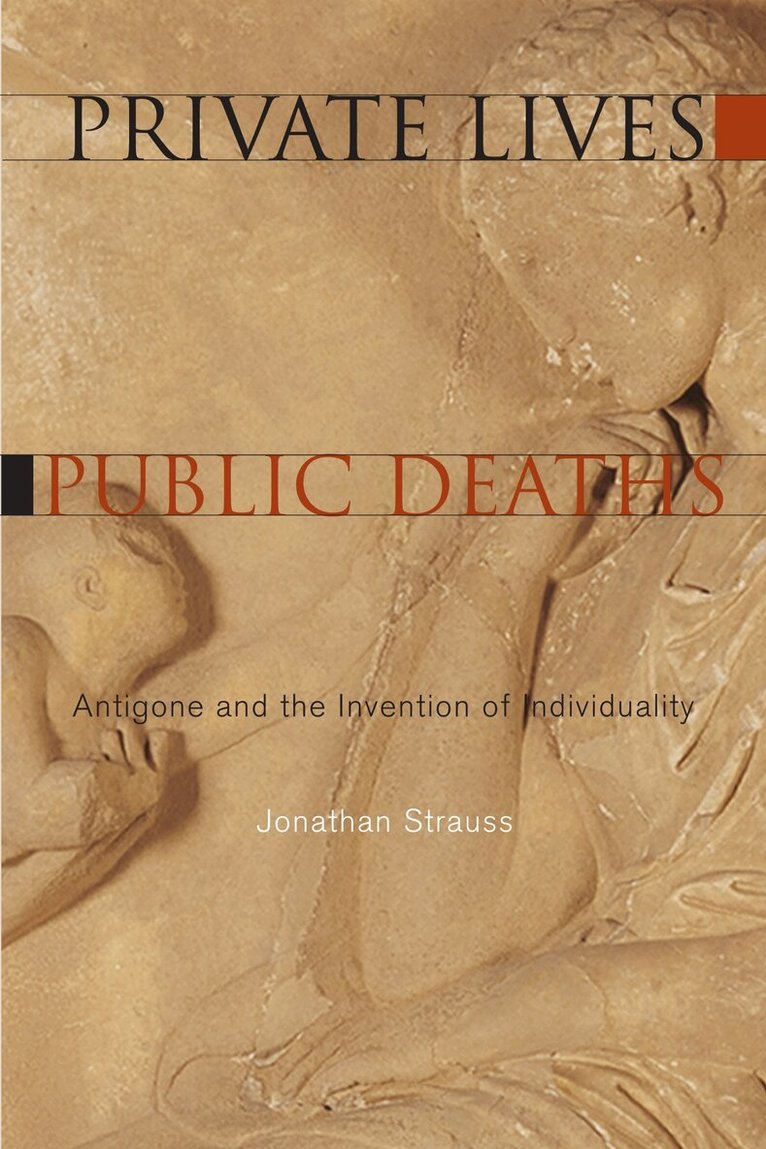
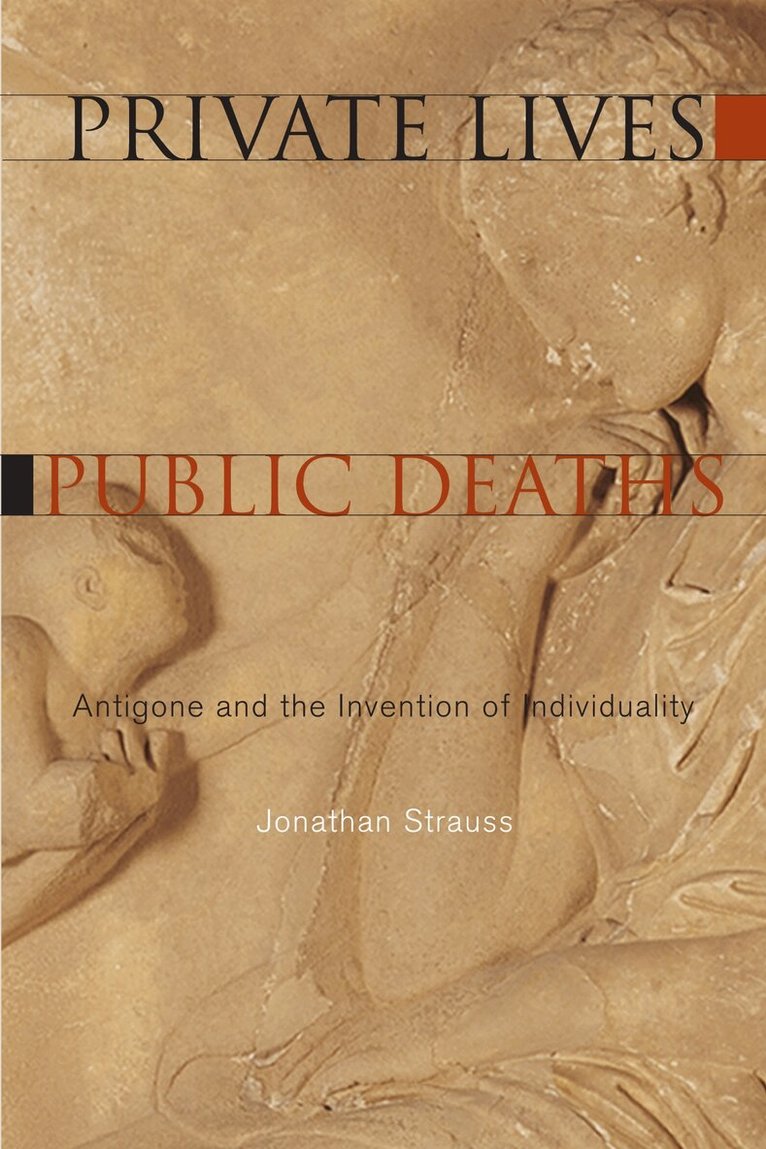
In Private Lives, Public Deaths, Jonathan Strauss shows how Sophocles' tragedy Antigone crystallized the political, intellectual, and aesthetic forces of an entire historical moment—fifth century Athens—into one idea: the value of a single living person. That idea existed, however, only as a powerful but unconscious desire. Drawing on classical studies, Hegel, and contemporary philosophical interpretations of this pivotal drama, Strauss argues that Antigone's tragedy, and perhaps all classical tragedy, represents a failure to satisfy this longing.To the extent that the value of a living individual remains an open question, what Sophocles attempted to imagine still escapes our understanding. Antigone is, in this sense, a text not from the past but from our future.
341 kr
Skickas inom 7-10 vardagar
In Private Lives, Public Deaths, Jonathan Strauss shows how Sophocles' tragedy Antigone crystallized the political, intellectual, and aesthetic forces of an entire historical moment—fifth century Athens—into one idea: the value of a single living person. That idea existed, however, only as a powerful but unconscious desire. Drawing on classical studies, Hegel, and contemporary philosophical interpretations of this pivotal drama, Strauss argues that Antigone's tragedy, and perhaps all classical tragedy, represents a failure to satisfy this longing.To the extent that the value of a living individual remains an open question, what Sophocles attempted to imagine still escapes our understanding. Antigone is, in this sense, a text not from the past but from our future.
1 096 kr
Skickas inom 10-15 vardagar
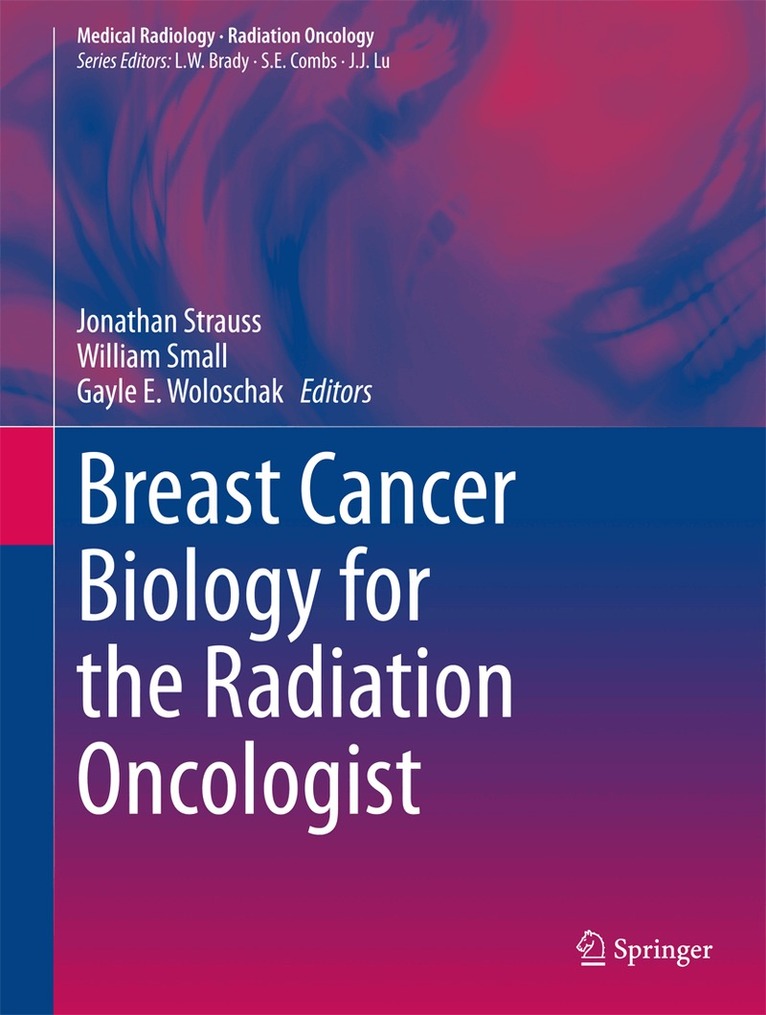
This is the first textbook of its kind devoted to describing the biological complexities of breast cancer in a way that is relevant to the radiation oncologist. Radiation Oncology has long treated breast cancer as a single biological entity, with all treatment decisions being based on clinical and pathologic risk factors. We are now beginning to understand that biological subtypes of breast cancer may have different risks of recurrence as well as different intrinsic sensitivity to radiotherapy. Multi-gene arrays that have for years been used to predict the risk of distant recurrence and the value of systemic chemotherapy may also have utility in predicting the risk of local recurrence. Additionally, the targeted agents used to treat breast cancer may interact with radiotherapy in ways that can be beneficial or undesirable. All of these emerging issues are extensively discussed in this book, and practical evidence-based treatment recommendations are presented whenever possible.
769 kr
Skickas inom 10-15 vardagar
This is the first textbook of its kind devoted to describing the biological complexities of breast cancer in a way that is relevant to the radiation oncologist. Radiation Oncology has long treated breast cancer as a single biological entity, with all treatment decisions being based on clinical and pathologic risk factors. We are now beginning to understand that biological subtypes of breast cancer may have different risks of recurrence as well as different intrinsic sensitivity to radiotherapy. Multi-gene arrays that have for years been used to predict the risk of distant recurrence and the value of systemic chemotherapy may also have utility in predicting the risk of local recurrence. Additionally, the targeted agents used to treat breast cancer may interact with radiotherapy in ways that can be beneficial or undesirable. All of these emerging issues are extensively discussed in this book, and practical evidence-based treatment recommendations are presented whenever possible.