Joop C. van Lenteren – författare
Visar alla böcker från författaren Joop C. van Lenteren. Handla med fri frakt och snabb leverans.
4 produkter
4 produkter
E-bok
PDF, Engelska, 20063 809 kr
Läs direkt efter köp
The International Centre for Advanced Mediterranean Agronomic Studies (CIHEAM), established in 1962, is an intergovernmental organization of 13 countries: Albania, Algeria, Egypt, France, Greece, Italy, Lebanon, Malta, Morocco, Portugal, Spain, Tunisia and Turkey. Four institutes (Bari, Italy; Chania, Greece; Montpellier, France; and Zaragoza, Spain) provide postgraduate education at the Master of Science level. CIHEAM promotes research networks on Mediterranean agricultural priorities, supports the organization of specialized education in member countries, holds seminars and workshops bringing together technologists and scientists involved in Mediterranean agriculture and regularly produces diverse publications including the series Options Méditerranéennes. Through these activities, CIHEAM promotes North/South dialogue and international co-operation for agricultural development in the Mediterranean region. Over the past decade, the Mediterranean Agronomic Institute of Zaragoza has developed a number of training and research-supporting activities in the field of agroecology and sustainability of agricultural production systems. Some of these activities have been concerned with the rational use of pesticides and more particularly with the implementation of integrated control systems in order to gain in efficacy and decrease both the environmental impact and the negative repercussions for the commercialization of agricultural products.
Inbunden, Engelska, 2000
3 831 kr
Skickas inom 5-8 vardagar
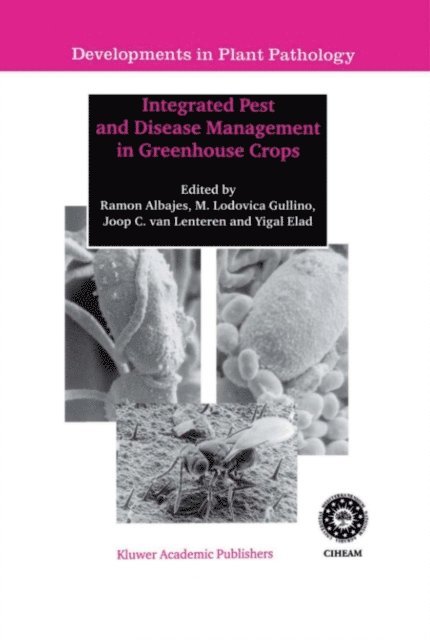
This text is mainly directed towards postgraduate students and professionals in the field of research and implementation of integrated pest and disease management programmes in greenhouse crops. After presenting the major pests and diseases that affect greenhouse vegetable and ornamental crops, several chapters deal with the tools for designing and implementing IP & DM in protected cultivation with particular emphasis on biological control. Implementation and the future of IP & DM in the most important protected crops world-wide are presented in the concluding chapters. Protected cultivation is practised in many hundreds of thousands of hectares throughout the world under quite different social, economic and technical conditions. Contributions to the book reflect such a diversity of situations, from the high-technology glasshouses of northern Europe and America to the simple plastic tunnels of the Mediterranean area and temperate eastern Asia. Furthermore, the editors have entrusted each chapter to authors whose activity and perspectives could be complementary, pathologists and entomologists, from private and public sectors, and from differentiated geographical regions.
Inbunden, Engelska, 2003
2 100 kr
Skickas inom 5-8 vardagar
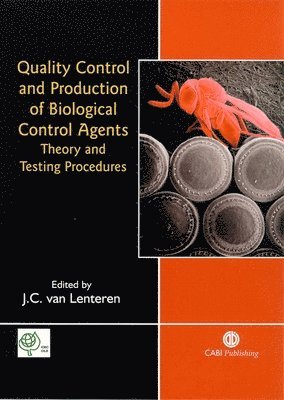
The use of biological control agents has been increasing worldwide and there are now many companies mass-producing such organisms, particularly for the control of insect pests. However, there is a great need for quality control in the production and use of these natural enemies, which include insect parasitoids and predators, fungi and viruses. This book has been written by leading scientists from Europe and North America to provide both background theory and practical guidance on this subject.
Inbunden, Engelska, 2019
2 232 kr
Skickas inom 5-8 vardagar
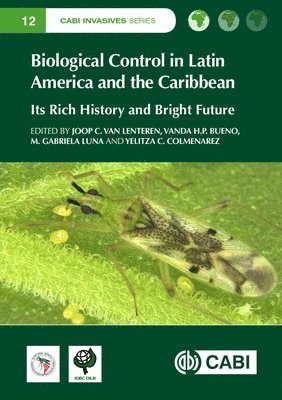
The book summarizes the history of biological control in Latin America and the Caribbean. Few publications provide historical detail and the records are, therefore, fragmented until now. By bringing information together in this book, we offer a more complete picture of important developments in biological control on this continent. There are a wealth of text, tables and references about the history of such projects, and which were successful and which failed. This will help plan future biocontrol projects. An overview is provided of the current situation in biological control for many Latin American and Caribbean countries, revealing an astonishing level of practical biological control applied in the region, making it the largest area under biological control worldwide. The final part describes new developments and speculates about the future of biological control in Latin America and the Caribbean.