Jorg Rothe – författare
1 101 kr
Läs direkt efter köp
1 737 kr
Läs direkt efter köp
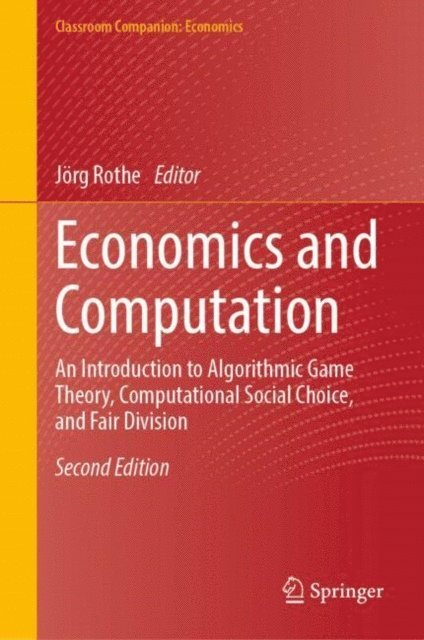
This textbook connects three vibrant areas at the interface between economics and computer science: algorithmic game theory, computational social choice, and fair division. It thus offers an interdisciplinary treatment of collective decision making from an economic and computational perspective. Part I introduces to algorithmic game theory, focusing on both noncooperative and cooperative game theory. Part II introduces to computational social choice, focusing on both preference aggregation (voting) and judgment aggregation. Part III introduces to fair division, focusing on the division of both a single divisible resource ("cake-cutting") and multiple indivisible and unshareable resources ("multiagent resource allocation"). In all these parts, much weight is given to the algorithmic and complexity-theoretic aspects of problems arising in these areas, and the interconnections between the three parts are of central interest.
687 kr
Läs direkt efter köp
708 kr
Läs direkt efter köp
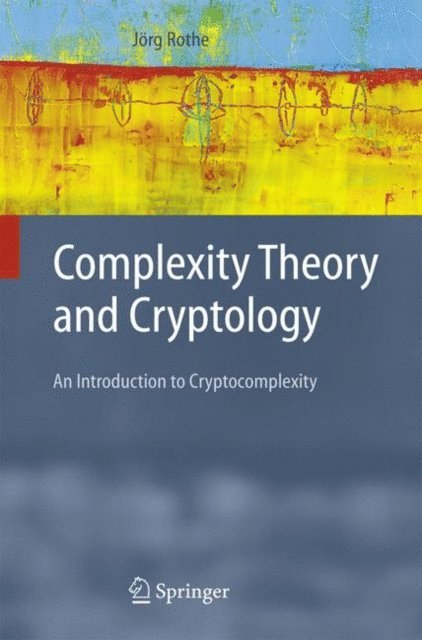
Modern cryptology increasingly employs mathematically rigorous concepts and methods from complexity theory. Conversely, current research topics in complexity theory are often motivated by questions and problems from cryptology. This book takes account of this situation, and therefore its subject is what may be dubbed "cryptocomplexity'''', a kind of symbiosis of these two areas.
This book is written for undergraduate and graduate students of computer science, mathematics, and engineering, and can be used for courses on complexity theory and cryptology, preferably by stressing their interrelation. Moreover, it may serve as a valuable source for researchers, teachers, and practitioners working in these fields. Starting from scratch, it works its way to the frontiers of current research in these fields and provides a detailed overview of their history and their current research topics and challenges.
380 kr
Läs direkt efter köp
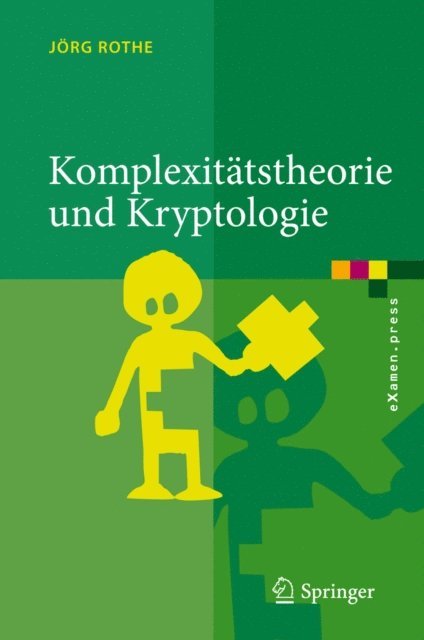
Während die moderne Kryptologie mathematisch strenge Konzepte und Methoden aus der Komplexitätstheorie verwendet, ist die Forschung in der Komplexitätstheorie wiederum oft durch Fragen und Probleme motiviert, die aus der Kryptologie stammen. Das vorliegende Buch hebt die enge Verflechtung dieser verwandten (doch oft separat behandelten) Gebiete hervor, deren Symbiose man als „Kryptokomplexität" bezeichnen könnte.
Der Autor führt in verständlicher Weise in dieses faszinierende Gebiet der Kryptokomplexität ein - von den Grundlagen bis hin zur aktuellen Forschung. Neben der Bereitstellung der nötigen mathematischen Begriffe enthält dieses Buch zahlreiche Abbildungen, Übungsaufgaben, Beispiele, ein ausführliches Sachwortverzeichnis und eine umfassende Bibliographie. Es präsentiert einige zentrale Themen und Herausforderungen der derzeitigen Forschung und ist sehr gut für Studierende der Informatik, Mathematik oder Ingenieurswissenschaften ab den höheren Semestern eines Bachelorstudiums geeignet.
242 kr
Läs direkt efter köp
1 138 kr
Läs direkt efter köp
This textbook connects three vibrant areas at the interface between economics and computer science: algorithmic game theory, computational social choice, and fair division. It thus offers an interdisciplinary treatment of collective decision making from an economic and computational perspective. Part I introduces to algorithmic game theory, focusing on both noncooperative and cooperative game theory. Part II introduces to computational social choice, focusing on both preference aggregation (voting) and judgment aggregation. Part III introduces to fair division, focusing on the division of both a single divisible resource ("cake-cutting") and multiple indivisible and unshareable resources ("multiagent resource allocation"). In all these parts, much weight is given to the algorithmic and complexity-theoretic aspects of problems arising in these areas, and the interconnections between the three parts are of central interest.
336 kr
Läs direkt efter köp
Sie wollen im Spiel den höchsten Gewinn machen? Das wollen die anderen Spieler auch! Können Sie und die anderen ihre individuellen Strategien so wählen, dass alle im Gleichgewicht sind und keiner von seiner Strategie abweichen möchte? Wie schwer ist es, solche Gleichgewichtsstrategien zu finden?
Sie wollen Ihren Lieblingskandidaten die Wahl gewinnen sehen? Das wollen die anderen Wähler auch! Können Sie Ihre individuelle Präferenz strategisch setzen, um die Wahl zu manipulieren? Wie schwer ist das?
Sie wollen ein besonders leckeres Stück vom Kuchen haben? Das wollen die anderen Kuchenteiler auch! Die individuellen Geschmäcker sind jedoch verschieden. Wie kann man den Kuchen aufteilen, ohne dass Neid entsteht?
Dieses Buch führt in das junge, interdisziplinäre Gebiet Computational Social Choice ein, das an der Schnittstelle zwischen der Informatik und den Politik- und Wirtschaftswissenschaften liegt. Ausgehend von der klassischen Spiel- und Social-Choice-Theorie werden die algorithmischen Eigenschaften von Spielen, Wahlen und Aufteilungsverfahren in leicht verständlicher und dennoch exakter Form präsentiert.