Jorge Silva-Bórquez – författare
Visar alla böcker från författaren Jorge Silva-Bórquez. Handla med fri frakt och snabb leverans.
2 produkter
2 produkter
Inbunden, Engelska, 2018
565 kr
Skickas inom 10-15 vardagar
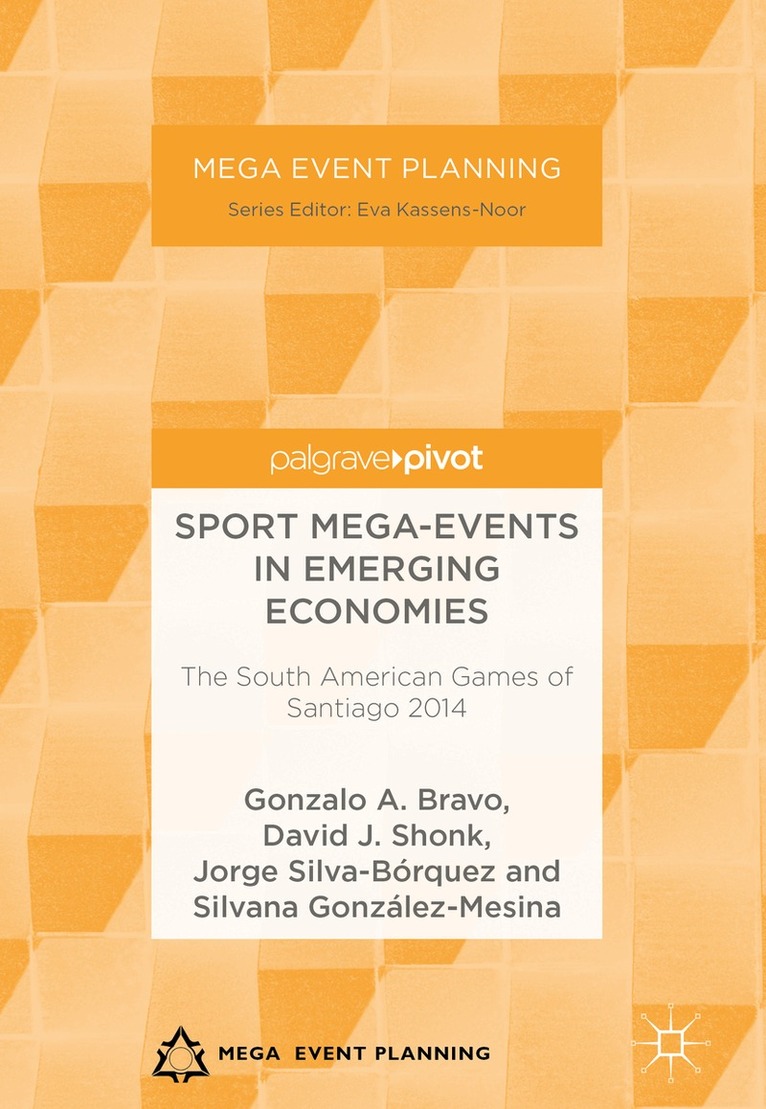
Chile and the South American Games of Santiago 2014 offers an interesting case to examine an event of sizeable magnitude in a country with little history of hosting sport mega-events (SMEs). This case study will expand the readers understanding of third-order SMEs like the South American Games and highlight the circumstances under which they occur. It also contributes to advance and challenge our knowledge as to what extent previous findings made on impact, legacies, justifications, and challenges identified on larger scale SMEs hosted in the developed world, inform the process and outcomes of second or third-order SMEs organized in less developed countries. This monograph is suitable for scholars and practitioners who want to expand their knowledge on sport event planning outside the rim of the global north. It is an essential read for scholars and graduate students in policy studies, sociology, international business, sport and event management, and tourism and hospitality. Likewise,it is an important resource for event planners, government officials, event rights holders, and sport destination marketers involved with the planning of sport mega-events across the world.
E-bok
PDF, Engelska, 2018734 kr
Läs direkt efter köp
Chile and the South American Games of Santiago 2014 offers an interesting case to examine an event of sizeable magnitude in a country with little history of hosting sport mega-events (SMEs). This case study will expand the readers understanding of third-order SMEs like the South American Games and highlight the circumstances under which they occur. It also contributes to advance and challenge our knowledge as to what extent previous findings made on impact, legacies, justifications, and challenges identified on larger scale SMEs hosted in the developed world, inform the process and outcomes of second or third-order SMEs organized in less developed countries. This monograph is suitable for scholars and practitioners who want to expand their knowledge on sport event planning outside the rim of the global north. It is an essential read for scholars and graduate students in policy studies, sociology, international business, sport and event management, and tourism and hospitality. Likewise,it is an important resource for event planners, government officials, event rights holders, and sport destination marketers involved with the planning of sport mega-events across the world.