Joris Escher – författare
Visar alla böcker från författaren . Handla med fri frakt och snabb leverans.
2 produkter
2 produkter
Inbunden, Engelska, 2025
520 kr
Skickas inom 10-15 vardagar
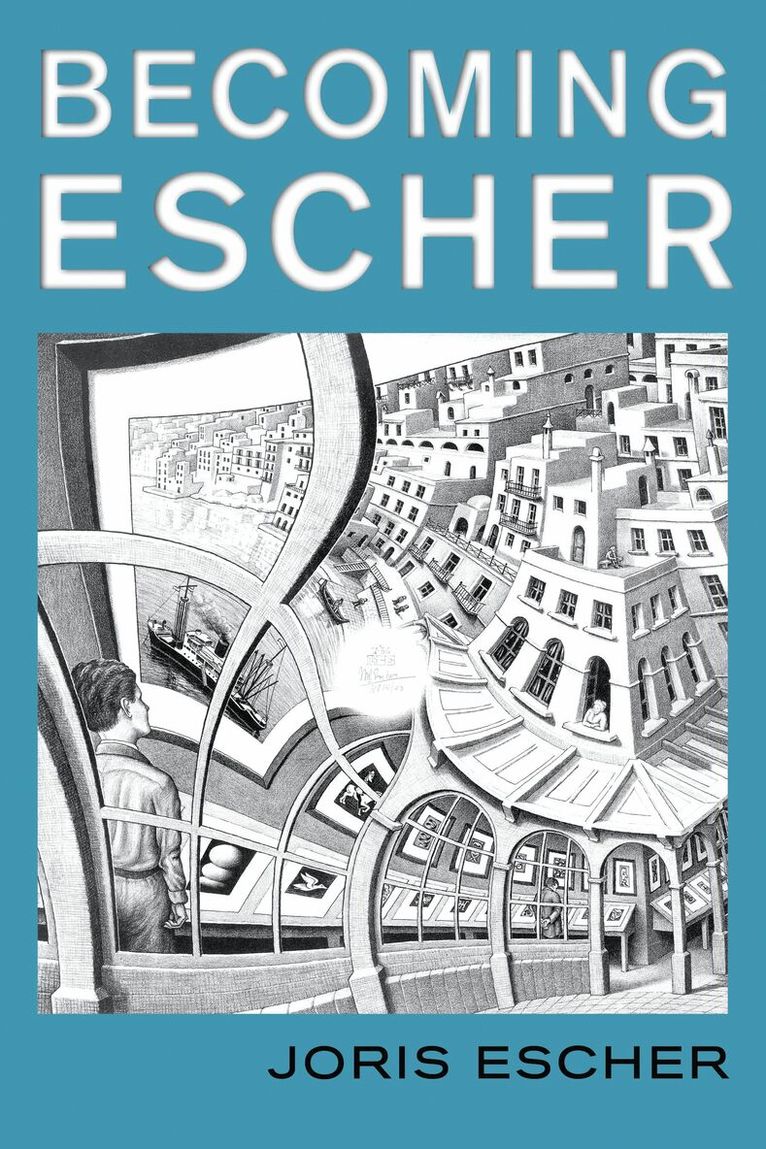
In a nineteenth century Chinese lacquer box, this book’s author Joris Escher found two drawings of his great-uncle, the world-famous graphic artist M.C. Escher. The sheets had not been looked at in more than 90 years. He believes that these early studies may be the missing link in the development of Escher as an artist and starts a voyage of discovery to the origins of the fascinations of his great-uncle. Who was his Uncle Mauk? How did he become the world-famous artist M.C. Escher? How did he, precisely he, begin walking down a path on which no one had preceded him and no one would ever follow?Joris Escher relates the artist’s life-metamorphosis through the eyes of his uncle in four successive parts: his youth (Becoming Mauk), his art education as a young adult (Becoming a Graphic Artist), his happiest years in Italy (Becoming an Atist) and finally, already in his late thirties, the transformation that leads to his spatial experiments (Becoming Escher). The author relates this journey from the known facts of primary sources (letters, diaries, family albums).
E-bok
Engelska, 2025563 kr
Läs direkt efter köp
In a nineteenth century Chinese lacquer box, this book’s author Joris Escher found two drawings of his great-uncle, the world-famous graphic artist M.C. Escher. The sheets had not been looked at in more than 90 years. He believes that these early studies may be the missing link in the development of Escher as an artist and starts a voyage of discovery to the origins of the fascinations of his great-uncle. Who was his Uncle Mauk? How did he become the world-famous artist M.C. Escher? How did he, precisely he, begin walking down a path on which no one had preceded him and no one would ever follow?Joris Escher relates the artist’s life-metamorphosis through the eyes of his uncle in four successive parts: his youth (Becoming Mauk), his art education as a young adult (Becoming a Graphic Artist), his happiest years in Italy (Becoming an Atist) and finally, already in his late thirties, the transformation that leads to his spatial experiments (Becoming Escher). The author relates this journey from the known facts of primary sources (letters, diaries, family albums).