José-Luis Barredo - Böcker
Visar alla böcker från författaren José-Luis Barredo. Handla med fri frakt och snabb leverans.
16 produkter
16 produkter
1 961 kr
Skickas inom 10-15 vardagar
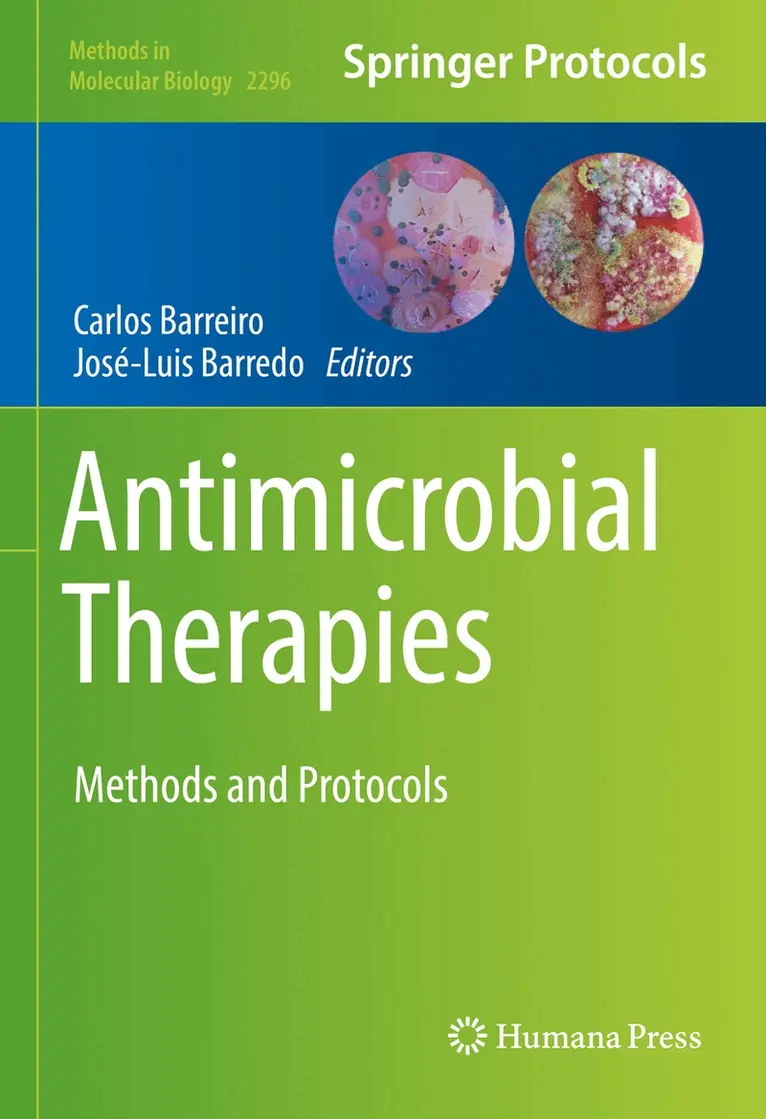
Antimicrobial resistance will become a global health threat since antimicrobial treatments continue at the forefront of the defense against microbial infections. To respond to the issue, this detailed book explores vital methodologies currently in use to advance our understanding of antibiotic issues and answer the worldwide demand for novel antibiotics therapies. Beginning with a review chapter that guides the reader through the worldwide demand for novel antibiotics therapies, the volume continues with sections covering new screening procedures and environmental sources, advances in analytical, microbiological, and biotechnological methodologies, antibiotic production and antibiotic resistances, as well as considerations of drug trials and clinical concerns regarding multi-resistant patients. Written for the highly successful Methods in Molecular Biology series, chapters include introductions to their respective topics, lists of the necessary materials and reagents, step-by-step, readily reproducible laboratory protocols, and tips on troubleshooting and avoiding known pitfalls. Authoritative and practical, Antimicrobial Therapies: Methods and Protocols provides a reference source for health, laboratory, and industrial professionals, as well as for graduate students in a number of bio-sanitary disciplines, including medicine, nursery, biotechnology, veterinary, microbiology, genetics, molecular biology, nutrition, farming, and more.Chapter “14” is available open access under a Creative Commons Attribution 4.0 International License via link.springer.com.
1 418 kr
Skickas inom 10-15 vardagar
Antimicrobial resistance will become a global health threat since antimicrobial treatments continue at the forefront of the defense against microbial infections. To respond to the issue, this detailed book explores vital methodologies currently in use to advance our understanding of antibiotic issues and answer the worldwide demand for novel antibiotics therapies. Beginning with a review chapter that guides the reader through the worldwide demand for novel antibiotics therapies, the volume continues with sections covering new screening procedures and environmental sources, advances in analytical, microbiological, and biotechnological methodologies, antibiotic production and antibiotic resistances, as well as considerations of drug trials and clinical concerns regarding multi-resistant patients. Written for the highly successful Methods in Molecular Biology series, chapters include introductions to their respective topics, lists of the necessary materials and reagents, step-by-step, readily reproducible laboratory protocols, and tips on troubleshooting and avoiding known pitfalls. Authoritative and practical, Antimicrobial Therapies: Methods and Protocols provides a reference source for health, laboratory, and industrial professionals, as well as for graduate students in a number of bio-sanitary disciplines, including medicine, nursery, biotechnology, veterinary, microbiology, genetics, molecular biology, nutrition, farming, and more.Chapter “14” is available open access under a Creative Commons Attribution 4.0 International License via link.springer.com.
2 325 kr
Skickas inom 10-15 vardagar
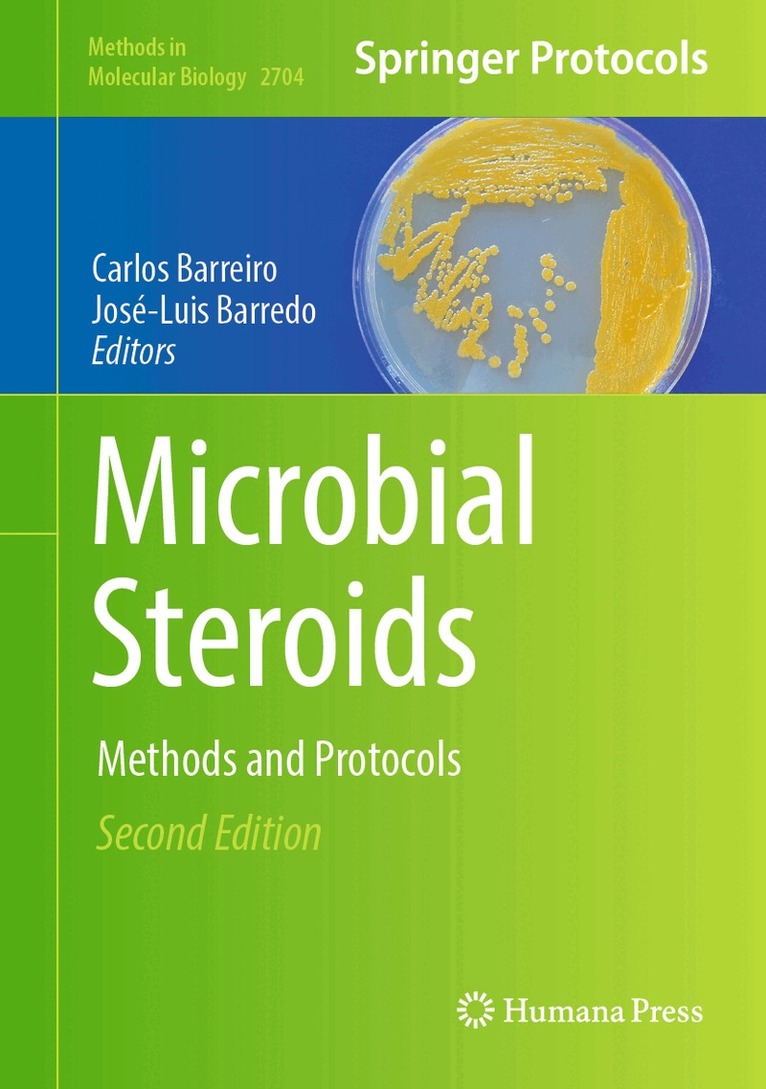
This detailed volume explores experimental laboratory procedures for a wide range of steroid bioconversions. After an overview on the current trends and perspectives, the book continues with sections covering microbial screening and synthetic biology applied to microorganisms able to catabolize sterols, methods on strain characterization, including omics and biochemical analyses, methods of fermentation and biocatalysis for steroids production, as well as a chapter on the medical use of glucocorticoids in cancer patients. Written for the highly successful Methods in Molecular Biology series, chapters include introductions to their respective topics, lists of the necessary materials and reagents, step-by-step and readily reproducible laboratory protocols, and tips on troubleshooting and avoiding known pitfalls. Authoritative and practical, Microbial Steroids: Methods and Protocols, Second Edition serves as an ideal reference source for laboratory and industrial professionals, as well as for students in a wide array of biological disciplines.
1 693 kr
Skickas inom 10-15 vardagar
This detailed volume explores experimental laboratory procedures for a wide range of steroid bioconversions. After an overview on the current trends and perspectives, the book continues with sections covering microbial screening and synthetic biology applied to microorganisms able to catabolize sterols, methods on strain characterization, including omics and biochemical analyses, methods of fermentation and biocatalysis for steroids production, as well as a chapter on the medical use of glucocorticoids in cancer patients. Written for the highly successful Methods in Molecular Biology series, chapters include introductions to their respective topics, lists of the necessary materials and reagents, step-by-step and readily reproducible laboratory protocols, and tips on troubleshooting and avoiding known pitfalls. Authoritative and practical, Microbial Steroids: Methods and Protocols, Second Edition serves as an ideal reference source for laboratory and industrial professionals, as well as for students in a wide array of biological disciplines.
1 990 kr
Skickas inom 5-8 vardagar
Carotenoids are a family of yellow to orange-red terpenoid pigments synthesized by photosynthetic organisms and many bacteria and fungi. They have beneficial health effects protecting against oxidative damage and may be responsible for the colours associated with plants and animals. In Microbial Carotenoids from Bacteria and Microalgae: Methods and Protocols, expert researchers in the field detail many of the most up-to-date methods which are now commonly used to study carotenoids. These include methods for the study of canthaxanthin production, construction of carotenoid reporter systems, directed evolution of carotenoid synthases, and improvement of b-carotene hydroxylase catalytic activity are described. Additionally, the book includes methods of DNA fingerprinting for the identification of carotenogenic Dunaliella species, ketocarotenoid biosynthesis in microalgae expressing the beta-C-4-carotene oxygenase gene, characterization of carotenogenesis genes in Anabaena sp., obtaining lutein from microalgal biomass, NMR-based isotopologue profiling of microbial carotenoids, and analysis of diapocarotenoids. Written in the highly successful Methods in Molecular Biology™ series format, chapters include introductions to their respective topics, lists of the necessary materials and reagents, step-by-step, readily reproducible laboratory protocols, and key tips on troubleshooting and avoiding known pitfalls.Authoritative and practical, Microbial Carotenoids from Bacteria and Microalgae: Methods and Protocols provides practical experimental laboratory procedures for a wide range of carotenoids producing microorganisms.
1 272 kr
Skickas inom 10-15 vardagar
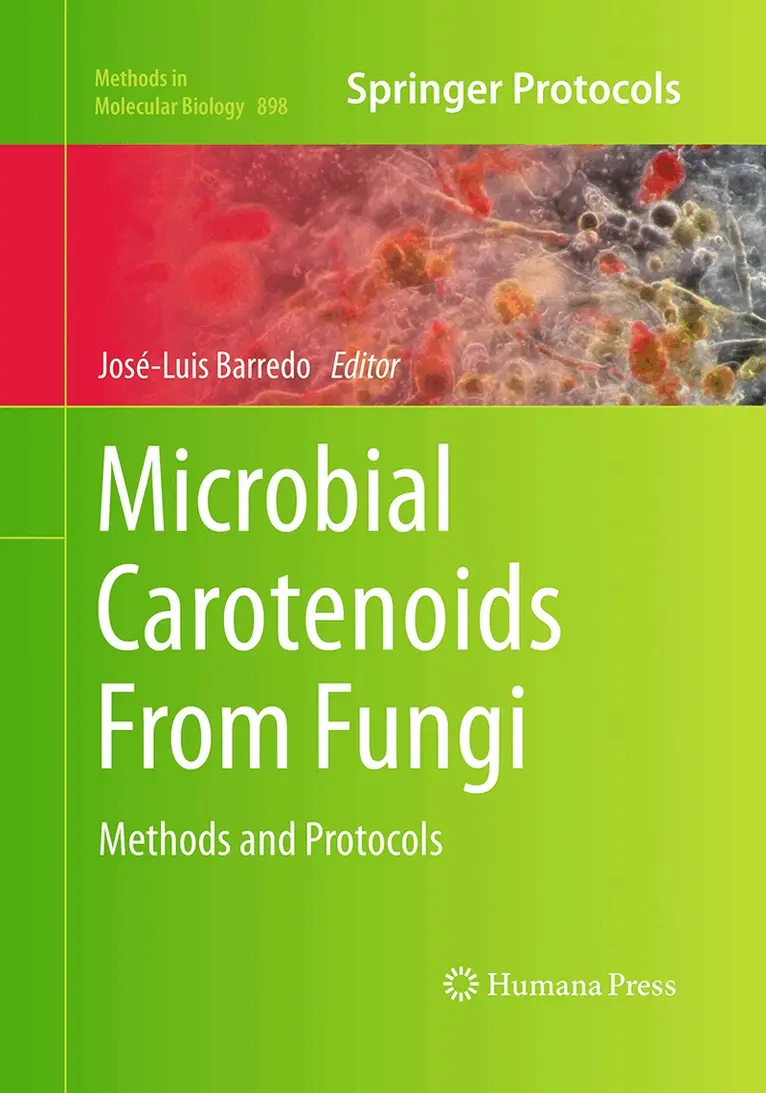
Carotenoids are a family of yellow to orange-red terpenoid pigments synthesized by photosynthetic organisms and many bacteria and fungi. They have beneficial health effects protecting against oxidative damage, and may be responsible for the colours associated with plants and animals. In Microbial Carotenoids From Fungi: Methods and Protocols, expert researchers in the field detail many of the most up-to-date methods which are now commonly used to study carotenoids. These include methods for the manipulation and metabolic engineering of the Beta-carotene producing fungi Blakeslea trispora and Mucor circinelloides, lycopene production with the yeast Yarrowia lipolytica, peroxisome targeting of lycopene pathway enzymes in Pichia pastoris, and the manipulation of the heterobasidiomycetous yeast Xanthophyllomyces dendrorhous, which produces astaxanthin, a red xanthophyll with large importance in the aquaculture, pharmaceutical, and food industries. Additionally, the book includes a DNA assembler method for construction of zeaxanthin-producing strains of Saccharomyces cerevisiae, production of neurosporaxanthin by Neurospora and Fusarium, and production of torularhodin, torulene and b-carotene by Rhodotorula yeasts. Written in the highly successful Methods in Molecular Biology™ series format, chapters include introductions to their respective topics, lists of the necessary materials and reagents, step-by-step, readily reproducible laboratory protocols, and key tips on troubleshooting and avoiding known pitfalls. Authoritative and practical, Microbial Carotenoids From Fungi: Methods and Protocols, provides practical experimental laboratory procedures for a wide range of carotenoids producing microorganisms.
1 798 kr
Skickas inom 10-15 vardagar
This volume provides practical experimental laboratory protocols for a wide range of steroid bioconversions. The chapters in this book cover topics such as bioconversions and chemical synthesis pathways; strain characterization; bioconversion from sterols to androstenedione and androstadienedione; steroid hydroxylations; biocatalysis; and downstream processes to purify steroid intermediates. Written in the highly successful Methods in Molecular Biology series format, chapters include introductions to their respective topics, lists of the necessary materials and reagents, step-by-step, readily reproducible laboratory protocols, and tips on troubleshooting and avoiding known pitfalls. Comprehensive and thorough, Microbial Steroids: Methods and Protocols is a valuable resource for laboratory and industrial professionals. It is also useful for graduate students studying biotechnology, microbiology, genetics, and molecular biology.
1 276 kr
Skickas inom 10-15 vardagar
This volume provides practical experimental laboratory protocols for a wide range of steroid bioconversions. The chapters in this book cover topics such as bioconversions and chemical synthesis pathways; strain characterization; bioconversion from sterols to androstenedione and androstadienedione; steroid hydroxylations; biocatalysis; and downstream processes to purify steroid intermediates. Written in the highly successful Methods in Molecular Biology series format, chapters include introductions to their respective topics, lists of the necessary materials and reagents, step-by-step, readily reproducible laboratory protocols, and tips on troubleshooting and avoiding known pitfalls. Comprehensive and thorough, Microbial Steroids: Methods and Protocols is a valuable resource for laboratory and industrial professionals. It is also useful for graduate students studying biotechnology, microbiology, genetics, and molecular biology.
2 121 kr
Skickas inom 10-15 vardagar
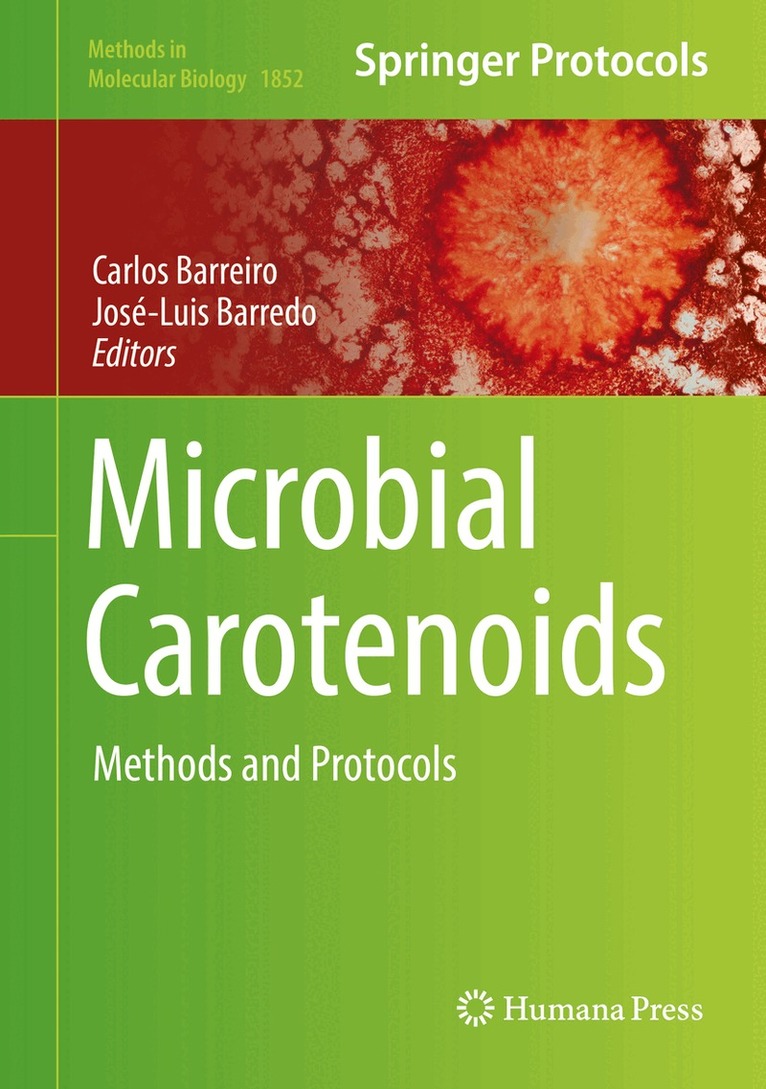
In this volume, expert researchers in the field detail the most up-to-date methods commonly used to study and produce carotenoids. These include methods on the manipulation and metabolic engineering of carotenoid producing microalgae and bacteria, including Corynebacterium glutamicum, Rhodopseudomonas palustris and radio-tolerant bacteria; in addition to fungi, as the beta-carotene producing Blakeslea trispora and Mucor circinelloides or the lycopene producing Blakeslea trispora; and the heterobasidiomycetous yeast producing xanthophylls Xanthophyllomyces dendrorhous (Phaffia rhodozyma) and the engineered yeast Pichia pastoris. Additionally, three overview chapters on the advancement of Biotechnology and carotenoid production are included. Written in the highly successful Methods in Molecular Biology series format, chapters include introductions to their respective topics, lists of the necessary materials and reagents, step-by-step, readily reproducible laboratory protocols, and key tips on troubleshooting and avoiding known pitfalls. Authoritative and cutting-edge, Microbial Carotenoids: Methods and Protocols provides practical experimental laboratory procedures for a wide range of carotenoids producing microorganisms, aiming to ensure successful results in the further study of this vital field.
1 381 kr
Skickas inom 10-15 vardagar
In this volume, expert researchers in the field detail the most up-to-date methods commonly used to study and produce carotenoids. These include methods on the manipulation and metabolic engineering of carotenoid producing microalgae and bacteria, including Corynebacterium glutamicum, Rhodopseudomonas palustris and radio-tolerant bacteria; in addition to fungi, as the beta-carotene producing Blakeslea trispora and Mucor circinelloides or the lycopene producing Blakeslea trispora; and the heterobasidiomycetous yeast producing xanthophylls Xanthophyllomyces dendrorhous (Phaffia rhodozyma) and the engineered yeast Pichia pastoris. Additionally, three overview chapters on the advancement of Biotechnology and carotenoid production are included. Written in the highly successful Methods in Molecular Biology series format, chapters include introductions to their respective topics, lists of the necessary materials and reagents, step-by-step, readily reproducible laboratory protocols, and key tips on troubleshooting and avoiding known pitfalls. Authoritative and cutting-edge, Microbial Carotenoids: Methods and Protocols provides practical experimental laboratory procedures for a wide range of carotenoids producing microorganisms, aiming to ensure successful results in the further study of this vital field.
1 640 kr
Skickas inom 10-15 vardagar
The development of biotechnology over the last 20 years and particularly the use of recombinant DNA techniques are expanding the opportunities for human profit of living resources. Microbial Enzymes and Biotransformation provides practical experimental laboratory procedures for a wide range of enzymes and biotransformations mediated by microorganisms. In addition, it provides a step-by-step description of the most recent developments in applied biotechnological processes useful for screening, evolution, production, immobilization, and use of enzymes.
1 640 kr
Skickas inom 10-15 vardagar
Outstanding experts in the use of microorganisms as cell factories describe in step-by-step detail their best laboratory procedures for a wide range of processes and products mediated by microorganisms. The diverse chemicals and biochemicals produced can be used in human health, nutrition, and environmental protection, and include semisynthetic derivatives of cephalosporins, erythromycin, antitumor compounds, plasmids for gene therapy and DNA vaccination , L-lysine, Vitamins B2 and B12, the sweet-tasting protein thaumatin, the carotenoids s carotene and astaxanthin, the polysaccharide gellan, and bacteria-producing bacteria for sausage fermentation, and many more. Also illustrated are the uses of phenylacetyl-CoA catabolon for the enzymatic synthesis of penicillins, aromatic biotransformation, syntheses of novel bioplastics, biosensor design, and the synthesis of drug vehicles. This book offers laboratory and industrial scientists a wealth of readily reproducible techniques for the microbial generation of biochemical products serving human health, nutrition, and environmental protection.
1 593 kr
Skickas inom 10-15 vardagar
Leading experts in enzyme manipulation describe in detail their cutting-edge techniques for the screening, evolution, production, immobilization, and application of enzymes. These readily reproducible methods can be used to improve enzyme function by directed evolution, to covalently immobilize enzymes, to microencapsulate enzymes and cells, and to manufacture enzymes for human health, nutrition, and environmental protection. Overview chapters on microorganisms as a source of metabolic and enzymatic diversity, and on the fast-moving field of enzyme biosensors are presented. Microbial Enzymes and Biotransformations offers laboratory and industrial scientists a wealth of proven enzymatic protocols that show clearly how to go from laboratory results to successful industrial applications.
1 593 kr
Skickas inom 10-15 vardagar
Outstanding experts in the use of microorganisms as cell factories describe in step-by-step detail their best laboratory procedures for a wide range of processes and products mediated by microorganisms. The diverse chemicals and biochemicals produced can be used in human health, nutrition, and environmental protection, and include semisynthetic derivatives of cephalosporins, erythromycin, antitumor compounds, plasmids for gene therapy and DNA vaccination , L-lysine, Vitamins B2 and B12, the sweet-tasting protein thaumatin, the carotenoids ss-carotene and astaxanthin, the polysaccharide gellan, and bacteria-producing bacteria for sausage fermentation, and many more. Also illustrated are the uses of phenylacetyl-CoA catabolon for the enzymatic synthesis of penicillins, aromatic biotransformation, syntheses of novel bioplastics, biosensor design, and the synthesis of drug vehicles. This book offers laboratory and industrial scientists a wealth of readily reproducible techniques for the microbial generation of biochemical products serving human health, nutrition, and environmental protection.
1 064 kr
Skickas inom 10-15 vardagar
Carotenoids are a family of yellow to orange-red terpenoid pigments synthesized by photosynthetic organisms and many bacteria and fungi. They have beneficial health effects protecting against oxidative damage and may be responsible for the colours associated with plants and animals. In Microbial Carotenoids from Bacteria and Microalgae: Methods and Protocols, expert researchers in the field detail many of the most up-to-date methods which are now commonly used to study carotenoids. These include methods for the study of canthaxanthin production, construction of carotenoid reporter systems, directed evolution of carotenoid synthases, and improvement of b-carotene hydroxylase catalytic activity are described. Additionally, the book includes methods of DNA fingerprinting for the identification of carotenogenic Dunaliella species, ketocarotenoid biosynthesis in microalgae expressing the beta-C-4-carotene oxygenase gene, characterization of carotenogenesis genes in Anabaena sp., obtaining lutein from microalgal biomass, NMR-based isotopologue profiling of microbial carotenoids, and analysis of diapocarotenoids. Written in the highly successful Methods in Molecular Biology™ series format, chapters include introductions to their respective topics, lists of the necessary materials and reagents, step-by-step, readily reproducible laboratory protocols, and key tips on troubleshooting and avoiding known pitfalls.Authoritative and practical, Microbial Carotenoids from Bacteria and Microalgae: Methods and Protocols provides practical experimental laboratory procedures for a wide range of carotenoids producing microorganisms.
1 064 kr
Skickas inom 10-15 vardagar
Carotenoids are a family of yellow to orange-red terpenoid pigments synthesized by photosynthetic organisms and many bacteria and fungi. They have beneficial health effects protecting against oxidative damage, and may be responsible for the colours associated with plants and animals. In Microbial Carotenoids From Fungi: Methods and Protocols, expert researchers in the field detail many of the most up-to-date methods which are now commonly used to study carotenoids. These include methods for the manipulation and metabolic engineering of the Beta-carotene producing fungi Blakeslea trispora and Mucor circinelloides, lycopene production with the yeast Yarrowia lipolytica, peroxisome targeting of lycopene pathway enzymes in Pichia pastoris, and the manipulation of the heterobasidiomycetous yeast Xanthophyllomyces dendrorhous, which produces astaxanthin, a red xanthophyll with large importance in the aquaculture, pharmaceutical, and food industries. Additionally, the book includes a DNA assembler method for construction of zeaxanthin-producing strains of Saccharomyces cerevisiae, production of neurosporaxanthin by Neurospora and Fusarium, and production of torularhodin, torulene and b-carotene by Rhodotorula yeasts. Written in the highly successful Methods in Molecular Biology™ series format, chapters include introductions to their respective topics, lists of the necessary materials and reagents, step-by-step, readily reproducible laboratory protocols, and key tips on troubleshooting and avoiding known pitfalls. Authoritative and practical, Microbial Carotenoids From Fungi: Methods and Protocols, provides practical experimental laboratory procedures for a wide range of carotenoids producing microorganisms.