Jose Szapocznik - Böcker
Visar alla böcker från författaren Jose Szapocznik. Handla med fri frakt och snabb leverans.
4 produkter
4 produkter
2 865 kr
Skickas inom 3-6 vardagar
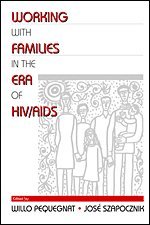
The purpose of this book is to encourage professionals to become involved in family-oriented services to prevent the spread of HIV and its consequences and to provide examples of strategies for mobilizing family resources in the prevention and adaptation to HIV and AIDS. The members of the NIMH Consortium on Families and HIV/AIDS have prepared these chapters building on their research and practice experience. Together some of the nation's most capable behavioral prevention and treatment scientists have developed these prevention programs based on sound scientific principles and are currently testing them in rigorous controlled trials in communities across the country. While these interventions have not yet been demonstrated to be effective, they have received rigorous peer review by independent scientists conducted under the auspices of the NIMH, and were considered worthy of research support. This book focuses on populations were HIV infection is now quickly spreading, and yet relatively little is know about family interventions with these populations. The prevention programs address the spectrum of programs to prevent the spread of HIV and its consequences. The HIV prevention programs are intended to promote greater responsibility in general, and thus encourage healthier lifestyles with respect to drug and sexual behavior among family members. Although not exclusively, a large proportion of the programs presented in this book were designed for African American populations and address the Prevention of the spread of HIV/AIDS and its consequences. With that caveat, however, it should be noted that these interventions can also be adapted for use with other cultural groups, other chronic diseases, STDs and multiple family configurations.
1 845 kr
Skickas inom 3-6 vardagar
The purpose of this book is to encourage professionals to become involved in family-oriented services to prevent the spread of HIV and its consequences and to provide examples of strategies for mobilizing family resources in the prevention and adaptation to HIV and AIDS. The members of the NIMH Consortium on Families and HIV/AIDS have prepared these chapters building on their research and practice experience. Together some of the nation's most capable behavioral prevention and treatment scientists have developed these prevention programs based on sound scientific principles and are currently testing them in rigorous controlled trials in communities across the country. While these interventions have not yet been demonstrated to be effective, they have received rigorous peer review by independent scientists conducted under the auspices of the NIMH, and were considered worthy of research support. This book focuses on populations were HIV infection is now quickly spreading, and yet relatively little is know about family interventions with these populations. The prevention programs address the spectrum of programs to prevent the spread of HIV and its consequences. The HIV prevention programs are intended to promote greater responsibility in general, and thus encourage healthier lifestyles with respect to drug and sexual behavior among family members. Although not exclusively, a large proportion of the programs presented in this book were designed for African American populations and address the Prevention of the spread of HIV/AIDS and its consequences. With that caveat, however, it should be noted that these interventions can also be adapted for use with other cultural groups, other chronic diseases, STDs and multiple family configurations.
617 kr
Skickas inom 7-10 vardagar
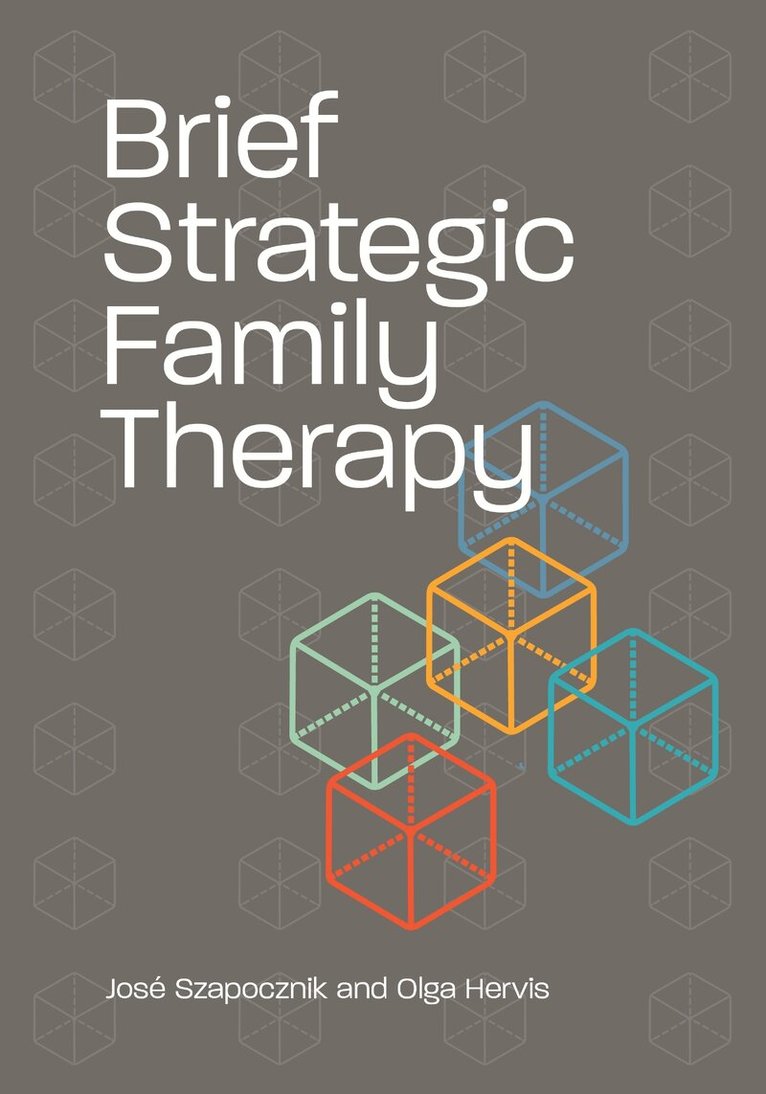
Brief strategic family therapy (BSFT) is an evidence‑based intervention for diagnosing and correcting patterns of familyinteractions that are linked to distressing experiences and symptoms in children ages ‑ 8. This clinical guide showspractitioners how to transform family interactions from conflictive to collaborative, from habitual to proactive, so that the lovetrapped behind the anger can flourish, and family members can re‑bond in loving and mutually caring relationshipsReaders of this book will learn how to engage families that are reluctant to become involved in family therapy, and structure a12‑to 16‑week intervention that will effect powerful behavioral change. Therapists help adults learn to collaborate with one another to nurture, guide, and handle misbehavior among children and teens.Dozens of detailed clinical examples show practitioners how to navigate family complexities, and how to work through the challenging decision points they present.
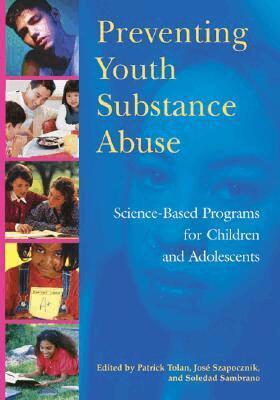
Preventing Youth Substance Abuse
Science-Based Programs for Children and Adolescents
Inbunden, Engelska, 2006
270 kr
Skickas inom 7-10 vardagar
Adolescent substance use can interfere with cognitive, emotional, and social development and may even affect later functioning in adult domains such as parenting and employment. The Center for Substance Abuse Prevention (CSAP) recognized that this problem does not arise anew in adolescence, but in fact has roots in childhood. CSAP identified four critical predictors from childhood for substance use that could be valuable targets for prevention of adolescent substance use: parental management of and involvement with the child, and the child's social competence, self-regulation, and school achievement. In this book, the editors bring together a body of intervention research into a practical guide that shows how seven selected prevention programs address these risk factors.After introducing the developmental and setting factors that affect risk for substance use, a general framework for translating this research into practice is provided. Chapters describing each intervention contain user-friendly explanations of the theoretical basis, intended population, methods and procedures, and critical implementation characteristics of each program and summarize how it was tested and shown to reduce risk for substance abuse. Illustrative case examples are woven throughout the text, showing the benefits gained from the approach.The book is organized to describe interventions that apply to participants at differing developmental periods. Chapters include programs for universal or general population and for high risk youth and families. The included chapters cover programs developed and tested for a variety of ethnic and cultural groups across varying locations.