Josep MaciA – författare
Visar alla böcker från författaren Josep MaciA. Handla med fri frakt och snabb leverans.
4 produkter
4 produkter
E-bok
PDF, Engelska, 2006504 kr
Läs direkt efter köp
According to two-dimensional semantics, the meaning of an expression involves two different "dimensions": one dimension involves reference and truth-conditions of a familiar sort, while the other dimension involves the way that reference and truth-conditions depend on the external world (for example, reference and truth-conditions might be held to depend on which individuals and substances are present in the world, or on which linguistic conventions are in place). A number of different two-dimensional frameworks have been developed, and these have been applied to a number of fundamental problems in philosophy: the nature of communication, the relation between the necessary and the a priori, the role of context in assertion, Frege''s distinction between sense and reference, the contents of thought, and the mind-body problem. Manuel Garcia-Carpintero and Josep Macia present a selection of new essays by an outstanding international team, shedding fresh light both on foundational issues regarding _ two-dimensional semantics and on its specific applications. The volume will be the starting-point for future work on this approach to issues in philosophy of language, _ epistemology, and metaphysics. _
Inbunden, Engelska, 2006
1 861 kr
Skickas inom 5-8 vardagar
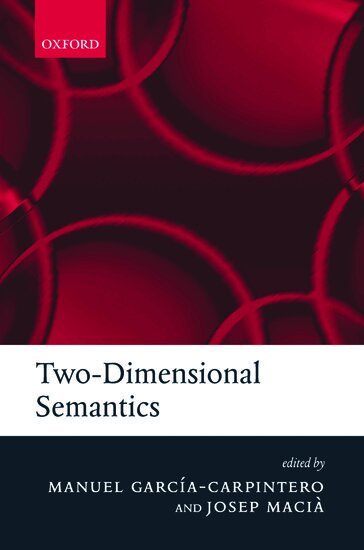
According to two-dimensional semantics, the meaning of an expression involves two different "dimensions": one dimension involves reference and truth-conditions of a familiar sort, while the other dimension involves the way that reference and truth-conditions depend on the external world (for example, reference and truth-conditions might be held to depend on which individuals and substances are present in the world, or on which linguistic conventions are in place). A number of different two-dimensional frameworks have been developed, and these have been applied to a number of fundamental problems in philosophy: the nature of communication, the relation between the necessary and the a priori, the role of context in assertion, Frege's distinction between sense and reference, the contents of thought, and the mind-body problem. Manuel Garcia-Carpintero and Josep Macia present a selection of new essays by an outstanding international team, shedding fresh light both on foundational issues regarding _ two-dimensional semantics and on its specific applications. The volume will be the starting-point for future work on this approach to issues in philosophy of language, _ epistemology, and metaphysics. _
Häftad, Engelska, 2006
779 kr
Skickas inom 5-8 vardagar
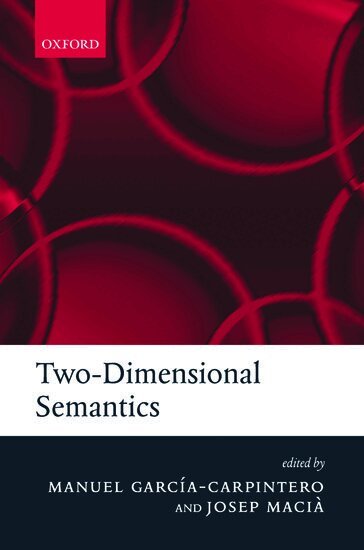
According to two-dimensional semantics, the meaning of an expression involves two different "dimensions": one dimension involves reference and truth-conditions of a familiar sort, while the other dimension involves the way that reference and truth-conditions depend on the external world (for example, reference and truth-conditions might be held to depend on which individuals and substances are present in the world, or on which linguistic conventions are in place). A number of different two-dimensional frameworks have been developed, and these have been applied to a number of fundamental problems in philosophy: the nature of communication, the relation between the necessary and the a priori, the role of context in assertion, Frege's distinction between sense and reference, the contents of thought, and the mind-body problem. Manuel Garcia-Carpintero and Josep Macia present a selection of new essays by an outstanding international team, shedding fresh light both on foundational issues regarding two-dimensional semantics and on its specific applications. The volume will be the starting-point for future work on this approach to issues in philosophy of language, epistemology, and metaphysics.
E-bok
PDF, Spanska, 2020113 kr
Läs direkt efter köp
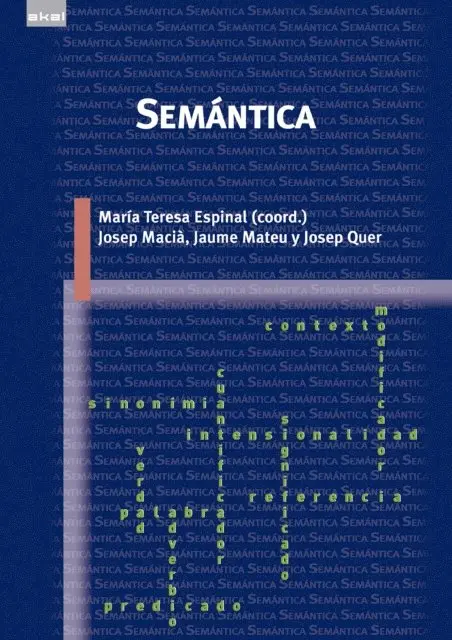
La Semántica es el estudio del significado. El libro que aquí presentamos es un manual sobre dicha materia que tiene fundamentalmente dos objetivos: el primero, introducir a los estudiantes en los temas centrales de la teoría del significado (cuestiones que son típicamente lingüísticas; problemas que se han planteado en filosofía del lenguaje y en lógica y que son pertinentes en teoría lingüística, y problemas que tienen un interés en semántica gracias a los avances producidos en áreas afines como la psicología cognitiva); el segundo, iniciarles en el discurso propio de la argumentación lingüística para el planteamiento y resolución de problemas de significado de las lenguas naturales. El libro está organizado en ocho capítulos. El primero incluye una reflexión sobre las unidades de estudio de la Semántica y la operación básica de composición del significado, al que sigue otro dedicado a las unidades léxicas y al tipo de significado e información que estas pueden codificar. En el tercero se aborda la noción de referencia y otras relacionadas con ella, en las que se fundamenta la Semántica de Condiciones de Verdad. En los capítulos que siguen se estudian con cierto detalle las nociones de predicación, cuantificación, modificación e intensionalidad; en ellos se discuten fundamentalmente datos del español para justificar las hipótesis y los conceptos teóricos que se presentan. En el último, pensado para estudiantes de posgrado, se plantean problemas de interfaz sintaxis-semántica y de interfaz gramática-cognición, cuyo objetivo fundamental es relacionar y reflexionar sobre algunos conceptos y nociones introducidos en los capítulos precedentes. Todo ello se acompaña de un abundante material complementario en forma de bibliografías, ejercicios y actividades, que hacen del libro una herramienta fundamental para iniciarse y profundizar en una de las áreas básicas para el conocimiento y dominio de la lengua.