Joseph A. Packowski – författare
Visar alla böcker från författaren Joseph A. Packowski. Handla med fri frakt och snabb leverans.
4 produkter
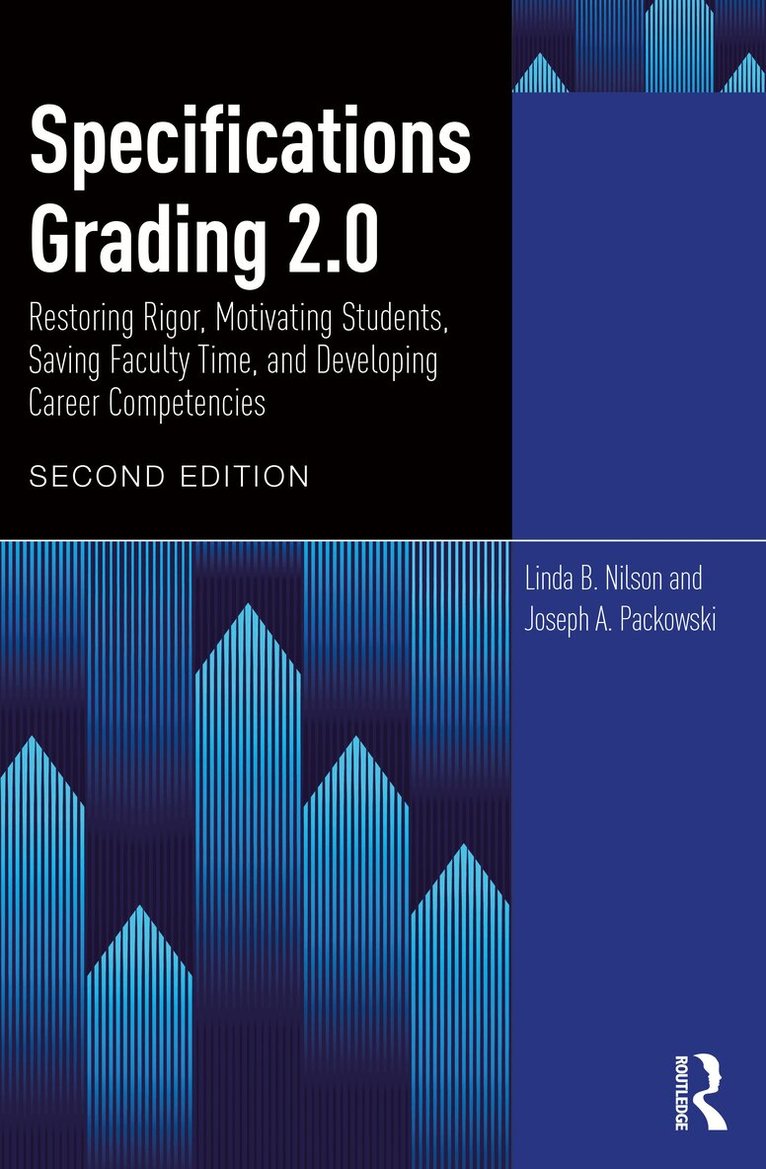
Specifications Grading 2.0
Restoring Rigor, Motivating Students, Saving Faculty Time, and Developing Career Competencies
Av Linda B. Nilson, Joseph A. Packowski
Häftad, 2025
516 kr
Lägg i varukorg
This second edition of the alternative grading classic revisits specs grading with a robust body of research, exemplars, and strategies to elevate the quality of student work, increase engagement and buy-in, reduce faculty stress, and cultivate students' career competencies.Nilson and Packowski …
Specifications Grading 2.0
Restoring Rigor, Motivating Students, Saving Faculty Time, and Developing Career Competencies
Av Linda B. Nilson, Joseph A. Packowski
Inbunden, 2025
2441 kr
Lägg i varukorg
This second edition of the alternative grading classic revisits specs grading with a robust body of research, exemplars, and strategies to elevate the quality of student work, increase engagement and buy-in, reduce faculty stress, and cultivate students' career competencies.Nilson and Packowski …
Specifications Grading 2.0
Restoring Rigor, Motivating Students, Saving Faculty Time, and Developing Career Competencies
Av Joseph A. Packowski, Linda B. Nilson
E-bok, 2025
593 kr
Lägg i varukorg
This second edition of the alternative grading classic revisits specs grading with a robust body of research, exemplars, and strategies to elevate the quality of student work, increase engagement and buy-in, reduce faculty stress, and cultivate students'' career competencies. Nilson and Packowski …
Specifications Grading 2.0
Restoring Rigor, Motivating Students, Saving Faculty Time, and Developing Career Competencies
Av Joseph A. Packowski, Linda B. Nilson
E-bok, 2025
593 kr
Lägg i varukorg
This second edition of the alternative grading classic revisits specs grading with a robust body of research, exemplars, and strategies to elevate the quality of student work, increase engagement and buy-in, reduce faculty stress, and cultivate students'' career competencies. Nilson and Packowski …