Joseph Epes Brown – författare
Visar alla böcker från författaren Joseph Epes Brown. Handla med fri frakt och snabb leverans.
4 produkter
4 produkter
Inbunden, Engelska, 2001
1 314 kr
Skickas inom 5-8 vardagar
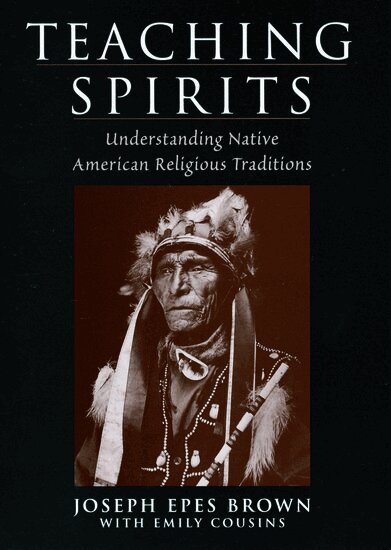
Teaching Spirits offers a thematic approach to Native American religious traditions. Within the great multiplicity of Native American cultures, Joseph Epes Brown has perceived certain common themes that resonate within many Native traditions. He demonstrates how themes within native traditions connect with each other while upholding the integrity of individual traditions. Brown and Cousins illustrate these themes with in-depth explorations of specific native cultures including Lakota, Navajo, Apache, Koyukon, and Ojibwe. They also demonstrates how Native American spiritual values provide an alternative metaphysics that stands opposed to modern materialism. These values provide material for a serious rethinking of modern attitudes, which may help non-native peoples develop a more sensitive response to native concerns.
E-bok
PDF, Engelska, 2001380 kr
Läs direkt efter köp
Teaching Spirits offers a thematic approach to Native American religious traditions. Through years of living with and learning about Native traditions across the continent, Joseph Epes Brown learned firsthand of the great diversity of the North American Indian cultures. Yet within this great multiplicity, he also noticed certain common themes that resonate within many Native traditions. These themes include a shared sense of time as cyclical rather than linear, a belief that landscapes are inhabited by spirits, a rich oral tradition, visual arts that emphasize the process of creation, a reciprocal relationship with the natural world, and the rituals that tie these themes together. Brown illustrates each of these themes with in-depth explorations of specific native cultures including Lakota, Navajo, Apache, Koyukon, and Ojibwe. Brown was one of the first scholars to recognize that Native religions-rather than being relics of the past-are vital traditions that tribal members shape and adapt to meet both timeless and contemporary needs. Teaching Spirits reflects this view, using examples from the present as well as the past. For instance, when writing about Plains rituals, he describes not only building an impromptu sweat lodge in a Denver hotel room with Black Elk in the 1940s, but also the struggles of present-day Crow tribal members to balance Sun Dances and vision quests with nine-to-five jobs. In this groundbreaking work, Brown suggests that Native American traditions demonstrate how all components of a culture can be interconnected-how the presence of the sacred can permeate all lifeways to such a degree that what we call religion is integrated into all of life''s activities. Throughout the book, Brown draws on his extensive personal experience with Black Elk, who came to symbolize for many the richness of the imperiled native cultures. This volume brings to life the themes that resonate at the heart of Native American religious traditions.
E-bok
Engelska, 2010380 kr
Läs direkt efter köp
Teaching Spirits offers a thematic approach to Native American religious traditions. Through years of living with and learning about Native traditions across the continent, Joseph Epes Brown learned firsthand of the great diversity of the North American Indian cultures. Yet within this great multiplicity, he also noticed certain common themes that resonate within many Native traditions. These themes include a shared sense of time as cyclical rather than linear, a belief that landscapes are inhabited by spirits, a rich oral tradition, visual arts that emphasize the process of creation, a reciprocal relationship with the natural world, and the rituals that tie these themes together. Brown illustrates each of these themes with in-depth explorations of specific native cultures including Lakota, Navajo, Apache, Koyukon, and Ojibwe. Brown was one of the first scholars to recognize that Native religions-rather than being relics of the past-are vital traditions that tribal members shape and adapt to meet both timeless and contemporary needs. Teaching Spirits reflects this view, using examples from the present as well as the past. For instance, when writing about Plains rituals, he describes not only building an impromptu sweat lodge in a Denver hotel room with Black Elk in the 1940s, but also the struggles of present-day Crow tribal members to balance Sun Dances and vision quests with nine-to-five jobs. In this groundbreaking work, Brown suggests that Native American traditions demonstrate how all components of a culture can be interconnected-how the presence of the sacred can permeate all lifeways to such a degree that what we call religion is integrated into all of life''s activities. Throughout the book, Brown draws on his extensive personal experience with Black Elk, who came to symbolize for many the richness of the imperiled native cultures. This volume brings to life the themes that resonate at the heart of Native American religious traditions.
Häftad, Engelska, 1989
240 kr
Skickas inom 5-8 vardagar
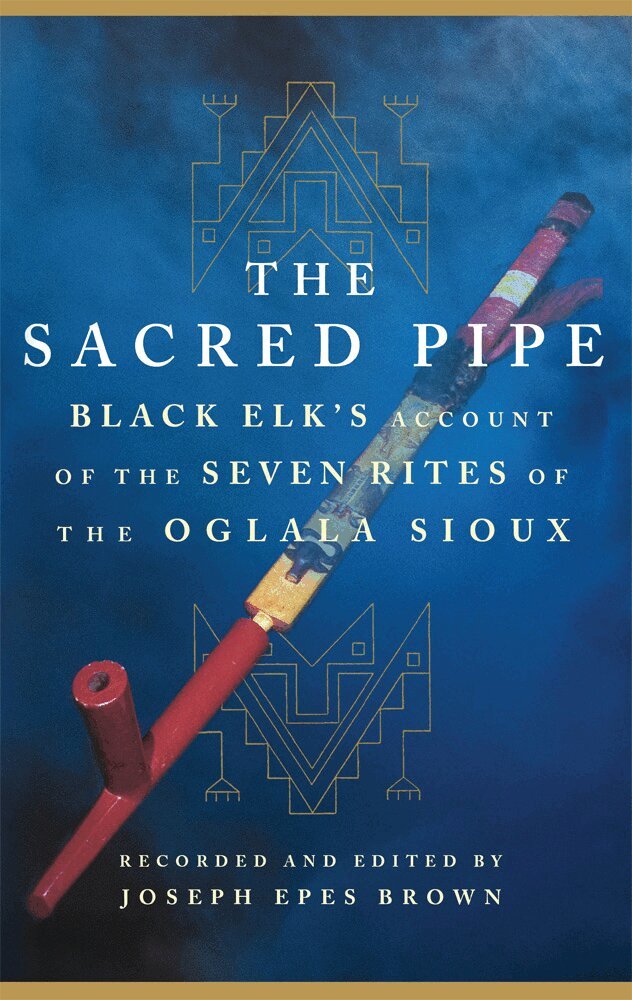
Black Elk of the Sioux has been recognized as one of the truly remarkable men of his time in the matter of religious belief and practice. Shortly before his death in August, 1950, when he was the ""keeper of the sacred pipe,"" he said, ""It is my prayer that, through our sacred pipe, and through this book in which I shall explain what our pipe really is, peace may come to those peoples who can understand, and understanding which must be of the heart and not of the head alone. Then they will realize that we Indians know the One true God, and that we pray to Him continually.""Black Elk was the only qualified priest of the older Oglala Sioux still living when The Sacred Pipe was written. This is his book: he gave it orally to Joseph Epes Brown during the latter's eight month's residence on the Pine Ridge Reservation in South Dakota, where Black Elk lived. Beginning with the story of White Buffalo Cow Woman's first visit to the Sioux to give them the sacred pip~, Black Elk describes and discusses the details and meanings of the seven rites, which were disclosed, one by one, to the Sioux through visions. He takes the reader through the sun dance, the purification rite, the ""keeping of the soul,"" and other rites, showing how the Sioux have come to terms with God and nature and their fellow men through a rare spirit of sacrifice and determination.The wakan Mysteries of the Siouan peoples have been a subject of interest and study by explorers and scholars from the period of earliest contact between whites and Indians in North America, but Black Elk's account is without doubt the most highly developed on this religion and cosmography. The Sacred Pipe, published as volume thirty-six in the Civilization of the American Indian Series, will be greeted enthusiastically by students of comparative religion, ethnologists, historians, philosophers, and everyone interested in American Indian life.