Joseph McBride - Böcker
Visar alla böcker från författaren Joseph McBride. Handla med fri frakt och snabb leverans.
18 produkter
18 produkter
1 010 kr
Skickas inom 7-10 vardagar
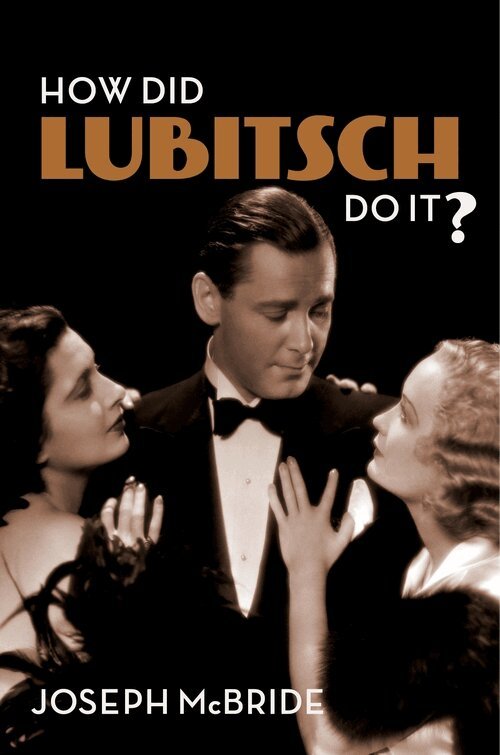
Orson Welles called Ernst Lubitsch (1892–1947) “a giant” whose “talent and originality are stupefying.” Jean Renoir said, “He invented the modern Hollywood.” Celebrated for his distinct style and credited with inventing the classic genre of the Hollywood romantic comedy and helping to create the musical, Lubitsch won the admiration of his fellow directors, including Alfred Hitchcock and Billy Wilder, whose office featured a sign on the wall asking, “How would Lubitsch do it?” Despite the high esteem in which Lubitsch is held, as well as his unique status as a leading filmmaker in both Germany and the United States, today he seldom receives the critical attention accorded other major directors of his era.How Did Lubitsch Do It? restores Lubitsch to his former stature in the world of cinema. Joseph McBride analyzes Lubitsch’s films in rich detail in the first in-depth critical study to consider the full scope of his work and its evolution in both his native and adopted lands. McBride explains the “Lubitsch Touch” and shows how the director challenged American attitudes toward romance and sex. Expressed obliquely, through sly innuendo, Lubitsch’s risqué, sophisticated, continental humor engaged the viewer’s intelligence while circumventing the strictures of censorship in such masterworks as The Marriage Circle, Trouble in Paradise, Design for Living, Ninotchka, The Shop Around the Corner, and To Be or Not to Be. McBride’s analysis of these films brings to life Lubitsch’s wit and inventiveness and offers revealing insights into his working methods.
258 kr
Skickas inom 7-10 vardagar
Orson Welles called Ernst Lubitsch (1892–1947) “a giant” whose “talent and originality are stupefying.” Jean Renoir said, “He invented the modern Hollywood.” Celebrated for his distinct style and credited with inventing the classic genre of the Hollywood romantic comedy and helping to create the musical, Lubitsch won the admiration of his fellow directors, including Alfred Hitchcock and Billy Wilder, whose office featured a sign on the wall asking, “How would Lubitsch do it?” Despite the high esteem in which Lubitsch is held, as well as his unique status as a leading filmmaker in both Germany and the United States, today he seldom receives the critical attention accorded other major directors of his era.How Did Lubitsch Do It? restores Lubitsch to his former stature in the world of cinema. Joseph McBride analyzes Lubitsch’s films in rich detail in the first in-depth critical study to consider the full scope of his work and its evolution in both his native and adopted lands. McBride explains the “Lubitsch Touch” and shows how the director challenged American attitudes toward romance and sex. Expressed obliquely, through sly innuendo, Lubitsch’s risqué, sophisticated, continental humor engaged the viewer’s intelligence while circumventing the strictures of censorship in such masterworks as The Marriage Circle, Trouble in Paradise, Design for Living, Ninotchka, The Shop Around the Corner, and To Be or Not to Be. McBride’s analysis of these films brings to life Lubitsch’s wit and inventiveness and offers revealing insights into his working methods.
461 kr
Skickas
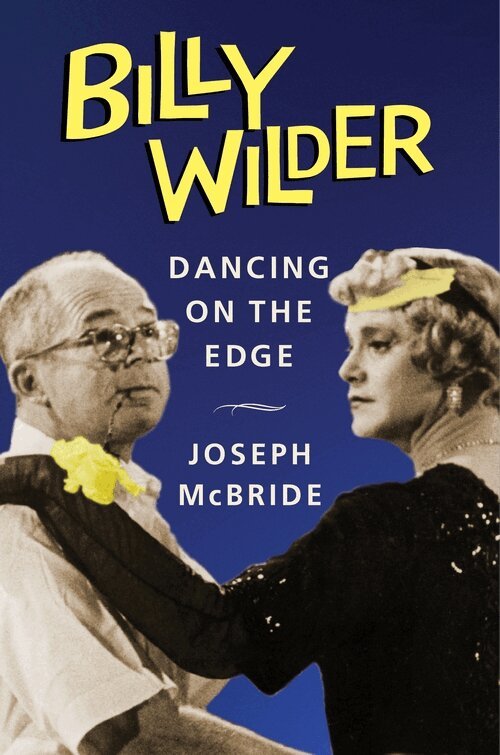
The director and cowriter of some of the world's most iconic films—including Double Indemnity, Sunset Blvd., Some Like It Hot, and The Apartment—Billy Wilder earned acclaim as American cinema's greatest social satirist. Though an influential fixture in Hollywood, Wilder always saw himself as an outsider. His worldview was shaped by his background in the Austro-Hungarian Empire and work as a journalist in Berlin during Hitler's rise to power, and his perspective as a Jewish refugee from Nazism lent his films a sense of the peril that could engulf any society.In this critical study, Joseph McBride offers new ways to understand Wilder's work, stretching from his days as a reporter and screenwriter in Europe to his distinguished as well as forgotten films as a Hollywood writer and his celebrated work as a writer-director. In contrast to the widespread view of Wilder as a hardened cynic, McBride reveals him to be a disappointed romantic. Wilder's experiences as an exile led him to mask his sensitivity beneath a veneer of wisecracking that made him a celebrated caustic wit. Amid the satirical barbs and exposure of social hypocrisies, Wilder’s films are marked by intense compassion and a profound understanding of the human condition.Mixing biographical insight with in-depth analysis of films from throughout Wilder's career as a screenwriter and director of comedy and drama, and drawing on McBride's interviews with the director and his collaborators, this book casts new light on the full range of Wilder's rich, complex, and distinctive vision.
342 kr
Skickas inom 7-10 vardagar
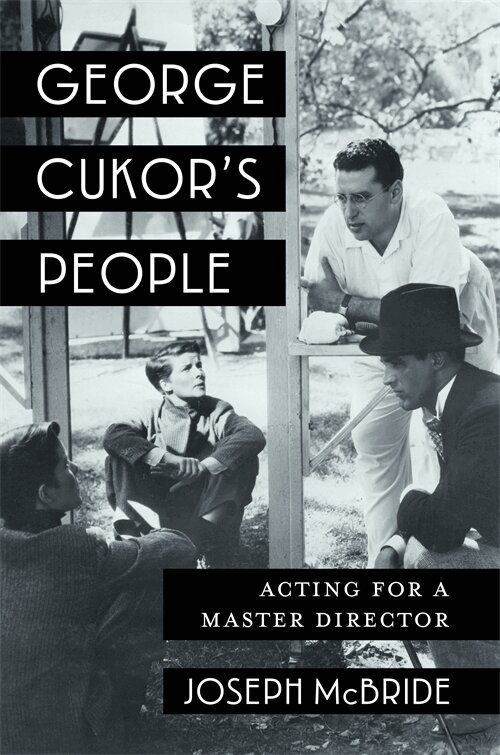
The director of classic films such as Sylvia Scarlett, The Philadelphia Story, Gaslight, Adam’s Rib, A Star Is Born, and My Fair Lady, George Cukor is widely admired but often misunderstood. Reductively stereotyped in his time as a “woman’s director”—a thinly veiled, disparaging code for “gay”—he brilliantly directed a wide range of iconic actors and actresses, including Cary Grant, Greta Garbo, Spencer Tracy, Joan Crawford, Marilyn Monroe, and Maggie Smith. As Katharine Hepburn, the star of ten Cukor films, told the director, “All the people in your pictures are as goddamned good as they can possibly be, and that’s your stamp.”In this groundbreaking, lavishly illustrated critical study, Joseph McBride provides insightful and revealing essayistic portraits of Cukor’s actors in their most memorable roles. The queer filmmaker gravitated to socially adventurous, subversively rule-breaking, audacious dreamers who are often sexually transgressive and gender fluid in ways that seem strikingly modern today. McBride shows that Cukor’s seemingly self-effacing body of work is characterized by a discreet way of channeling his feelings through his actors. He expertly cajoled actors, usually gently but sometimes with bracing harshness, to delve deeply into emotional areas they tended to keep safely hidden. Cukor’s wry wit, his keen sense of psychological and social observation, his charm and irony, and his toughness and resilience kept him active for more than five decades in Hollywood. George Cukor’s People gives him the in-depth, multifaceted examination his rich achievement deserves.
300 kr
Skickas inom 7-10 vardagar
The director and cowriter of some of the world's most iconic films—including Double Indemnity, Sunset Blvd., Some Like It Hot, and The Apartment—Billy Wilder earned acclaim as American cinema's greatest social satirist. Though an influential fixture in Hollywood, Wilder always saw himself as an outsider. His worldview was shaped by his background in the Austro-Hungarian Empire and work as a journalist in Berlin during Hitler's rise to power, and his perspective as a Jewish refugee from Nazism lent his films a sense of the peril that could engulf any society.In this critical study, Joseph McBride offers new ways to understand Wilder's work, stretching from his days as a reporter and screenwriter in Europe to his distinguished as well as forgotten films as a Hollywood writer and his celebrated work as a writer-director. In contrast to the widespread view of Wilder as a hardened cynic, McBride reveals him to be a disappointed romantic. Wilder's experiences as an exile led him to mask his sensitivity beneath a veneer of wisecracking that made him a celebrated caustic wit. Amid the satirical barbs and exposure of social hypocrisies, Wilder’s films are marked by intense compassion and a profound understanding of the human condition.Mixing biographical insight with in-depth analysis of films from throughout Wilder's career as a screenwriter and director of comedy and drama, and drawing on McBride's interviews with the director and his collaborators, this book casts new light on the full range of Wilder's rich, complex, and distinctive vision.
276 kr
Skickas inom 3-6 vardagar
306 kr
Skickas inom 10-15 vardagar
Unlike most how-to books on screenwriting, Writing in Pictures is highly practical, offering a realistic guide to the screenwriting profession, as well as concrete practical guidance in the steps professional writers take to write a screenplay that comes from the heart instead of the pocketbook. The readeris taken through the nitty-gritty process of conceiving, outlining, constructing, and writing a screenplay in the professional format, with clear and concise examples offered for every step in writing a short dramatic film.Writing in Pictures offers straight talk, no mumbo-jumbo or gimmicks, just a methodical, step-by-step process that walks the reader through the different stages of writing a screenplay -- from idea to outline to character biography to treatment to step outline to finished screenplay. Using well-known films and screenplays, both contemporary and classic, to illustrate its lessons, Writing in Pictures also offers comments from famous screenwriters past and present and insightful stories (often colorful and funny) that illuminate aspects of the craft.
528 kr
Skickas inom 3-6 vardagar
At twenty-five, Orson Welles (1915-1985) directed, co-wrote, and starred in ""Citizen Kane"", widely considered the best film ever made. But Welles was such a revolutionary filmmaker that he found himself at odds with the Hollywood studio system. His work was so far ahead of its time that he never regained the wide popular following he had once enjoyed as a young actor-director on the radio. Frustrated by Hollywood and having fallen victim to the postwar blacklist, Welles departed for a long period of self-exile in Europe. But he kept making films, functioning with the creative freedom of an independent filmmaker before that term became common and eventually preserving his independence by funding virtually all his own projects. Because he worked defiantly outside the system, Welles has often been maligned as an errant genius who squandered his early promise. Film critic Joseph McBride, who acted in Welles' legendary unfinished film ""The Other Side of the Wind"", provocatively challenges conventional wisdom about Welles' supposed creative decline. McBride is the first author to provide a comprehensive examination of the films of Welles' artistically rich yet little-known later period. During the 1970s and '80s, Welles was breaking new aesthetic ground, experimenting as adventurously as he had throughout his career. McBride's friendship and collaboration with Welles and his interviews with those who knew and worked with the director make ""What Ever Happened to Orson Welles?"" a portrait of rare intimacy and insight. Reassessing Welles' final period in the context of his entire life and work, McBride's revealing portrait of this great film artist will change the terms of how Orson Welles is understood today.
395 kr
Skickas inom 3-6 vardagar
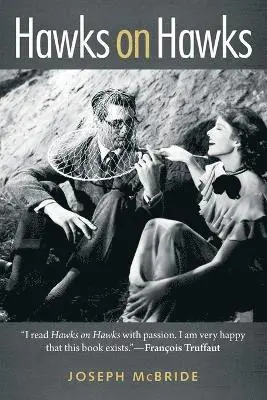
"I read Hawks on Hawks with passion. I am very happy that this book exists." -- François TruffautHoward Hawks (1896--1977) is often credited as being the most versatile of all of the great American directors, having worked with equal ease in screwball comedies, westerns, gangster movies, musicals, and adventure films. He directed an impressive number of Hollywood's greatest stars -- including Humphrey Bogart, Cary Grant, John Wayne, Lauren Bacall, Rosalind Russell, and Marilyn Monroe -- and some of his most celebrated films include Scarface (1932), Bringing Up Baby (1938), The Big Sleep (1946), Red River (1948), Gentlemen Prefer Blondes (1953), and Rio Bravo (1959).Hawks on Hawks draws on interviews that author Joseph McBride conducted with the director over the course of seven years, giving rare insight into Hawks's artistic philosophy, his relationships with the stars, and his position in an industry that was rapidly changing. In its new edition, this classic book is both an account of the film legend's life and work and a guidebook on how to make movies.
289 kr
Skickas inom 3-6 vardagar
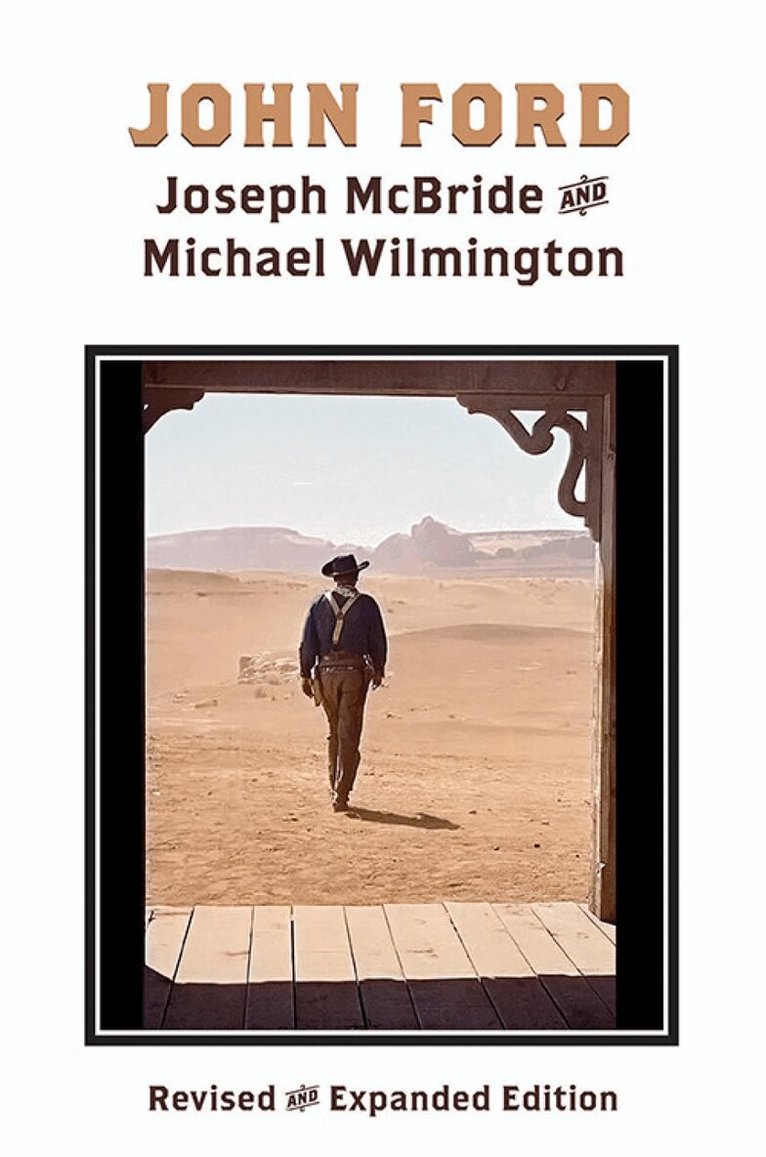
Orson Welles was once asked which directors he most admired. He replied: "The old masters. By which I mean John Ford, John Ford, and John Ford." A legend in his own time, John Ford (1894–1973) received a record four Academy Awards for best director, and two of his World War II documentaries won Oscars for the US Navy. He directed 136 films in a career that lasted from the early silent era through the late 1960s. Ford is celebrated throughout the world as the cinema's foremost chronicler of American history, the leading poet of the Western genre, and a wide-ranging filmmaker of profound emotional impact. His classic films - including Stagecoach (1939), The Grapes of Wrath (1940), How Green Was My Valley (1941), The Quiet Man (1952), The Searchers (1956), and The Man Who Shot Liberty Valance (1962) - remain widely popular, and he has been acknowledged as a major influence on filmmakers such as Jean Renoir, Ingmar Bergman, Akira Kurosawa, Howard Hawks, Frank Capra, Samuel Fuller, Elia Kazan, Sidney Lumet, Martin Scorsese, Steven Spielberg, and George Lucas.In this groundbreaking critical study, Joseph McBride and Michael Wilmington provide an overview of Ford's career as well as in-depth analyses of key Ford films. Analyzing recurring Fordian themes and relating each film to his entire body of work, the authors insightfully explore the full richness of Ford's tragicomic vision of history. This new and revised version includes a study of the twenty-seven Ford silent films now known to survive in whole or in part (more than double the number available when the original edition was published); essays on three controversial aspects of Ford: his tragicomic sensibility, his views of race, and the influence of his Irish heritage; and an expanded version of McBride's interview with Ford on the last day of his career.
538 kr
Skickas inom 7-10 vardagar
John Ford's classic films--such as Stagecoach, The Grapes of Wrath, How Green Was My Valley, The Quiet Man, and The Searchers--have earned him worldwide admiration as America's foremost filmmaker, a director whose rich visual imagination conjures up indelible, deeply moving images of our collective past.Joseph McBride's Searching for John Ford, described as definitive by both the New York Times and the Irish Times, surpasses all other biographies of the filmmaker in its depth, originality, and insight. Encompassing and illuminating Ford's myriad complexities and contradictions, McBride traces the trajectory of Ford's life from his beginnings as ""Bull"" Feeney, the nearsighted, football-playing son of Irish immigrants in Portland, Maine, to his recognition, after a long, controversial, and much-honored career, as America's national mythmaker. Blending lively and penetrating analyses of Ford's films with an impeccably documented narrative of the historical and psychological contexts in which those films were created, McBride has at long last given John Ford the biography his stature demands.
384 kr
Skickas inom 7-10 vardagar
Until the first edition of Steven Spielberg: A Biography was published in 1997, much about Spielberg's personality and the forces that shaped it had remained enigmatic, in large part because of his tendency to obscure and mythologize his own past. But in this first full-scale, in-depth biography of Spielberg, Joseph McBride reveals hidden dimensions of the filmmaker's personality and shows how deeply personal even his most commercial work has been.This new edition adds four chapters to Spielberg's life story, chronicling his extraordinarily active and creative period from 1997 to the present, a period in which he has balanced his executive duties as one of the partners in the film studio DreamWorks SKG with a remarkable string of films as a director. Spielberg's ambitious recent work--including Amistad, Saving Private Ryan, A. I. Artifucial Intelligence, Minority Report, The Terminal and Munich--has continually expanded his range both stylistically and in terms of adventurous, often controversial, subject matter.Steven Spielberg: A Biography brought about a reevaluation of the great filmmaker's life and work by those who viewed him as merely a facile entertainer. This new edition guides readers through the mature artistry of Spielberg's later period in which he manages, against considerable odds, to run a successful studio while maintaining and enlarging his high artistic standards as one of America's most thoughtful, sophisticated, and popular filmmakers.
545 kr
Skickas inom 10-15 vardagar
Moviegoers often assume Frank Capra's life resembled his beloved films (such as Mr. Smith Goes to Washington and It's a Wonderful Life). A man of the people faces tremendous odds and, by doing the right thing, triumphs! But as Joseph McBride reveals in this meticulously researched, definitive biography, the reality was far more complex, a true American tragedy. Using newly declassified U.S. government documents about Capra's response to being considered a possible ""subversive"" during the post-World War II Red Scare, McBride adds a final chapter to his unforgettable portrait of the man who gave us It Happened One Night, Mr. Deeds Goes to Town, and Meet John Doe.
246 kr
Skickas inom 5-8 vardagar
The Coen Bros. have attracted a wide following and been rewarded with Oscars and other honors. Some of their films are cult favorites and box office hits, such as Fargo, The Big Lebowski, and No Country for Old Men. Yet the team of filmmaking brothers remains misunderstood in some circles. Ethan and Joel Coen deliberately unsettle conventional expectations and raise disturbing questions about human nature while mischievously mixing film genres and styles. Their films display shocking tonal shifts as they blend comedy and drama and, most controversially, comedy and violence. This potent mélange of themes and stylistic approaches makes the Coens’ films adventurous, unpredictable probes into contemporary social anxieties. As brilliant satirists, they are heirs to Preston Sturges and Billy Wilder. But they resist easy definition and raise the ire of some critics who like films to fit more comfortably into preexisting formats. Film historian and critic Joseph McBride — author of acclaimed biographies of Frank Capra, John Ford, and Steven Spielberg, along with critical studies of Orson Welles, Ernst Lubitsch, and Wilder — jousts with the Coens’ detractors while defining the filmmakers’ freshness and originality. The quirkily individualistic Coens are the kind of personal filmmakers the increasingly conglomerated American cinema rarely fosters anymore, and this critical study illuminates their artistic personalities and contributions.
397 kr
Skickas inom 3-6 vardagar
607 kr
Skickas inom 3-6 vardagar
356 kr
Skickas inom 5-8 vardagar
515 kr
Skickas inom 5-8 vardagar