Joseph Melia – författare
Visar alla böcker från författaren Joseph Melia. Handla med fri frakt och snabb leverans.
5 produkter
5 produkter
E-bok
PDF, Engelska, 2003484 kr
Läs direkt efter köp
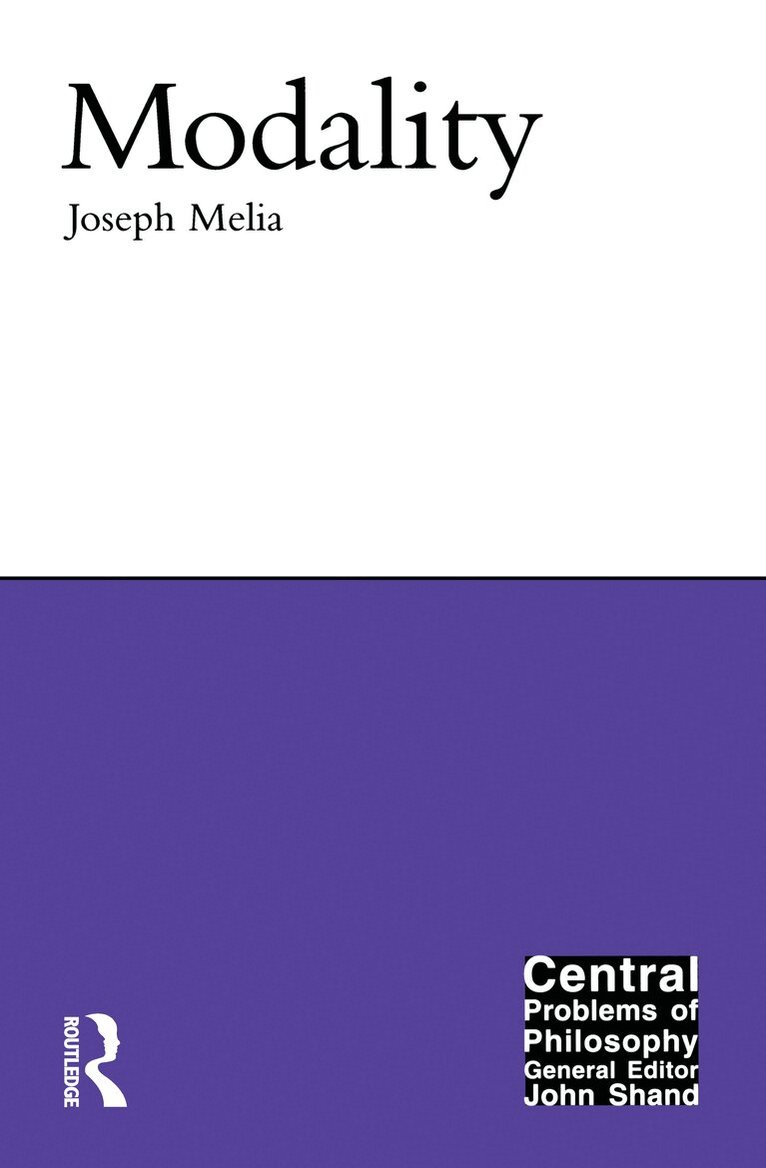
More and more philosophers are using modal concepts to shed light on various philosophical problems and to analyse philosophical concepts. This introduction to the topic of modality emphasizes the metaphysics of modality - in particular, the view that a commitment to possible worlds gives us the best way to understand modality - rather than the formal semantics of quantified modal logic. Joseph Melia shows how different theories about possible worlds not only influence our more general modal beliefs but illustrate and illuminate methodological considerations such as ontological and ideological parsimony, the degree to which any philosophical theory ought to respect common sense, and the nature of philosophical analysis. Melia begins by introducing students to the de re/de dicto distinction, conventionalist and conceptualist theories, and some of the key problems in modality. He then explains how possible worlds provide a solution to many of these problems and how possible worlds themselves have been used to analyse notions outside modality such as properties and propositions. Melia also shows how possible worlds can introduce new problems of their own and argues that to make progress with these problems a theory of possible worlds is required. The pros and cons of various theories are examined in turn, including those of Lewis, Kripke, Adams, Stalnaker, and Plantinga.
E-bok
Engelska, 2014706 kr
Läs direkt efter köp
This introduction to modality places the emphasis on the metaphysics of modality rather than on the formal semetics of quantified modal logic. The text begins by introducing students to the "de re/de dicto" distinction, conventionalist and conceptualist theories of modality and some of the key problems in modality, particularly Quine's criticisms. It then moves on to explain how possible worlds provide a solution to many of the problems in modality and how possible worlds themselves have been used to analyse notions outside modality such as properties and propositions. Possible worlds introduce problems of their own and the book argues that to make progress with these problems a theory of possible worlds is required. The pros and cons of various theories of possible worlds are then examined in turn, including those of Lewis, Kripke, Adams, Stalnaker and Plantinga.
E-bok
PDF, Engelska, 2014682 kr
Läs direkt efter köp
This introduction to modality places the emphasis on the metaphysics of modality rather than on the formal semetics of quantified modal logic. The text begins by introducing students to the "de re/de dicto" distinction, conventionalist and conceptualist theories of modality and some of the key problems in modality, particularly Quine's criticisms. It then moves on to explain how possible worlds provide a solution to many of the problems in modality and how possible worlds themselves have been used to analyse notions outside modality such as properties and propositions. Possible worlds introduce problems of their own and the book argues that to make progress with these problems a theory of possible worlds is required. The pros and cons of various theories of possible worlds are then examined in turn, including those of Lewis, Kripke, Adams, Stalnaker and Plantinga.
Inbunden, Engelska, 2003
1 986 kr
Skickas inom 10-15 vardagar
This introduction to modality places the emphasis on the metaphysics of modality rather than on the formal semetics of quantified modal logic. The text begins by introducing students to the "de re/de dicto" distinction, conventionalist and conceptualist theories of modality and some of the key problems in modality, particularly Quine's criticisms. It then moves on to explain how possible worlds provide a solution to many of the problems in modality and how possible worlds themselves have been used to analyse notions outside modality such as properties and propositions. Possible worlds introduce problems of their own and the book argues that to make progress with these problems a theory of possible worlds is required. The pros and cons of various theories of possible worlds are then examined in turn, including those of Lewis, Kripke, Adams, Stalnaker and Plantinga.
Häftad, Engelska, 2003
601 kr
Skickas inom 10-15 vardagar
This introduction to modality places the emphasis on the metaphysics of modality rather than on the formal semetics of quantified modal logic. The text begins by introducing students to the "de re/de dicto" distinction, conventionalist and conceptualist theories of modality and some of the key problems in modality, particularly Quine's criticisms. It then moves on to explain how possible worlds provide a solution to many of the problems in modality and how possible worlds themselves have been used to analyse notions outside modality such as properties and propositions. Possible worlds introduce problems of their own and the book argues that to make progress with these problems a theory of possible worlds is required. The pros and cons of various theories of possible worlds are then examined in turn, including those of Lewis, Kripke, Adams, Stalnaker and Plantinga.