Joseph Murray - Böcker
Visar alla böcker från författaren Joseph Murray. Handla med fri frakt och snabb leverans.
6 produkter
6 produkter
671 kr
Skickas inom 10-15 vardagar
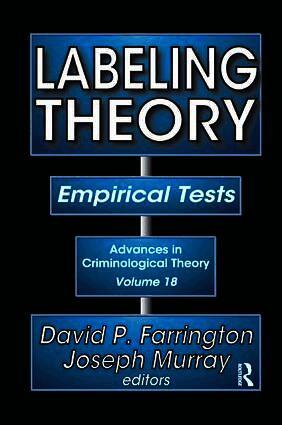
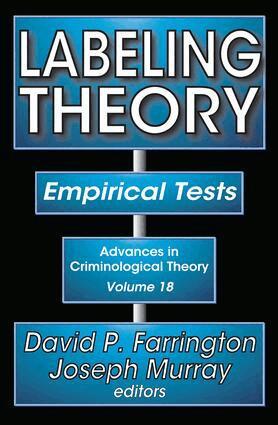
Labeling theory has been an extremely important and influential development in criminology, but its recent advances have been largely neglected. This volume aims to reinvigorate labeling theory by presenting a comprehensive range of its modern applications.In the first section, Ross Matsueda chronicles the early history of the theory. Fred Markowitz then reviews labeling theory research as applied to mental illness. Francis T. Cullen and Cheryl Lero Jonson discuss the relationship between labeling theory and correctional rehabilitation. The second section, which is focused on previous tests of labeling theory, begins with a review of prior empirical tests by Kelle Barrick. Anthony Petrosino and his colleagues then summarize their meta-analysis of the impact of the juvenile system processing on delinquency. Lawrence Sherman then discusses experiments on criminal sanctions. The final segment on empirical tests of labeling theory begins with a chapter by Marvin Krohn and his colleagues on the effects of official intervention on later offending. The long-term effects of incarceration are then investigated by Joseph Murray and his colleagues. Finally, Steven Raphael reviews the effects of conviction and incarceration on future employment.This landmark book presents the most comprehensive and up-to-date knowledge about labeling theory, and illustrates the importance of this theory for policy and practice. It is the latest volume in Transaction's acclaimed Advances in Criminological Theory series.
709 kr
Skickas inom 7-10 vardagar
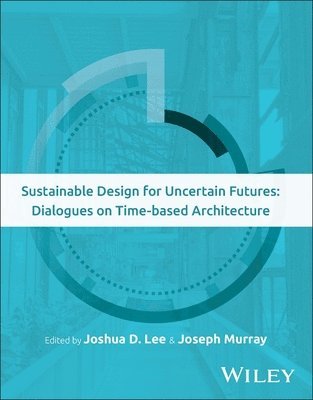
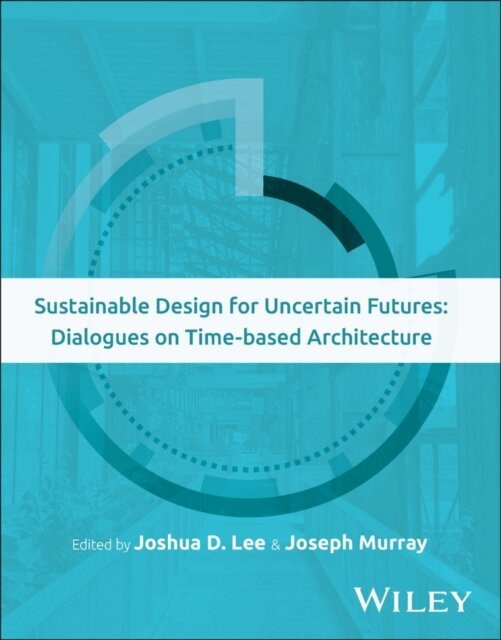
Explore pivotal intersections and themes between strategies for buildings and cities to adapt to shifting circumstances. Sustainable Design for Uncertain Futures introduces fourteen time-based strategies in architecture through a series of dialogues between experts. This format embraces a dynamic exploration of strategies ranging from Adaptive Reuse to Bio Design, revealing how each one addresses forces of change and adds adaptive capacity to the built environment. The book’s structure invites readers to engage with these strategies on multiple levels. Each chapter begins with a framing of the fundamentals, providing context and key examples to situate the strategies in the wider field. At the core of each chapter is a moderated dialogue that offers key insights into how these strategies work in practice and how they can be used in combination. By presenting these strategies through dialogue, the editors demonstrate the collaborative thinking needed to address growing uncertainty in the built environment and provide readers with an actionable framework of technical and management approaches. The book’s practical focus helps bridge the gap between theory and application, making this edited volume an invaluable resource for both academics and practitioners. Readers will find dialogues involving fifteen renowned experts in their respective fields: Avi Friedman & Naomi Keena (Mass Customization) ↔ Michael Fox (Computationally Responsive Environments) / Bie Plevoets (Adaptive Reuse) ↔ John Dale (Open Building) / Aki Ishida (Metabolism) ↔ Michelle Laboy (Persistence) / Felix Heisel (Circular Construction) ↔ Jenni Minner (Preservation) / Kim Trogal (Repair) ↔ Brad Guy (Design for Disassembly & Adaptability) / Sarah Wigglesworth (Inclusive Design) ↔ Irena Bauman (Resilience) / Doris Sung (Smart Materials) ↔ Mitchell Joachim (Bio Design) Sustainable Design for Uncertain Futures presents: The fundamentals of each strategy, along with a short summary of each with its affordances and challenges and a few key examplesThe editors’ theory of primary time signatures, enabling readers to see and plan the combination of different time-based strategies to increase building lifecycle coverage for adaptive capacityCritical insights from thought leaders across a wide spectrum of approaches to sustainability Academics, practitioners, and others interested in change in the built environment can use the strategies discussed in Sustainable Design for Uncertain Futures to develop architectural solutions that accommodate climate change, shifting demographics, new live-work patterns, and many other uncertainties.
2 088 kr
Skickas inom 10-15 vardagar
Labeling theory has been an extremely important and influential development in criminology, but its recent advances have been largely neglected. This volume aims to reinvigorate labeling theory by presenting a comprehensive range of its modern applications.In the first section, Ross Matsueda chronicles the early history of the theory. Fred Markowitz then reviews labeling theory research as applied to mental illness. Francis T. Cullen and Cheryl Lero Jonson discuss the relationship between labeling theory and correctional rehabilitation. The second section, which is focused on previous tests of labeling theory, begins with a review of prior empirical tests by Kelle Barrick. Anthony Petrosino and his colleagues then summarize their meta-analysis of the impact of the juvenile system processing on delinquency. Lawrence Sherman then discusses experiments on criminal sanctions. The final segment on empirical tests of labeling theory begins with a chapter by Marvin Krohn and his colleagues on the effects of official intervention on later offending. The long-term effects of incarceration are then investigated by Joseph Murray and his colleagues. Finally, Steven Raphael reviews the effects of conviction and incarceration on future employment.This landmark book presents the most comprehensive and up-to-date knowledge about labeling theory, and illustrates the importance of this theory for policy and practice.
765 kr
Skickas inom 5-8 vardagar
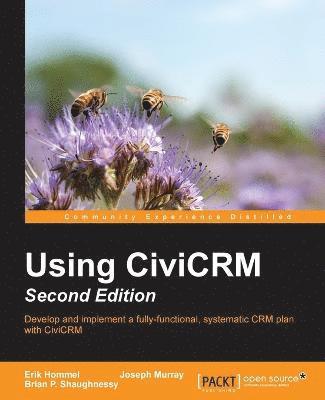
Develop and implement a fully-functional, systematic CRM plan with CiviCRMAbout This Book• Develop an integrated online system that manages contacts, donations, event registrations, memberships, bulk e-mail, campaigns, case management, and other functions such as activity tracking, grant distribution, and reporting.• Plan a constituency relationship management strategy with ladders of engagement that will improve how your organization realizes its mission.• Use case studies and step-by-step examples to put the raw concepts into real-life terminology and build your solutions.Who This Book Is ForThe book is primarily for administrators tasked with implementing, configuring, maintaining, and updating CiviCRM, and staff users who are looking to better understand the tools available in order to become power users. CiviCRM is software that may be used by advocacy groups, non-profit, and non-governmental organizations, elected officials, professional and trade associations, government entities, political campaigns and parties, and other similar organizations, and this book will prove useful to all such users.What You Will Learn • Install and configure your CiviCRM• Analyze your current workflows and processes to translate them effectively into the CiviCRM model• Build an integrated system to solicit, retain, and manage your donors and members through robust management and reporting tools for administrators• Raise more money with CiviCRM with effective solicitation campaigns• Market events effectively and track registrations and payments• Improve communications with constituents using targeted broadcast e-mail campaigns• Track ongoing communications with constituents including from Outlook and Gmail using activities and case management tools• Take advantage of the many CiviCRM tools to generate both simple and complex event structures and manage registrants through every phase of the projectIn DetailCiviCRM provides a powerful toolbox of resources to help organizations manage relationships with constituents. It is free, open source, web-based, and geared specifically to meet the constituent relationship management needs of the not-for-profit sector.Beginning with broader questions about how your organization is structured, which existing workflows are critical to your operations, and the overarching purpose of a centralized CRM, the book proceeds step by step through configuring CiviCRM, understanding the choices when setting up the system, importing data, and exploring the breadth of tools available throughout the system.You will see how to best use this software to handle event registrations, accept and track contributions, manage paid and free memberships and subscriptions, segment contacts, send bulk e-mails with open and click-through tracking, manage outreach campaigns, and set up case management workflows that match your organization's roles and rules. With specific emphasis on helping implementers ask the right questions, consider key principals when setting up the system, and understand usage through case studies and examples, the book comprehensively reviews the functionality of CiviCRM and the opportunities it provides.With this book, you can help your organization better achieve its mission as a charity, industry association, professional society, political advocacy group, community group, government agency, or other similar organization and position yourself to become a power user who efficiently and effectively navigates the system.Style and approach This guide is packed with step-by-step tutorials and real-life examples interspersed with practical advice and best practices on how to use CiviCRM strategically. You will be able to quickly grasp and implement the basic elements of CiviCRM before moving on to more advanced tools.
765 kr
Skickas inom 5-8 vardagar
Universal Wisdom in Aboriginal Dreamings
A New Perspective on Self, Consciousness and Spirituality
Häftad, Engelska, 2021
194 kr
Skickas inom 5-8 vardagar