Joseph Phiri – författare
Visar alla böcker från författaren Joseph Phiri. Handla med fri frakt och snabb leverans.
1 produkt
1 produkt
Inbunden, Engelska, 2026
3 062 kr
Kommande
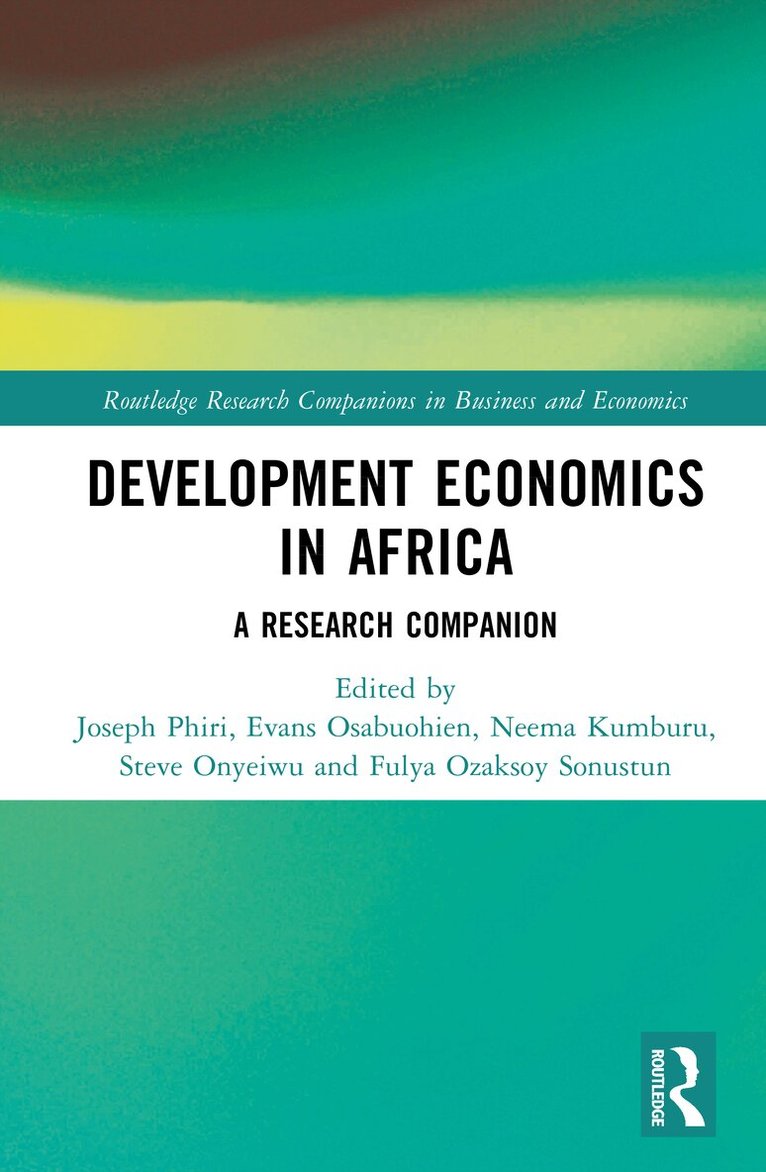
This book provides a forward-looking analysis of Africa’s evolving development trajectory, bringing together insights from leading scholars and practitioners to explore the pathways shaping the continent’s promising economic future.Divided into six sections, the book begins by establishing the conceptual and analytical foundations of the volume, interrogating how economic development is understood, theorized, and measured in the contemporary development discourse. It examines the structural, institutional, and distributive constraints that shape Africa’s development trajectory and brings together theoretical and empirical analyses to explore how governance quality, debt dynamics, inequality, labour markets, and collective action influence the pace and inclusiveness of structural transformation. It also discusses climate change and its implications for African economies, demonstrating how various institutional constraints have circumscribed the ability of African countries to achieve economic development and structural transformation. The book goes on to explore the transformative potential of digital technologies, innovation, and services-sector, highlighting how ICT, digital trade, industrialisation of services, and technological innovation interact with institutional quality to influence productivity, competitiveness, and inclusion, but also critically engages with the risks of digitalisation. The next part of the book integrates lessons on practical policy experiences in rural development, agriculture, gender empowerment, institutional learning, and developmental strategies. By grounding theory in lived policy contexts, this section highlights how innovation, gender inclusion, agriculture innovation, and institutional adaptation can translate development strategies into tangible welfare gains.Integrating theoretical perspectives with empirical evidence and policy-oriented analysis, this volume serves as a valuable resource for researchers, academics, policymakers, development practitioners, and students.