Joseph R. Slaughter - Böcker
Visar alla böcker från författaren Joseph R. Slaughter. Handla med fri frakt och snabb leverans.
3 produkter
3 produkter
1 296 kr
Skickas inom 10-15 vardagar
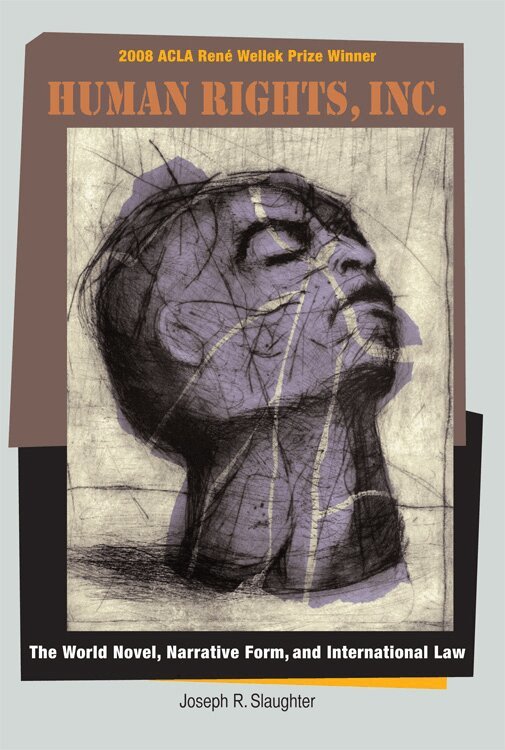
In this timely study of the historical, ideological, and formal interdependencies of the novel and human rights, Joseph Slaughter demonstrates that the twentieth-century rise of "world literature" and international human rights law are related phenomena. Slaughter argues that international law shares with the modern novel a particular conception of the human individual. The Bildungsroman, the novel of coming of age, fills out this image, offering a conceptual vocabulary, a humanist social vision, and a narrative grammar for what the Universal Declaration of Human Rights and early literary theorists both call "the free and full development of the human personality."Revising our received understanding of the relationship between law and literature, Slaughter suggests that this narrative form has acted as a cultural surrogate for the weak executive authority of international law, naturalizing the assumptions and conditions that make human rights appear commonsensical. As a kind of novelistic correlative to human rights law, the Bildungsroman has thus been doing some of the sociocultural work of enforcement that the law cannot do for itself. This analysis of the cultural work of law and of the social work of literature challenges traditional Eurocentric histories of both international law and the dissemination of the novel. Taking his point of departure in Goethe's Wilhelm Meister, Slaughter focuses on recent postcolonial versions of the coming-of-age story to show how the promise of human rights becomes legible in narrative and how the novel and the law are complicit in contemporary projects of globalization: in colonialism, neoimperalism, humanitarianism, and the spread of multinational consumer capitalism.Slaughter raises important practical and ethical questions that we must confront in advocating for human rights and reading world literature—imperatives that, today more than ever, are intertwined.
529 kr
Skickas inom 10-15 vardagar
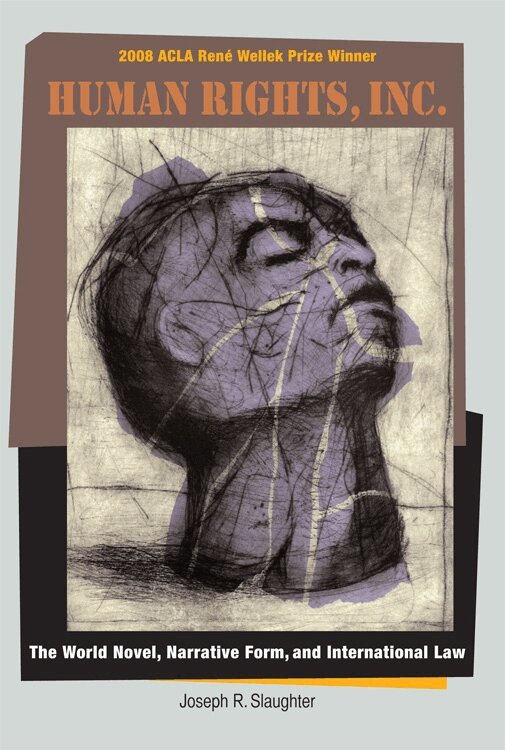
In this timely study of the historical, ideological, and formal interdependencies of the novel and human rights, Joseph Slaughter demonstrates that the twentieth-century rise of "world literature" and international human rights law are related phenomena. Slaughter argues that international law shares with the modern novel a particular conception of the human individual. The Bildungsroman, the novel of coming of age, fills out this image, offering a conceptual vocabulary, a humanist social vision, and a narrative grammar for what the Universal Declaration of Human Rights and early literary theorists both call "the free and full development of the human personality."Revising our received understanding of the relationship between law and literature, Slaughter suggests that this narrative form has acted as a cultural surrogate for the weak executive authority of international law, naturalizing the assumptions and conditions that make human rights appear commonsensical. As a kind of novelistic correlative to human rights law, the Bildungsroman has thus been doing some of the sociocultural work of enforcement that the law cannot do for itself. This analysis of the cultural work of law and of the social work of literature challenges traditional Eurocentric histories of both international law and the dissemination of the novel. Taking his point of departure in Goethe's Wilhelm Meister, Slaughter focuses on recent postcolonial versions of the coming-of-age story to show how the promise of human rights becomes legible in narrative and how the novel and the law are complicit in contemporary projects of globalization: in colonialism, neoimperalism, humanitarianism, and the spread of multinational consumer capitalism.Slaughter raises important practical and ethical questions that we must confront in advocating for human rights and reading world literature—imperatives that, today more than ever, are intertwined.
462 kr
Skickas inom 7-10 vardagar
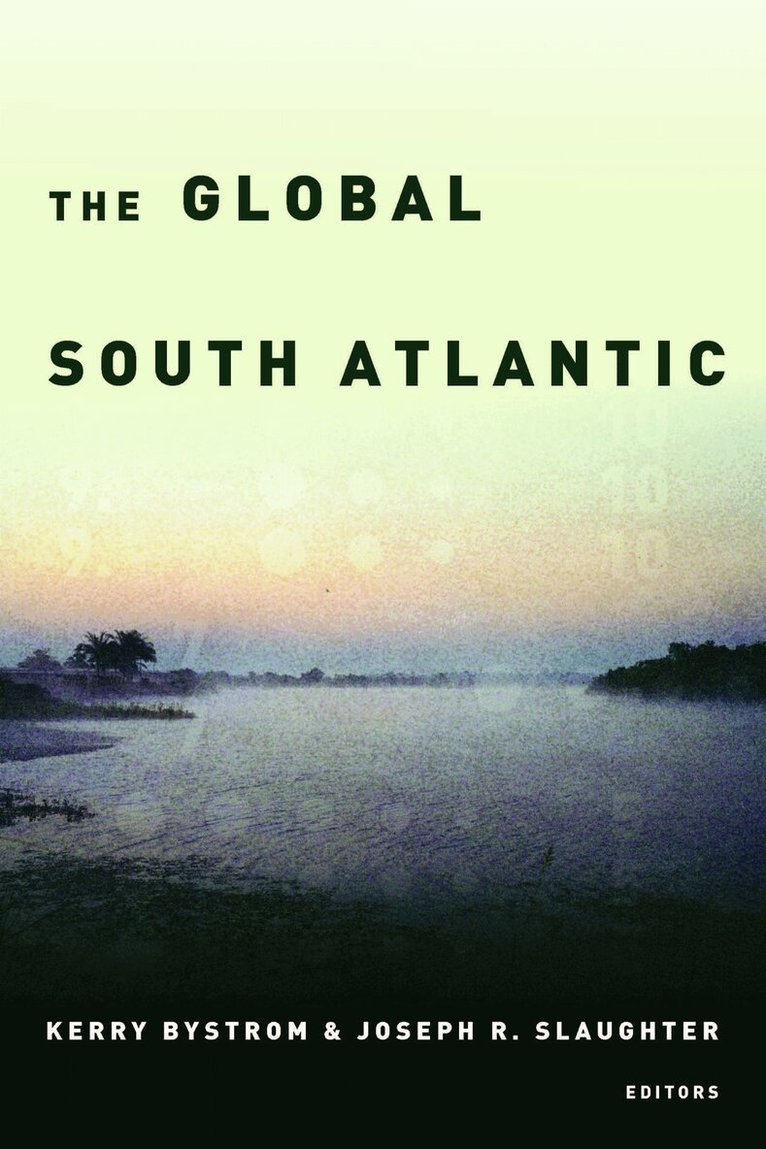
Not only were more African slaves transported to South America than to North, but overlapping imperialisms and shared resistance to them have linked Africa, Latin America, and the Caribbean for over five centuries. Yet despite the rise in transatlantic, oceanic, hemispheric, and regional studies, and even the growing interest in South-South connections, the South Atlantic has not yet emerged as a site that captures the attention it deserves.The Global South Atlantic traces literary exchanges and interlaced networks of communication and investment—financial, political, socio-cultural, libidinal—across and around the southern ocean. Bringing together scholars working in a range of languages, from Spanish to Arabic, the book shows the range of ways people, governments, political movements, social imaginaries, cultural artefacts, goods, and markets cross the South Atlantic, or sometimes fail to cross.As a region made up of multiple intersecting regions, and as a vision made up of complementary and competing visions, the South Atlantic can only be understood comparatively. Exploring the Atlantic as an effect of structures of power and knowledge that issue from the Global South as much as from Europe and North America, The Global South Atlantic helps to rebalance global literary studies by making visible a multi-textured South Atlantic system that is neither singular nor stable.