Joseph Sweeney – författare
Visar alla böcker från författaren Joseph Sweeney. Handla med fri frakt och snabb leverans.
4 produkter
4 produkter
Inbunden, Engelska, 2016
1 661 kr
Skickas inom 10-15 vardagar
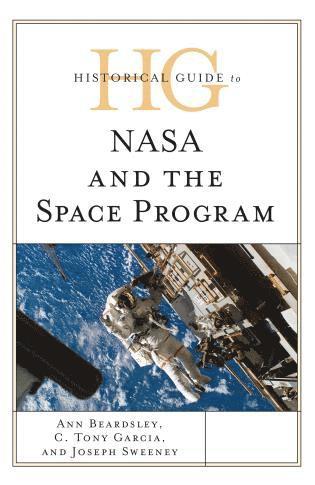
NASA—the National Aeronautics and Space Administration created in the wake of the Space Act—has and continues to accomplish those precepts every day. With many hundreds of satellites launched into space and close to 200 human spaceflights, NASA is a proven leader in space exploration. Most of the US space exploration efforts have been led by NASA, including the Apollo moon-landing missions, the Skylab space station, and later the Space Shuttle. Currently, NASA is supporting the International Space Station and is overseeing the development of the Orion Multi-Purpose Crew Vehicle, the Space Launch System and Commercial Crew vehicles. NASA is also responsible for the Launch Services Program which provides oversight of launch operations and countdown management for unmanned NASA launches.The Historical Guide to NASA and the Space Program contains a chronology, an introduction, appendixes, and an extensive bibliography. The dictionary section has over 500 cross-referenced entries on space missions, astronauts, technical terms, space shuttles, satellites and the international space station. This book is an excellent access point for students, researchers, and anyone wanting to know more about NASA and space exploration.
Häftad, Engelska, 1995
565 kr
Skickas inom 10-15 vardagar
Joseph Sweeney, Andrew Heaton he presence of allogeneic leukocytes in blood products received little T attention until the mid-1950s when these "passenger" cells were im plicated in the etiology of febrile transfusion reactions, and early strate gies based on centrifugation were developed to effect their removal. In recent decades and, particularly in the past five years, there has been an accumulation of literature implicating leukocytes in a wide variety of undesirable reactions to blood transfusion. White cells are the least numerous of the cellular elements in blood and ratios of white cells to platelets and white cells to red cells are ap proximately 1:15 to 1:1000 respectively. This ratio is maintained in whole blood, but may be altered slightly in the process of component prepara tion. Any production or processing step which intentionally decreases this ratio will result in a product which can be described as white cell depleted. It has, however, become more common to define the outcome as a residual white cell content, rather than a decrease in cellular ratios, although the latter makes more sense on theoretical grounds, since deple tion of white cells needs to be put in the context of any unintentional loss of red cells or platelets. The end result of this intentional processing step, therefore, is generally expressed as the residual absolute number of white cells or as the degree of difference in white cell content, the latter expressed as either a percentage change or as a logarithmic reduction.
Inbunden, Engelska, 2006
3 176 kr
Skickas inom 5-8 vardagar
In our post-9/11 world, the laws of aviation are under intense scrutiny. From torts law and victim compensation to passenger screening, pilots with guns, and international aviation agreements, the practice of aviation law is burgeoning.The book, AVIATION LAWS: Cases, Laws, and Related Sources, fills a gap in legal literature. It is directed to both practicing lawyers and to law students. The book introduces all the major areas of air law: International air law regime, crimes involving aircraft, economic regulation of domestic and international air carriage, litigation management, domestic and international liability regimes, governmental immunity from liability, airport law, airline travel restrictions, airport law, insurance, NTSB accident investigation, aircraft financing, FAA regulation of air safety, and airline labor relations. These subjects are presented not only in explanatory text, but also in cases and related source materials. The most important texts are annexed.The authors, Professors Larsen and Gillick, have regularly taught the course in Air Law at Georgetown University Law Center for more than 30 years. They have long time hands-on experience at the Department of Transportation and in private practice. Professor Sweeney, John D. Calamari Distinguished Professor of Law, has taught the course at Fordham University Law School for 30 years. He also has extensive transportation practice background.Classroom adoption: $85/copy for 10 or more copies.Student Edition : 1–57105–340-9, $95/copyPublished under the Transnational Publishers imprint.
E-bok
PDF, Engelska, 2013708 kr
Läs direkt efter köp
Joseph Sweeney, Andrew Heaton he presence of allogeneic leukocytes in blood products received little T attention until the mid-1950s when these "passenger" cells were im plicated in the etiology of febrile transfusion reactions, and early strate gies based on centrifugation were developed to effect their removal. In recent decades and, particularly in the past five years, there has been an accumulation of literature implicating leukocytes in a wide variety of undesirable reactions to blood transfusion. White cells are the least numerous of the cellular elements in blood and ratios of white cells to platelets and white cells to red cells are ap proximately 1:15 to 1:1000 respectively. This ratio is maintained in whole blood, but may be altered slightly in the process of component prepara tion. Any production or processing step which intentionally decreases this ratio will result in a product which can be described as white cell depleted. It has, however, become more common to define the outcome as a residual white cell content, rather than a decrease in cellular ratios, although the latter makes more sense on theoretical grounds, since deple tion of white cells needs to be put in the context of any unintentional loss of red cells or platelets. The end result of this intentional processing step, therefore, is generally expressed as the residual absolute number of white cells or as the degree of difference in white cell content, the latter expressed as either a percentage change or as a logarithmic reduction.