Joshua B. Hill - Böcker
Visar alla böcker från författaren Joshua B. Hill. Handla med fri frakt och snabb leverans.
4 produkter
4 produkter
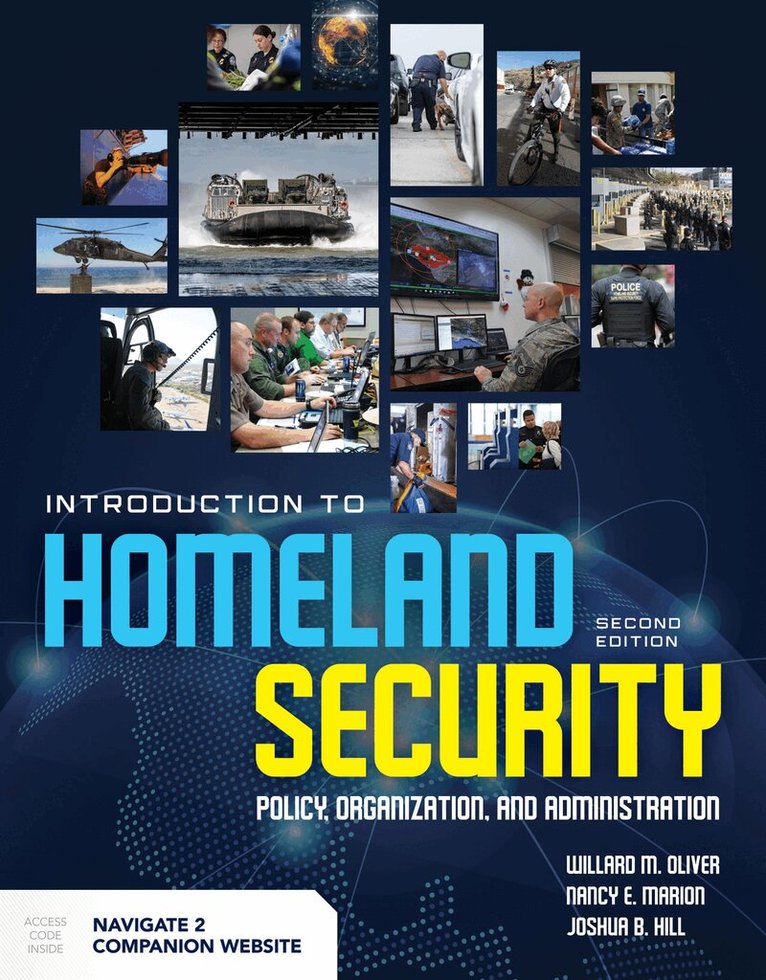
Introduction to Homeland Security: Policy, Organization, and Administration
Policy, Organization, and Administration
Häftad, Engelska, 2019
1 101 kr
Skickas inom 7-10 vardagar
After the terrorist attacks of September , 2 , and with the establishment of the Department of Homeland Security, the academic field of Homeland Security has grown exponentially. Until now, no text existed that addressed the need for a definitive textbook on this rapidly expanding field. Suitable for undergraduate students entering the field of Homeland Security, and for Criminal Justice students studying their role in a post-9/ world, Introduction to Homeland Security: Policy, Organization, and Administration, Second Edition is a comprehensive but accessible text designed for students seeking a thorough overview of the policies, administrations, and organizations that fall under Homeland Security.The only text of its kind available on the market, Introduction to Homeland Security, Second Edition offers grounding in the basic issues of homeland security, the history and context of the field, and what the future of the field might hold. Students will come away with a solid understanding of the central issues surrounding Homeland Security, including policy concepts and political and legal responses to Homeland Security. Authored by leading experts in the field, Introduction to Homeland Security: Policy, Organization, and Administration, Second Edition is the essential text on understanding Homeland Security in America today.
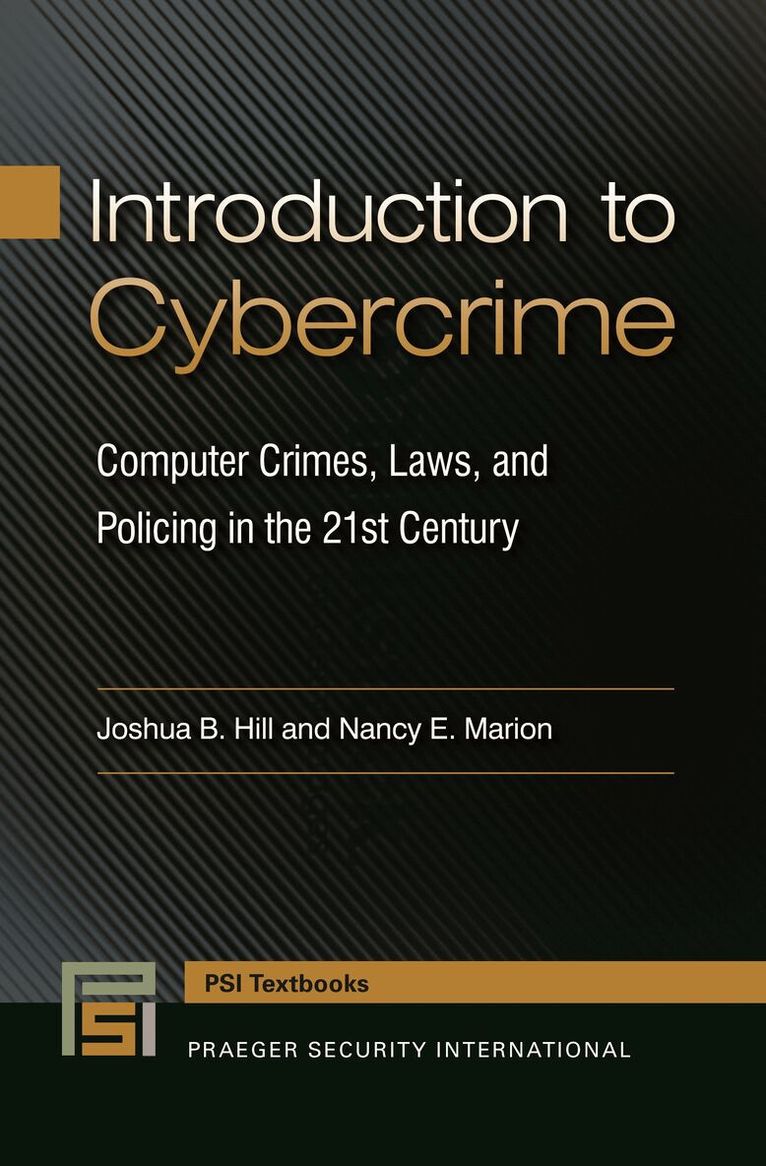
Introduction to Cybercrime
Computer Crimes, Laws, and Policing in the 21st Century
Inbunden, Engelska, 2016
942 kr
Skickas inom 10-15 vardagar
Explaining cybercrime in a highly networked world, this book provides a comprehensive yet accessible summary of the history, modern developments, and efforts to combat cybercrime in various forms at all levels of government—international, national, state, and local.As the exponential growth of the Internet has made the exchange and storage of information quick and inexpensive, the incidence of cyber-enabled criminal activity—from copyright infringement to phishing to online pornography—has also exploded. These crimes, both old and new, are posing challenges for law enforcement and legislators alike. What efforts—if any—could deter cybercrime in the highly networked and extremely fast-moving modern world? Introduction to Cybercrime: Computer Crimes, Laws, and Policing in the 21st Century seeks to address this tough question and enables readers to better contextualize the place of cybercrime in the current landscape.This textbook documents how a significant side effect of the positive growth of technology has been a proliferation of computer-facilitated crime, explaining how computers have become the preferred tools used to commit crimes, both domestically and internationally, and have the potential to seriously harm people and property alike. The chapters discuss different types of cybercrimes—including new offenses unique to the Internet—and their widespread impacts. Readers will learn about the governmental responses worldwide that attempt to alleviate or prevent cybercrimes and gain a solid understanding of the issues surrounding cybercrime in today's society as well as the long- and short-term impacts of cybercrime.
Introduction to Cybercrime
Computer Crimes, Laws, and Policing in the 21st Century
Häftad, Engelska, 2016
568 kr
Skickas inom 10-15 vardagar
Explaining cybercrime in a highly networked world, this book provides a comprehensive yet accessible summary of the history, modern developments, and efforts to combat cybercrime in various forms at all levels of government—international, national, state, and local.As the exponential growth of the Internet has made the exchange and storage of information quick and inexpensive, the incidence of cyber-enabled criminal activity—from copyright infringement to phishing to online pornography—has also exploded. These crimes, both old and new, are posing challenges for law enforcement and legislators alike. What efforts—if any—could deter cybercrime in the highly networked and extremely fast-moving modern world? Introduction to Cybercrime: Computer Crimes, Laws, and Policing in the 21st Century seeks to address this tough question and enables readers to better contextualize the place of cybercrime in the current landscape.This textbook documents how a significant side effect of the positive growth of technology has been a proliferation of computer-facilitated crime, explaining how computers have become the preferred tools used to commit crimes, both domestically and internationally, and have the potential to seriously harm people and property alike. The chapters discuss different types of cybercrimes—including new offenses unique to the Internet—and their widespread impacts. Readers will learn about the governmental responses worldwide that attempt to alleviate or prevent cybercrimes and gain a solid understanding of the issues surrounding cybercrime in today's society as well as the long- and short-term impacts of cybercrime.
449 kr
Skickas inom 10-15 vardagar
In 1996, California became the first state to legalize medical marijuana. Since then, 30 states and the District of Columbia have passed laws legalizing marijuana in some form. Nine of those states, including Alaska, Oregon, Colorado and Washington, have legalized marijuana for recreational use. Many states, including Arizona and Ohio, are considering legislation to allow for legalized cannabis use.Marijuana 360: Differing Perspectives on Legalization examines the perception of marijuana legalization from the perspective of those who are directly involved in some aspect of legal marijuana. Nancy E. Marion and Joshua B. Hill interweaves the interviews from a variety of representatives from different integral groups that have been affected by marijuana legalization, in both states that have legalized or are considering the legalization of marijuana, to get their impressions of the impact the law has made (or will make) in their area. These groups include medical professionals, educators, parents, lawmakers, drug users, and others. There is more public support for reform than ever before, but still much debate over the issues of legalizing marijuana. Marijuana 360 increases our understanding of what different professionals think about the legalization of marijuana.