
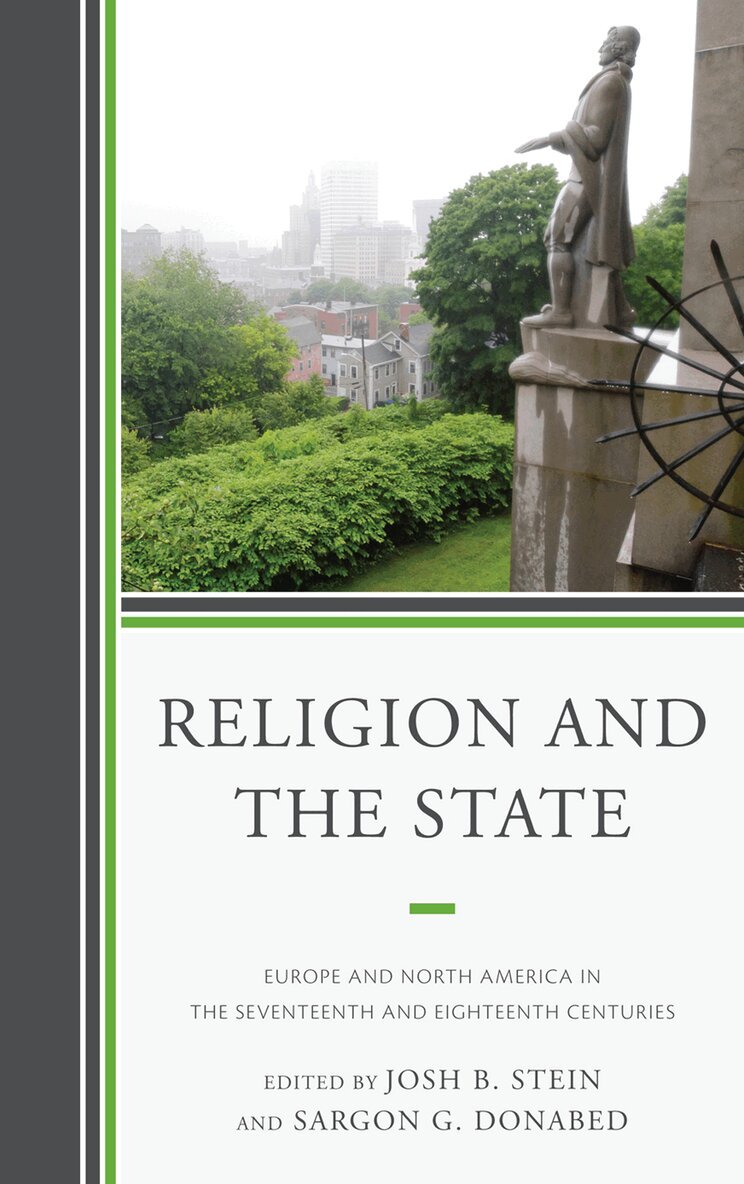
The historiography of church-state relations in America and Europe remains a live cultural, religious, and political issue on both sides of the Atlantic. Even more, current political invocations of history illuminate the need for a thoroughly trans-Atlantic approach to the history of church-state relations in the modern West. In the seventeenth and eighteenth centuries, the formative period for modern church-states relations we see vividly the complex interrelationship of developments from England, France, and America. Ever since, historians and political figures have compared the European and American efforts to discern the proper role of religion in government and government in religion. This work is an effort to illuminate that role or at the very least to bring to light the innumerable ways in which such roles were formed.
In an age where scholars, lawyers, judges and just plain folk debate the original intent of the U.S. Constitution, Commentary on the Constitution from Plato to Rousseau demonstrates that the issues confronting the founders—as well as issues of understanding what the founders intended—can be traced back to antiquity. Stein looks at 14 historical figures who—by their words and/or deeds—set the stage for political thought before the constitution was written. All the subjects of this book deal as best they can with questions of the relationship between executive and other branches of government; all deal with the role of religion in government; all deal with how much (if any) democracy should be allowed in determining fundamental law and day-to-day governance; all engaged in the thought experiment of asking what life was like before government, and therefore why government was instituted; all deal with the relationship of central authority and provincial (states') rights; all seek to avoid tyranny. Commentary on the Constitution from Plato to Rousseau is not about what the founders took from previous thinkers and political figures; it is a book that allows the reader to consider the U.S. Constitution while learning about people whose genius has transcended time, from Plato to Rousseau.
The historiography of church-state relations in America and Europe remains a live cultural, religious, and political issue on both sides of the Atlantic. Even more, current political invocations of history illuminate the need for a thoroughly trans-Atlantic approach to the history of church-state relations in the modern West. In the seventeenth and eighteenth centuries, the formative period for modern church-states relations we see vividly the complex interrelationship of developments from England, France, and America. Ever since, historians and political figures have compared the European and American efforts to discern the proper role of religion in government and government in religion. This work is an effort to illuminate that role or at the very least to bring to light the innumerable ways in which such roles were formed.
In an age where scholars, lawyers, judges and just plain folk debate the original intent of the U.S. Constitution, Commentary on the Constitution from Plato to Rousseau demonstrates that the issues confronting the founders—as well as issues of understanding what the founders intended—can be traced back to antiquity. Stein looks at 14 historical figures who—by their words and/or deeds—set the stage for political thought before the constitution was written. All the subjects of this book deal as best they can with questions of the relationship between executive and other branches of government; all deal with the role of religion in government; all deal with how much (if any) democracy should be allowed in determining fundamental law and day-to-day governance; all engaged in the thought experiment of asking what life was like before government, and therefore why government was instituted; all deal with the relationship of central authority and provincial (states') rights; all seek to avoid tyranny. Commentary on the Constitution from Plato to Rousseau is not about what the founders took from previous thinkers and political figures; it is a book that allows the reader to consider the U.S. Constitution while learning about people whose genius has transcended time, from Plato to Rousseau.