Joshua F. Wiley - Böcker
Visar alla böcker från författaren Joshua F. Wiley. Handla med fri frakt och snabb leverans.
5 produkter
5 produkter
Advanced R Statistical Programming and Data Models
Analysis, Machine Learning, and Visualization
Häftad, Engelska, 2019
756 kr
Skickas inom 10-15 vardagar
Carry out a variety of advanced statistical analyses including generalized additive models, mixed effects models, multiple imputation, machine learning, and missing data techniques using R. Each chapter starts with conceptual background information about the techniques, includes multiple examples using R to achieve results, and concludes with a case study.Written by Matt and Joshua F. Wiley, Advanced R Statistical Programming and Data Models shows you how to conduct data analysis using the popular R language. You’ll delve into the preconditions or hypothesis for various statistical tests and techniques and work through concrete examples using R for a variety of these next-level analytics. This is a must-have guide and reference on using and programming with the R language. What You’ll LearnConduct advanced analyses in R including: generalized linear models, generalized additive models, mixedeffects models, machine learning, and parallel processingCarry out regression modeling using R data visualization, linear and advanced regression, additive models, survival / time to event analysisHandle machine learning using R including parallel processing, dimension reduction, and feature selection and classificationAddress missing data using multiple imputation in RWork on factor analysis, generalized linear mixed models, and modeling intraindividual variability Who This Book Is ForWorking professionals, researchers, or students who are familiar with R and basic statistical techniques such as linear regression and who want to learn how to use R to perform more advanced analytics. Particularly, researchers and data analysts in the social sciences may benefit from these techniques. Additionally, analysts who need parallel processing to speed up analytics are givenproven code to reduce time to result(s).
656 kr
Skickas inom 10-15 vardagar
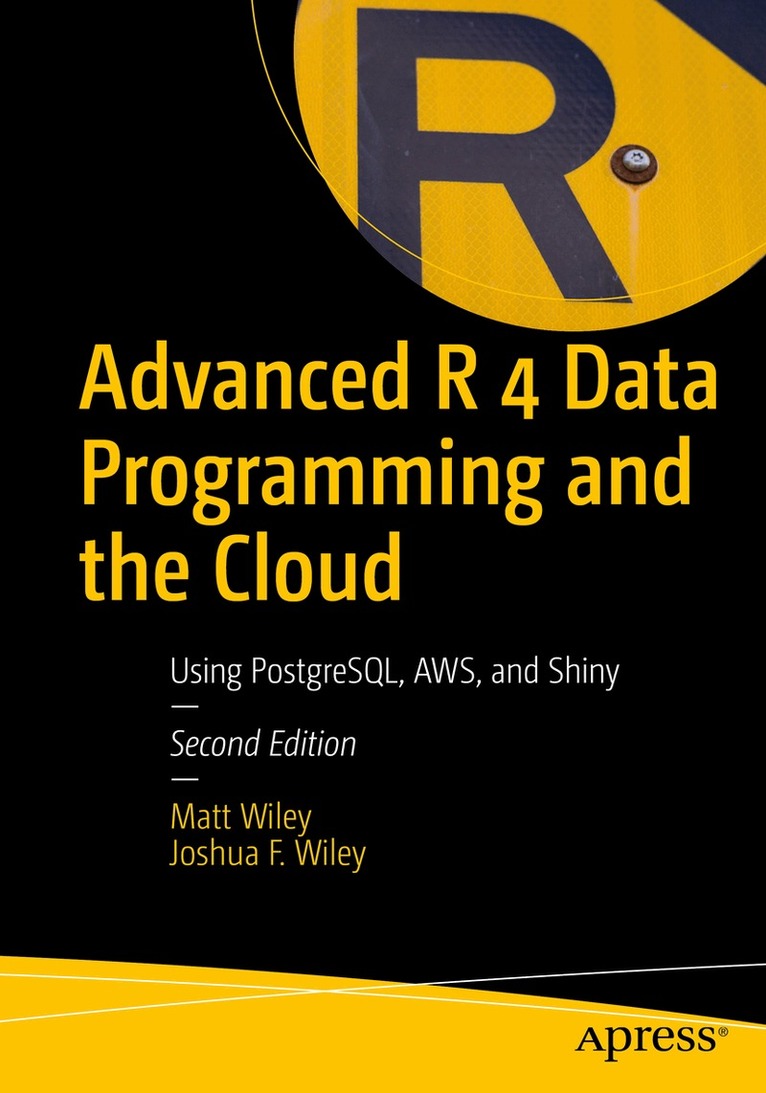
Program for data analysis using R and learn practical skills to make your work more efficient. This revised book explores how to automate running code and the creation of reports to share your results, as well as writing functions and packages. It includes key R 4 features such as a new color palette for charts, an enhanced reference counting system, and normalization of matrix and array types where matrix objects now formally inherit from the array class, eliminating inconsistencies.Advanced R 4 Data Programming and the Cloud is not designed to teach advanced R programming nor to teach the theory behind statistical procedures. Rather, it is designed to be a practical guide moving beyond merely using R; it shows you how to program in R to automate tasks. This book will teach you how to manipulate data in modern R structures and includes connecting R to databases such as PostgreSQL, cloud services such as Amazon Web Services (AWS), and digital dashboards such as Shiny. Each chapter also includes a detailed bibliography with references to research articles and other resources that cover relevant conceptual and theoretical topics.What You Will LearnWrite and document R functions using R 4Make an R package and share it via GitHub or privatelyAdd tests to R code to ensure it works as intendedUse R to talk directly to databases and do complex data managementRun R in the Amazon cloudDeploy a Shiny digital dashboardGenerate presentation-ready tables and reports using RWho This Book Is ForWorking professionals, researchers, and students who are familiar with R and basic statistical techniques such as linear regression and who want to learn how to take their R coding and programming to the next level.
152 kr
Skickas
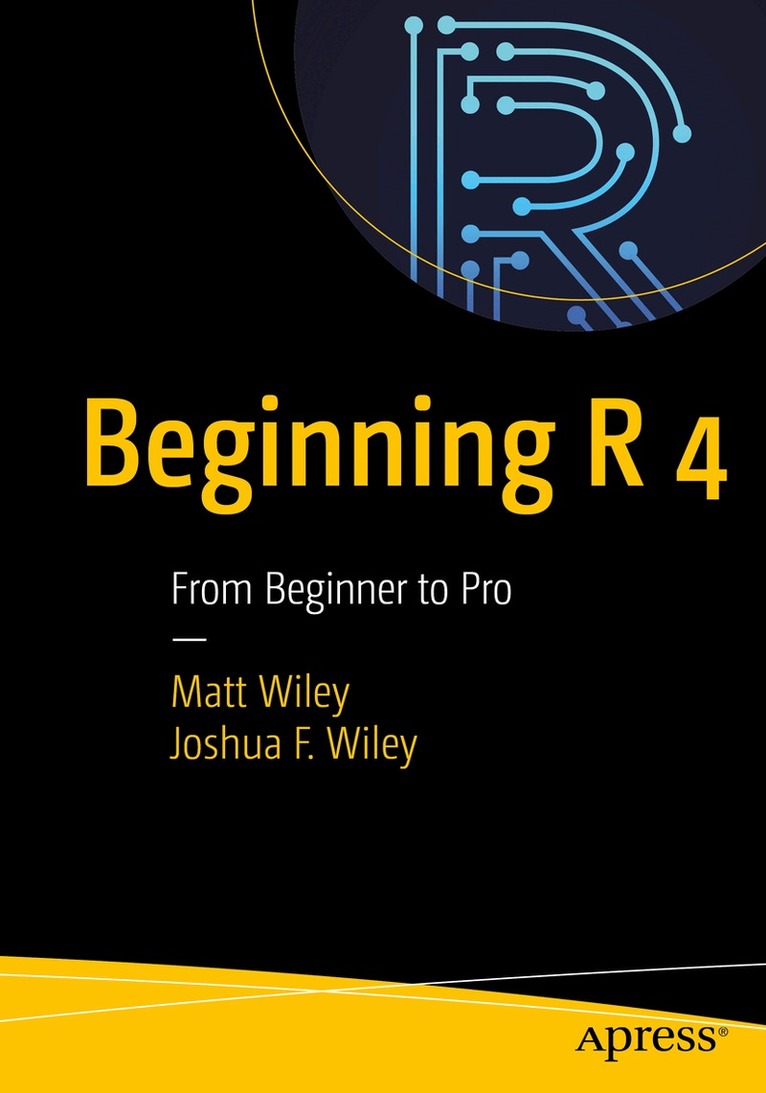
Learn how to use R 4, write and save R scripts, read in and write out data files, use built-in functions, and understand common statistical methods. This in-depth tutorial includes key R 4 features including a new color palette for charts, an enhanced reference counting system (useful for big data), and new data import settings for text (as well as the statistical methods to model text-based, categorical data). Each chapter starts with a list of learning outcomes and concludes with a summary of any R functions introduced in that chapter, along with exercises to test your new knowledge. The text opens with a hands-on installation of R and CRAN packages for both Windows and macOS. The bulk of the book is an introduction to statistical methods (non-proof-based, applied statistics) that relies heavily on R (and R visualizations) to understand, motivate, and conduct statistical tests and modeling.Beginning R 4 shows the use of R in specific cases such as ANOVA analysis, multiple and moderated regression, data visualization, hypothesis testing, and more. It takes a hands-on, example-based approach incorporating best practices with clear explanations of the statistics being done.You will:Acquire and install R and RStudioImport and export data from multiple file formatsAnalyze data and generate graphics (including confidence intervals)Interactively conduct hypothesis testingCode multiple and moderated regression solutions Who This Book Is For Programmers and data analysts who are new to R. Some prior experience in programming is recommended.
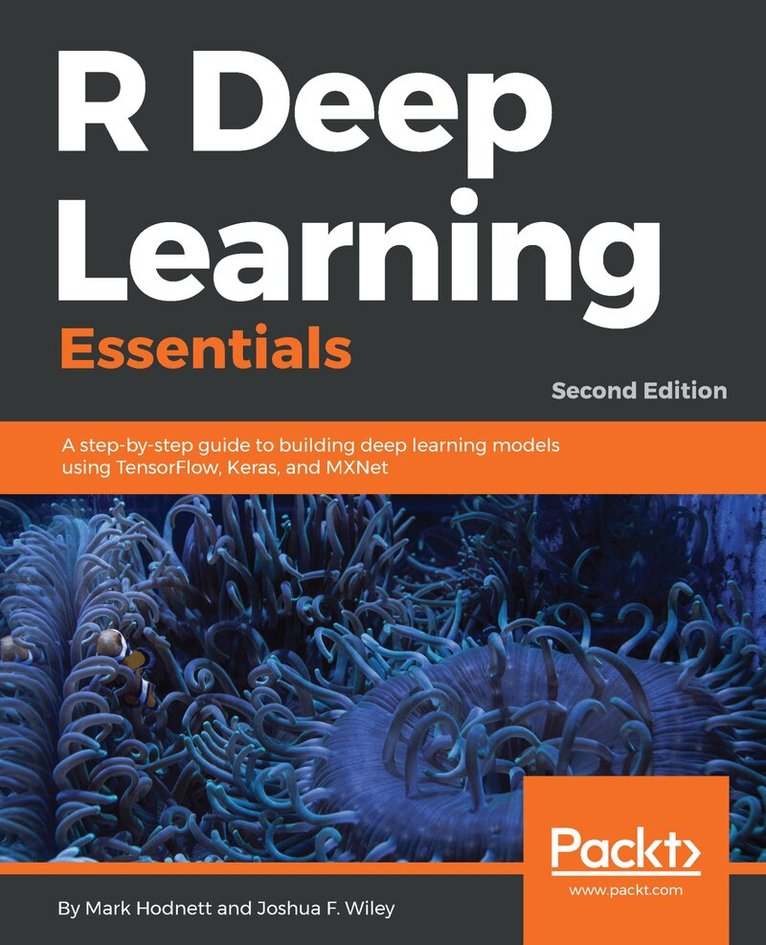
R Deep Learning Essentials
A step-by-step guide to building deep learning models using TensorFlow, Keras, and MXNet, 2nd Edition
Häftad, Engelska, 2018
510 kr
Skickas inom 5-8 vardagar
Implement neural network models in R 3.5 using TensorFlow, Keras, and MXNetKey FeaturesUse R 3.5 for building deep learning models for computer vision and textApply deep learning techniques in cloud for large-scale processingBuild, train, and optimize neural network models on a range of datasetsBook DescriptionDeep learning is a powerful subset of machine learning that is very successful in domains such as computer vision and natural language processing (NLP). This second edition of R Deep Learning Essentials will open the gates for you to enter the world of neural networks by building powerful deep learning models using the R ecosystem.This book will introduce you to the basic principles of deep learning and teach you to build a neural network model from scratch. As you make your way through the book, you will explore deep learning libraries, such as Keras, MXNet, and TensorFlow, and create interesting deep learning models for a variety of tasks and problems, including structured data, computer vision, text data, anomaly detection, and recommendation systems. You’ll cover advanced topics, such as generative adversarial networks (GANs), transfer learning, and large-scale deep learning in the cloud. In the concluding chapters, you will learn about the theoretical concepts of deep learning projects, such as model optimization, overfitting, and data augmentation, together with other advanced topics.By the end of this book, you will be fully prepared and able to implement deep learning concepts in your research work or projects.What you will learnBuild shallow neural network prediction modelsPrevent models from overfitting the data to improve generalizabilityExplore techniques for finding the best hyperparameters for deep learning modelsCreate NLP models using Keras and TensorFlow in RUse deep learning for computer vision tasksImplement deep learning tasks, such as NLP, recommendation systems, and autoencodersWho this book is forThis second edition of R Deep Learning Essentials is for aspiring data scientists, data analysts, machine learning developers, and deep learning enthusiasts who are well versed in machine learning concepts and are looking to explore the deep learning paradigm using R. Fundamental understanding of the R language is necessary to get the most out of this book.
Deep Learning with R for Beginners
Design neural network models in R 3.5 using TensorFlow, Keras, and MXNet
Häftad, Engelska, 2019
621 kr
Skickas inom 5-8 vardagar
Explore the world of neural networks by building powerful deep learning models using the R ecosystemKey FeaturesGet to grips with the fundamentals of deep learning and neural networksUse R 3.5 and its libraries and APIs to build deep learning models for computer vision and text processingImplement effective deep learning systems in R with the help of end-to-end projectsBook DescriptionDeep learning finds practical applications in several domains, while R is the preferred language for designing and deploying deep learning models.This Learning Path introduces you to the basics of deep learning and even teaches you to build a neural network model from scratch. As you make your way through the chapters, you’ll explore deep learning libraries and understand how to create deep learning models for a variety of challenges, right from anomaly detection to recommendation systems. The book will then help you cover advanced topics, such as generative adversarial networks (GANs), transfer learning, and large-scale deep learning in the cloud, in addition to model optimization, overfitting, and data augmentation. Through real-world projects, you’ll also get up to speed with training convolutional neural networks (CNNs), recurrent neural networks (RNNs), and long short-term memory networks (LSTMs) in R.By the end of this Learning Path, you’ll be well versed with deep learning and have the skills you need to implement a number of deep learning concepts in your research work or projects.This Learning Path includes content from the following Packt products:R Deep Learning Essentials - Second Edition by Joshua F. Wiley and Mark HodnettR Deep Learning Projects by Yuxi (Hayden) Liu and Pablo MaldonadoWhat you will learnImplement credit card fraud detection with autoencodersTrain neural networks to perform handwritten digit recognition using MXNetReconstruct images using variational autoencodersExplore the applications of autoencoder neural networks in clustering and dimensionality reductionCreate natural language processing (NLP) models using Keras and TensorFlow in RPrevent models from overfitting the data to improve generalizabilityBuild shallow neural network prediction modelsWho this book is forThis Learning Path is for aspiring data scientists, data analysts, machine learning developers, and deep learning enthusiasts who are well versed in machine learning concepts and are looking to explore the deep learning paradigm using R. A fundamental understanding of R programming and familiarity with the basic concepts of deep learning are necessary to get the most out of this Learning Path.