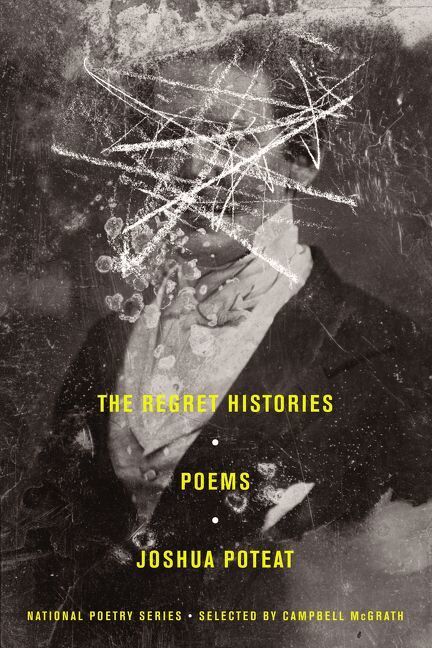
This powerful and provocative new installment of poetry is a recipient of the 2014 National Poetry Series Prize, as chosen by Campbell McGrath.The National Poetry Series''s long tradition of promoting exceptional poetry from lesser-known poets delivers another outstanding collection of poetry by Joshua Poteat.Through an investigation of the haunted spaces where history collides with the modern southern American landscape, The Regret Histories explores themes of ruin and nostalgia, our relationship to a collective past, and the extraordinary indifference of time to memory.For thirty years, the National Poetry Series has discovered many new and emerging voices and has been instrumental in launching the careers of poets and writers such as Billy Collins, Mark Doty, Denis Johnson, Marie Howe, and Sherod Santos.
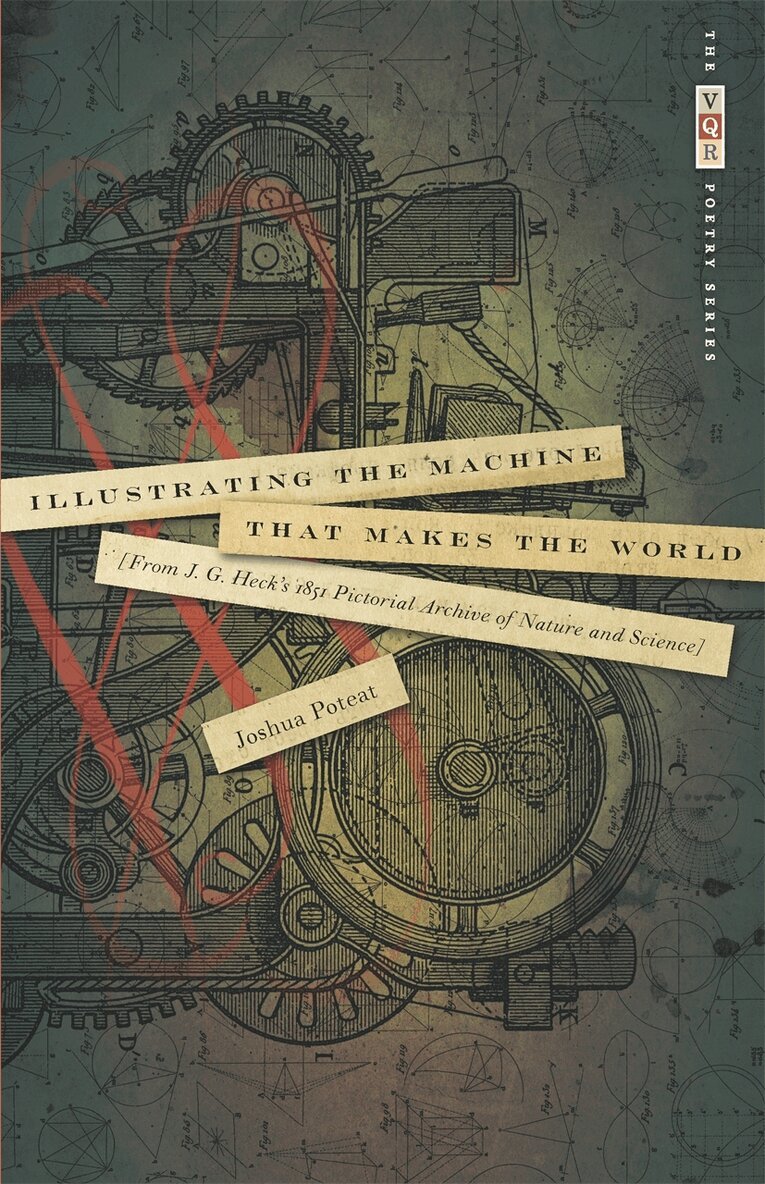
In this book-length series, poems with titles such as “Illustrating the theory of interference” and “Illustrating the construction of railroads” are paired with nineteenth-century engravings depicting phenomena from geology to astronomy to mechanics. Yet the poems relate to the images in an oblique rather than a direct way. Poteat uses this framework to construct a mysterious and engaging book that inhabits many worlds at once, bridging the real and the imagined, the traditional and the experimental, the surreal and the ordinary.As each diagram and scene gives rise to a poem that intertwines the life of German artist and printer J. G. Heck—imagined, as little is recorded—with Poteat’s own, the book reveals a preoccupation with landscape that encompasses both the precision of Heck’s carefully labeled sine waves and brass devices as well as the eeriness of his depictions of skeletal hands or dogs tearing apart a wounded boar. Poteat’s intense interest in the natural world is set against a sense of a world behind the world, where each living thing is properly named and the Spirit glows purposefully above the forest, ready to heal if asked in the correct manner.From “Illustrating how to catch and manufacture ghosts”: Tonight there is no wind. Even the heat / is on its knees, and the moths laying eggs / on the side door are not being honest / with themselves. Though their enterprise / is beauty, the eggs will not last through / the rains, and so it goes. / A slug, fresh as cinnamon, steps through / the snuffed coals of my stove.