Jouko Sarvi – författare
Visar alla böcker från författaren Jouko Sarvi. Handla med fri frakt och snabb leverans.
6 produkter
6 produkter
E-bok
Engelska, 201546 kr
Läs direkt efter köp
With more than 140 countries currently offering or in transition to a kindergarten through grade 12 (K–12) school education system, this desk study explored the experiences of four countries---Mongolia, Philippines, Poland, and Turkey---and one Canadian province, Ontario, in preparing and implementing K–12 systems. Lessons learned from the five diverse jurisdictions are: (i) align the education system with macro policies, (ii) view transition to K–12 as part of a package of reforms, (iii) prioritize improving student learning, (iv) consider teacher development as critical, (v) avoid high-stakes examinations, and (vi) focus on higher order curriculum and assessments.
E-bok
Engelska, 201546 kr
Läs direkt efter köp
Early adoption of information and communication technology can allow developing countries in Asia and the Pacific to move from labor-intensive, natural resources-based to knowledge-based economies. Higher education institutions must adopt an institution-wide, holistic information and communication technology (ICT) strategy, not a project-based approach, to avoid redundancies, obsolescence, and large maintenance costs. A coordinated top-down plus bottom-up intervention is best, with three areas requiring attention: infrastructure, application software, and staff development. ICT investments in higher education institutions in support of teaching, research, and community engagement are essential for developing and retaining competitive advantage in the knowledge economy.
E-bok
Engelska, 201547 kr
Läs direkt efter köp
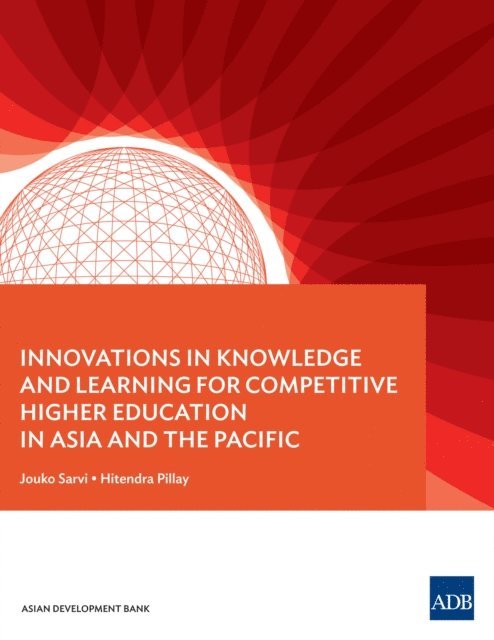
Higher education institutions in Asia and the Pacific, modeled on industrial age thinking that demands excellence in routinized capacities, lack the ability to innovate and create new knowledge enterprises. The transition to a knowledge economy is affecting the purpose, content, pedagogy, and methodologies of higher education. Nontraditional stakeholders such as professional bodies, industry experts, think tanks, research institutes, and field experts/practitioners are now involved not only in planning but in providing higher education services. The traditional model of "knowledge versus skills" is no longer relevant. Higher education programs must consider lived experiences, contextual knowledge, and indigenous knowledge.
E-bok
Engelska, 201754 kr
Läs direkt efter köp
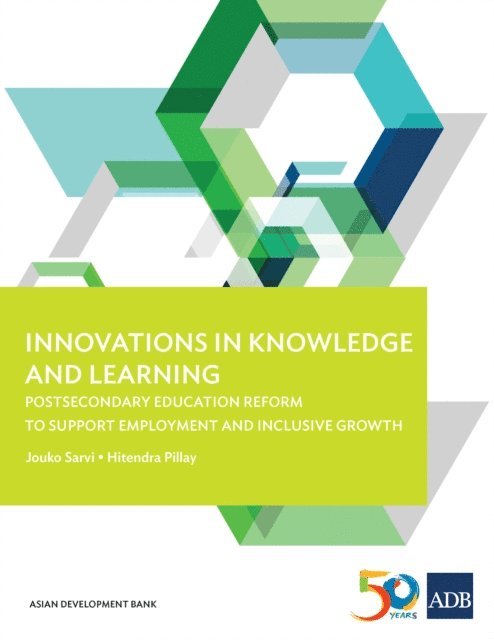
To meet modern-day challenges of improving quality and relevance, responding to new knowledge, and strengthening teaching and learning, the postsecondary education space must revise system structures, content designs, and delivery strategies, i.e., engage in disruptive thinking. Governments need to implement effective regulatory processes to ensure quality and equitable access by all students. Education programs must be in sync with workplace needs and built around "knowledge clusters" rather than specialized fields. Diverse and multiple disruptions will become the norm.
Inbunden, Engelska, 2012
528 kr
Skickas inom 10-15 vardagar
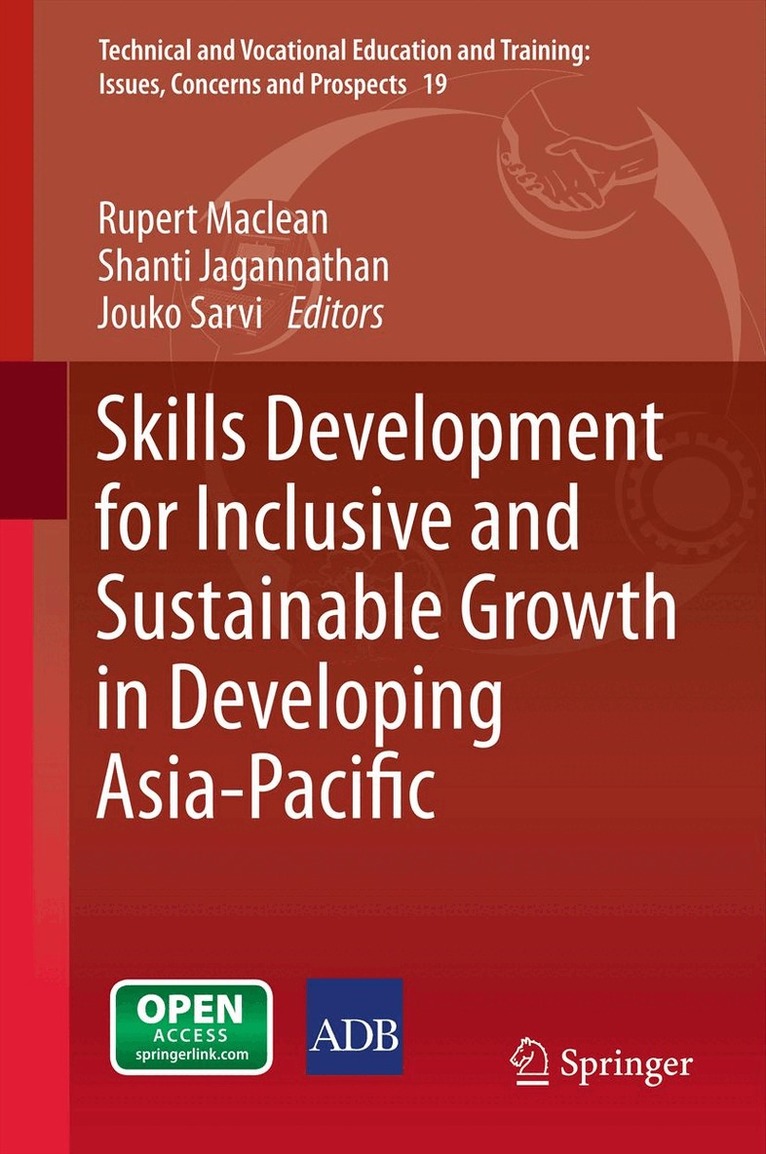
Focusing on the Asia-Pacific region, which in recent years has been the engine of global economic growth , this volume surveys trends and prospects in technical and vocational education and training (TVET) with particular reference to achieving inclusive growth and the greening of economies. Underlying the increasing pressure for new models of TVET provision is the rapid pace of technological change, demand for a work force which is highly responsive to evolving needs and a transforming market place that calls for higher order skills and lifelong learning. The book proposes a re-engineered, modernized TVET system that fosters an innovative approach which enhances the employability of workers as well as the sustainability of their livelihoods. The book includes contributions from leading policy makers, researchers, and practitioners, including those in the private sector in analyzing and forecasting the most urgent priorities in skills development. The book argues for creative approaches to TVET design and delivery particularly with a view to improve job prospects , and meeting the goals of inclusion, sustainable development and social cohesion. Addressing issues such as the chronic mismatches between skills acquired and actual skills required in the work place, the volume proposes diversified approaches towards workforce development and partnerships with the private sector to improve the quality and relevance of skills development . The new imperatives created by ‘greening’ economies and responses required in skills development and training are addressed. Developing TVET is a high priority for governments in the Asia Pacific region as they seek to achieve long-term sustainable growth since the .continued success of their economic destinies depend on it. The volume also includes an emerging framework for skills development for inclusive and sustainable growth in the Asia and Pacific region.
Häftad, Engelska, 2015
528 kr
Skickas inom 10-15 vardagar
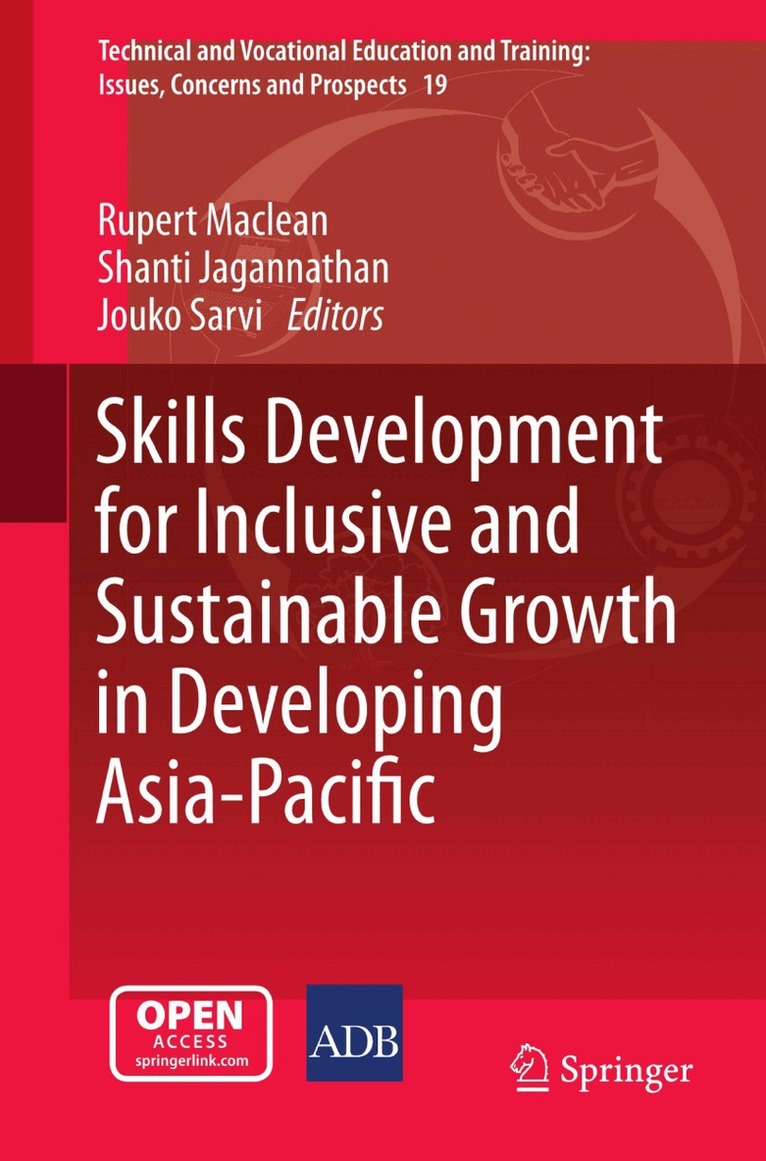
Focusing on the Asia-Pacific region, which in recent years has been the engine of global economic growth , this volume surveys trends and prospects in technical and vocational education and training (TVET) with particular reference to achieving inclusive growth and the greening of economies. Underlying the increasing pressure for new models of TVET provision is the rapid pace of technological change, demand for a work force which is highly responsive to evolving needs and a transforming market place that calls for higher order skills and lifelong learning. The book proposes a re-engineered, modernized TVET system that fosters an innovative approach which enhances the employability of workers as well as the sustainability of their livelihoods. The book includes contributions from leading policy makers, researchers, and practitioners, including those in the private sector in analyzing and forecasting the most urgent priorities in skills development. The book argues for creative approaches to TVET design and delivery particularly with a view to improve job prospects , and meeting the goals of inclusion, sustainable development and social cohesion. Addressing issues such as the chronic mismatches between skills acquired and actual skills required in the work place, the volume proposes diversified approaches towards workforce development and partnerships with the private sector to improve the quality and relevance of skills development . The new imperatives created by ‘greening’ economies and responses required in skills development and training are addressed. Developing TVET is a high priority for governments in the Asia Pacific region as they seek to achieve long-term sustainable growth since the .continued success of their economic destinies depend on it. The volume also includes an emerging framework for skills development for inclusive and sustainable growth in the Asia and Pacific region.