Joyce D. Goodfriend – författare
Visar alla böcker från författaren Joyce D. Goodfriend. Handla med fri frakt och snabb leverans.
4 produkter
4 produkter
Before the Melting Pot
Society and Culture in Colonial New York City, 1664-1730
Häftad, Engelska, 1994
562 kr
Skickas inom 5-8 vardagar
From its earliest days under English rule, New York City had an unusually diverse ethnic makeup, with substantial numbers of Dutch, English, Scottish, Irish, French, German, and Jewish immigrants, as well as a large African-American population. Joyce Goodfriend paints a vivid portrait of this society, exploring the meaning of ethnicity in early America and showing how colonial settlers of varying backgrounds worked out a basis for coexistence. She argues that, contrary to the prevalent notion of rapid Anglicization, ethnicity proved an enduring force in this small urban society well into the eighteenth century.
1 620 kr
Skickas inom 10-15 vardagar
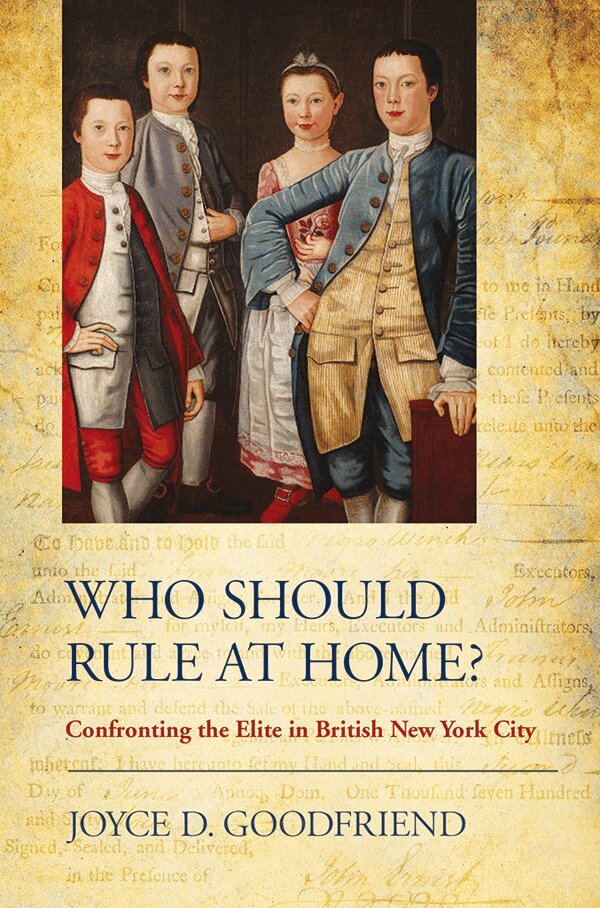
In Who Should Rule at Home? Joyce D. Goodfriend argues that the high-ranking gentlemen who figure so prominently in most accounts of New York City's evolution from 1664, when the English captured the small Dutch outpost of New Amsterdam, to the eve of American independence in 1776 were far from invincible and that the degree of cultural power they held has been exaggerated. The urban elite experienced challenges to its cultural authority at different times, from different groups, and in a variety of settings. Goodfriend illuminates the conflicts that pitted the privileged few against the socially anonymous many who mobilized their modest resources to creatively resist domination. Critics of orthodox religious practice took to heart the message of spiritual rebirth brought to New York City by the famed evangelist George Whitefield and were empowered to make independent religious choices. Wives deserted husbands and took charge of their own futures. Indentured servants complained or simply ran away. Enslaved women and men carved out spaces where they could control their own lives and salvage their dignity. Impoverished individuals, including prostitutes, chose not to bow to the dictates of the elite, even though it meant being cut off from the sources of charity. Among those who confronted the elite were descendants of the early Dutch settlers; by clinging to their native language and traditional faith they preserved a crucial sense of autonomy.
497 kr
Tillfälligt slut
Using the concept of the life cycle as the organizing principle, the authors examine the lives of American women from the seventeenth century to the present. Their focus is on the women themselves and the way they have evaluated their experiences, relationships and choices at each stage (childhood, adolescence, young adulthood, middle age and old age).
299 kr
Skickas inom 10-15 vardagar
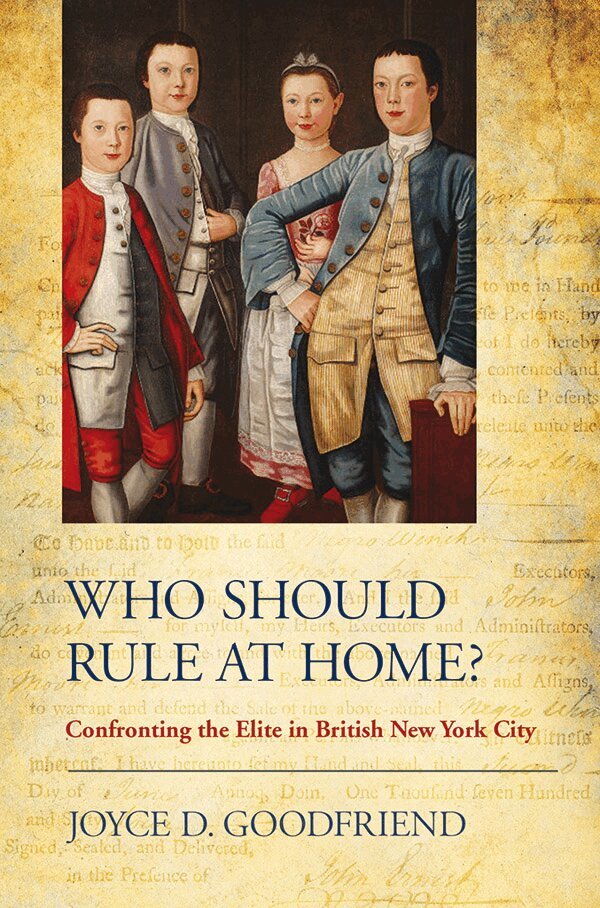
In Who Should Rule at Home? Joyce D. Goodfriend argues that the high-ranking gentlemen who figure so prominently in most accounts of New York City's evolution from 1664, when the English captured the small Dutch outpost of New Amsterdam, to the eve of American independence in 1776 were far from invincible and that the degree of cultural power they held has been exaggerated. The urban elite experienced challenges to its cultural authority at different times, from different groups, and in a variety of settings. Goodfriend illuminates the conflicts that pitted the privileged few against the socially anonymous many who mobilized their modest resources to creatively resist domination. Critics of orthodox religious practice took to heart the message of spiritual rebirth brought to New York City by the famed evangelist George Whitefield and were empowered to make independent religious choices. Wives deserted husbands and took charge of their own futures. Indentured servants complained or simply ran away. Enslaved women and men carved out spaces where they could control their own lives and salvage their dignity. Impoverished individuals, including prostitutes, chose not to bow to the dictates of the elite, even though it meant being cut off from the sources of charity. Among those who confronted the elite were descendants of the early Dutch settlers; by clinging to their native language and traditional faith they preserved a crucial sense of autonomy.