József Böröcz – författare
Visar alla böcker från författaren József Böröcz. Handla med fri frakt och snabb leverans.
3 produkter
3 produkter
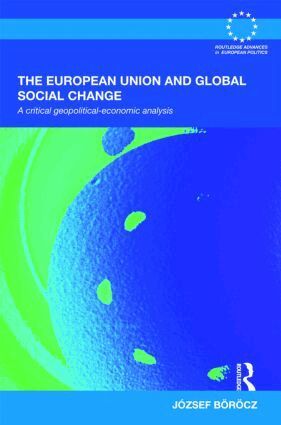
European Union and Global Social Change
A Critical Geopolitical-Economic Analysis
Inbunden, Engelska, 2009
646 kr
Skickas inom 10-15 vardagar
This book examines just what the European Union is, in the context of the ongoing structural transformation of the global system. The author develops an integrated approach to global transformations, drawing on geopolitics, political geography, international relations, economics, economic and political history, political economy and macro-sociology to discuss how this supra-state organisation, that shares and pools the sovereignty of some of the wealthiest states of the modern world, makes sense. The book: Interprets the ongoing transformation of west European public authority in the context of the global geopolitical economy of competition, cooperation and conflict Examines the consequences of west European integration for the global system in a longue-durée perspective, developing a new, geopolitical dialect within world-systems analysis, sharpening some of the conceptual tools developed by its paradigm-setters. Develops a new conceptualization for the EU’s global geopolitical strategy, which the author describes this strategy as the elasticity of size Developing a deeper understanding of global social change and west European strategies of global advantage-maintenance and power-management, this book will be of interest to students and scholars of European Politics, International Politics, International Relations Theory and Globalization Studies.
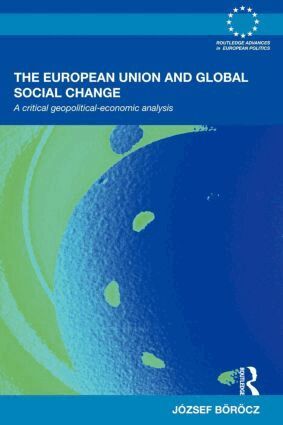
European Union and Global Social Change
A Critical Geopolitical-Economic Analysis
Häftad, Engelska, 2010
333 kr
Skickas inom 10-15 vardagar
This book examines just what the European Union is, in the context of the ongoing structural transformation of the global system. The author develops an integrated approach to global transformations, drawing on geopolitics, political geography, international relations, economics, economic and political history, political economy and macro-sociology to discuss how this supra-state organisation, that shares and pools the sovereignty of some of the wealthiest states of the modern world, makes sense. The book: Interprets the ongoing transformation of west European public authority in the context of the global geopolitical economy of competition, cooperation and conflict Examines the consequences of west European integration for the global system in a longue-durée perspective, developing a new, geopolitical dialect within world-systems analysis, sharpening some of the conceptual tools developed by its paradigm-setters. Develops a new conceptualization for the EU’s global geopolitical strategy, which the author describes this strategy as the elasticity of size Developing a deeper understanding of global social change and west European strategies of global advantage-maintenance and power-management, this book will be of interest to students and scholars of European Politics, International Politics, International Relations Theory and Globalization Studies.
1 714 kr
Skickas inom 10-15 vardagar
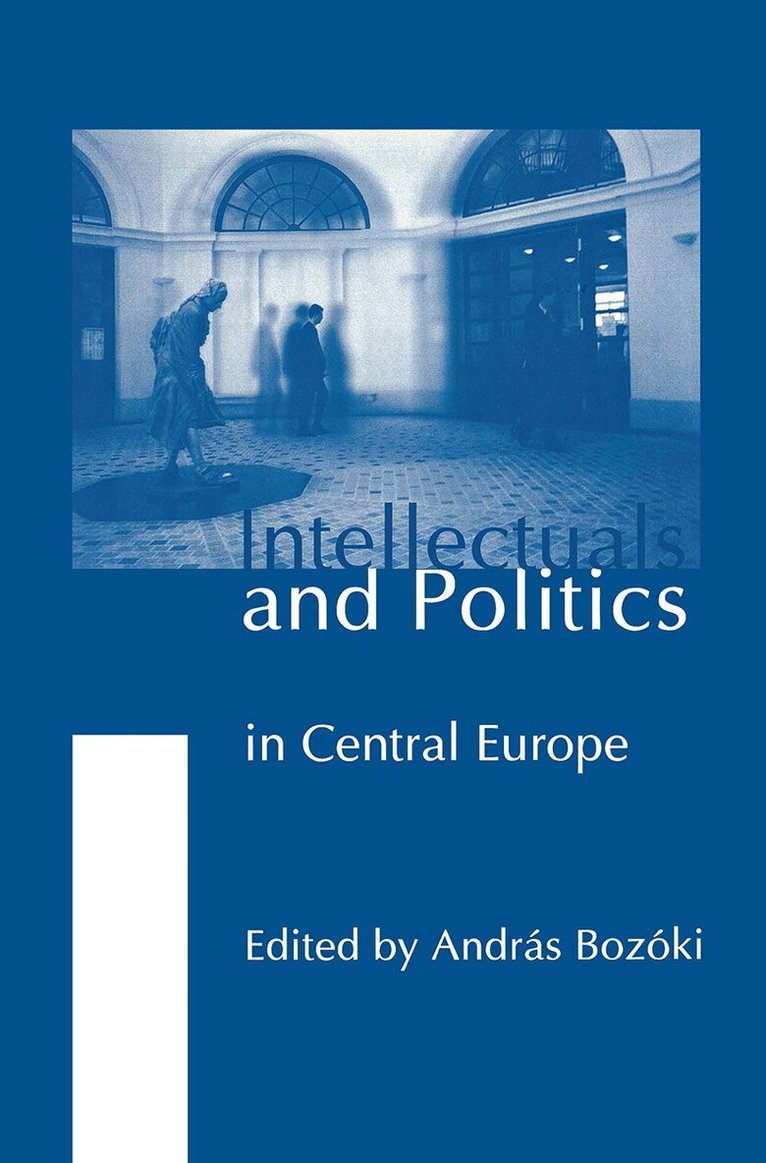
Discussing the role of intellectuals in the political transition of the late 1980s and early 1990s and their participation in the political life of the new democracies of Central Europe, this book presents original essays from authors who discuss the eight countries in the region. In the Introduction, the editor gives a historical overview of the tradition of the political involvement of intellectuals in these countries, especially in the nineteenth century. The chapters which follow describe the typical political and social attitude of Central European intellectuals, including writers, poets, artists, and scientists. A unique feature of the book is that it deals not only with the role of intellectuals in the preparation of the peaceful revolutions in the individual countries, but also critically analyzes their role in the transition and their behavior in the emerging democracies. The most striking phenomenon, common to all the countries studied, is the disillusionment of intellectuals and their disappointment in the years following the transition, a period when the role of prophet should be replaced by that of politician for those who have chosen to stay in politics. This phenomenon has, in general, been much less subjected to systematic study than the role of intellectuals in the changes themselves.