J.R. Davis - Böcker
Visar alla böcker från författaren J.R. Davis. Handla med fri frakt och snabb leverans.
9 produkter
9 produkter
3 943 kr
Skickas inom 7-10 vardagar
This one-stop reference is a tremendous value time saver for engineers, designers and researchers. Emerging technologies, including aluminium metal matrix composites, are combined with all the essential aluminum information from the multi-volume ASM Handbook series.Contents: General Introduction to Aluminum and Alloy Metallurgy and Designations; Selection and Application of Wrought, Cast, Powdered, composite, Coating Materials; Casting, Forming, Fabrication and Finishing; Metallography, Microstructures and Phase Diagrams; Properties of Aluminum and Alloys, including Corrosion Behavior and Tribology.
3 943 kr
Skickas inom 7-10 vardagar
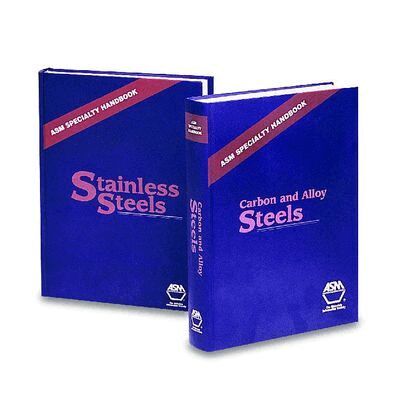
Contents include: Introduction to Stainless Steels - metallurgy and properties of wrought and cast stainless steels, powder metallurgy, melting, refining and recycling Corrosion Behaviour - atmospheric and aqueous corrosion, stress-corrosion cracking and hydrogen embrittlement, high-temperature corrosion, corrosion of cast stainless, corrosion of weldments Fabrication and Finishing - Foundry practice, forming, forging and extrusion, PM processing, heat treating, machining, welding, brazing and soldering, adhesive bonding, surface engineering Metallography, Microstructures and Phase Diagrams - metallographic practices and microstructures of wrought stainless metallography and microstructures of cast stainless phase diagrams Properties of Stainless Steels - physical properties, low temperature properties, elevated-temperature properties, tribological properties. An index is also included.
3 943 kr
Skickas inom 7-10 vardagar
Includes application on thousands of steels and metals!If you are involved with machining or metalworking or you specify materials for industrial components, this book is an absolute must. It gives you detailed and comprehensive information about the selection, processing, and properties of materials for machining and metalworking applications. They include wrought and powder metallurgy tool steels, cobalt base alloys, cemented carbides, cermets, ceramics and ultra-hard materials.You’ll find specific guide-lines for optimizing machining productivity through the proper selection of cutting tool materials plus expanded coverage on the use of coatings extended cutting tool and die life. There is also valuable information on alternative heat treatments for improving the toughness of tool and die steels. All new material on the correlation of heat treatment microstructures and properties of tool steels is supplement with dozens of photomicrographs. Information on special tooling considerations for demanding applications such as isothermal forging, die casting of metal matrix composites, and molding of corrosive plastics is also included. And you’ll learn about alternative to ferrous materials for metalworking applications such as carbides, cermets, ceramics and nonferrous metals like aluminum, nickel and copper base alloys.Contents include: Materials for Machining and Grinding Applications, Materials for Metalworking Applications, Heat Treatment and Secondary Processing of Tool Materials, Microstructural Analysis and Failure Analysis of Tool Materials.
4 407 kr
Skickas inom 11-20 vardagar
Carbon and alloy steels are the workhorse of structural materials in modern engineering because of their very reasonable costs coupled with their many and varied properties that allow their use in such large array of applications. It's very easy to take steel for granted and forget how much it's relied upon in critical uses such as cars, bridges, buildings, landing gear assemblies, and more. It's what makes Carbon and Alloy Steels such an important Specialty Handbook series, it places special emphasis on the processing and service characteristics of steel. You'll find detailed, yet practical information that will help you select the best grade for a particular environment or application. There are in-depth reviews of formability, weldability, machinability, and hardenability of the various steel grades. You'll also discover how adding certain alloys can significantly improve steel processing. The strength and toughness section has been greatly expanded with more coverage than ever before of corrosion fatigue. You'll have access to extensive reports detailing which steels are more susceptable to environmental damage such as stress-corrosion and hydrogen embrittlement. Temperature effects relating to mechanical properties and corrosion are also discussed. As a special feature, entirely new articles on steels for specific applications like bearings, gears, automotive, oil and gas pipelines, and more are also discussed. Not only are material requirements covered, but applicable codes, standards and specifications as well. You'll learn what problems and failures others have experienced and what you can do to avoid similar difficulties.
3 943 kr
Skickas inom 7-10 vardagar
Cast iron offers the design engineer a low-cost, high-strength material that can be easily melted and poured into a wide variety of useful, and sometimes complex, shapes. This latest handbook from ASM covers the entire spectrum of one of the most widely used and versatile of all engineered materials.The reader will find the basic, but vital, information on metallurgy, solidification characteristics, and properties. Extensive reviews are presented on the low-alloy gray, ductile, compacted graphite, and malleable irons. New and expanded material has been added covering high-alloy white irons used for abrasion resistance and high-alloy graphitic irons for heat and corrosion resistance. Also discussed are melting furnaces and foundry practices such as melting, inoculation, alloying, pouring, gating and rising, and molding. Heat treating practices including stress relieving, annealing, normalizing, hardening and tempering, autempering (of ductile irons), and surface-hardening treatments are covered, too.ASM Specialty Handbook: Cast Irons helps the reader learn about routine nondestructive testing to ensure the necessary casting quality, along with failure and metallograph analysis. Finally, property characteristics are thoroughly presented including physical, fatigue and fracture, and elevated-temperature.Contents include: Classification and Basic Metallurgy, Solidification Characteristics, Metallurgy and Properties, Melting Furnaces and Foundry Practices, Heat Treating, Welding and Brazing, Machining and Grinding, Surface Engineering, Inspection and Analysis, Fatigue and Fracture Properties, Elevated-Temperature Properties, Physical Properties, Corrosion Behavior, Index.
3 943 kr
Skickas inom 7-10 vardagar
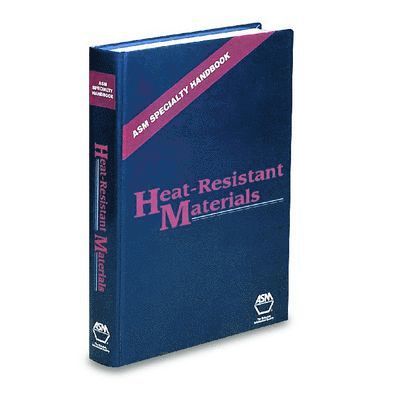
This handbook covers the complete spectrum of technology dealing with heat-resistant materials, including high-temperature characteristics, effects of processing and microstructure on high-temperature properties, materials selection guidelines for industrial applications, and life-assessment methods. Also included is information on comparative properties that allows the ranking of alloy performance, effects of processing and microstructure on high-temperature properties, high-temperature oxidation and corrosion-resistant coatings for superalloys, and design guidelines for applications involving creep and/or oxidation.Contents: General introduction (high-temperature materials characteristics, and mechanical and corrosion properties, and industrial applications); Properties of Ferrous Heat-Resistant Alloys (carbon, alloy, and stainless steels; alloy cast irons; and high alloy cast steels); Properties of superalloys (metallurgy and processing, mechanical and corrosion properties, degradation, and protective coatings); Properties of Nonferrous Heat-Resistant Materials (Ti and Ti alloys, refractory metals and alloys, Ni-Cr and Ni-ThO2 alloys, Intermetallics, ceramics, cermets, cemented carbides, and C-C composites); Special Topics (including creep-rupture sata assessment and use, thermal and thermomechanical fatigue, elevated-temperature crack growth, creep fatigue interaction and design for high-temperature applications and oxidation).
3 943 kr
Skickas inom 7-10 vardagar
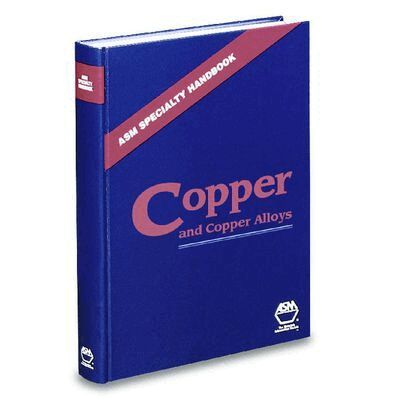
This book is a comprehensive guide to the selection and applications of copper and copper alloys, which constitute one of the largest and most diverse families of engineering materials. The handbook includes all of the essential information contained in the 20-volume ASM Handbook series, as well as important reference information and data from a wide variety of ASM publications and industry sources. In addition to extensive property data for wrought, cast, and powder-metallurgy products, this book provides practical information on the casting, forming, joining, machining, and finishing of copper alloys. The principles of physical metallurgy, including the relationships among heat treatment, structure, and properties, are also examined. Specifications for copper and its alloys are cross referenced in useful tabular form. Recent alloy developments - such as low-lead free-machining alloys, high-strength alloys with resistance to corrosion in hot 'sour' environments, and thermally stable, high-conductivity electronic packaging materials-are also reviewed. Contents: Metallurgy, alloys, and applications Fabrication and finishing Metallurgy, microstructures, and phase diagrams: Metallography and microstructures of copper alloys and beryllium-copper alloys Solidification structures Phase diagrams. Engineering properties and service characteristics Appendices.
1 686 kr
Skickas inom 7-10 vardagar
Surface Hardening of Steels: Understanding the Basics is a practical selection guide to help engineers and technicians choose the most efficient surface hardening techniques that offer consistent and repeatable results. Emphasis is placed on characteristics such as processing temperature, case/coating thickness, bond strength, and hardness level obtained. The advantages and limitations of the various thermochemical, thermal, and coating/surface modification technologies are compared. Economic concerns and health and safety considerations are also addressed. Recent developments in the understanding of the relationships between microstructure and fatigue and wear performance are reviewed, as are more recently introduced surface hardening processes such as vacuum-related technologies, laser processing, CVD/PVD, and ion implantation. Methods for evaluating hardness patterns and depths of hardness for quality control and failure analysis are described. The book also reviews methods for measuring and controlling case depth, residual stresses, and distortion. Metallurgical comparisons are made between those processes that offer rapid heating and rapid cooling (self quenching) characteristics for example, induction hardening and conventional furnace hardening. While all of the surface engineering methods discussed enhance wear resistance, some such as electroless nickel plating, carbide salt-bath deposition, and chrome platingualso offer resistance to corrosion and oxidation. Wear and corrosion data are provided to demonstrate the benefits of each process. Contents: Process Selection Guide Gas Carburizing Vacuum and Plasma Carburizing Pack and Liquid Carburizing Carbonitriding Nitriding Nitrocarburizing Boriding (Boronizing) Thermal Diffusion (TD) Process Surface Hardening by Applied Energy Surface Hardening by Coating or Surface Modification Appendices: The Iron-Carbon Phase Diagram, Hardness Conversion Tables, Austenitizing Temperatures for Steels Index.
1 581 kr
Skickas inom 7-10 vardagar
A complete guide to the uniaxial tensile test, the cornerstone test for determining the mechanical properties of materials:Learn ways to predict material behavior through tensile testing.Learn how to test metals, alloys, composites, ceramics, and plastics to determine strength, ductility and elastic/plastic deformation.A must for laboratory managers, technicians, materials and design engineers, and students involved with uniaxial tensile testing.Tensile Testing, Second Edition begins with an introduction and overview of the test, with clear explanations of how materials properties are determined from test results. Subsequent sections illustrate how knowledge gained through tensile tests, such as tension properties to predict the behavior (including strength, ductility, elastic or plastic deformation, tensile and yield strengths) have resulted in improvements in materals applications.The Second Edition is completely revised and updated. It includes expanded coverage throughout the volume on a variety of topics, including equipment, testing for design, and testing at extreme temperatures and high strain rates.