Jr. Donald S. Lopez – författare
268 kr
Läs direkt efter köp
An essential companion to a timeless spiritual classicThe Lotus Sūtra is among the most venerated scriptures of Buddhism. Composed in India some two millennia ago, it asserts the potential for all beings to attain supreme enlightenment. Donald Lopez and Jacqueline Stone provide an essential reading companion to this inspiring yet enigmatic masterpiece, explaining how it was understood by its compilers in India and, centuries later in medieval Japan, by one of its most influential proponents.In this illuminating chapter-by-chapter guide, Lopez and Stone show how the sūtra''s anonymous authors skillfully reframed the mainstream Buddhist tradition in light of a new vision of the path and the person of the Buddha himself, and examine how the sūtra''s metaphors, parables, and other literary devices worked to legitimate that vision. They go on to explore how the Lotus was interpreted by the Japanese Buddhist master Nichiren (1222–1282), whose inspired reading of the book helped to redefine modern Buddhism. In doing so, Lopez and Stone demonstrate how readers of sacred works continually reinterpret them in light of their own unique circumstances.An invaluable guide to an incomparable spiritual classic, this book unlocks the teachings of the Lotus for modern readers while providing insights into the central importance of commentary as the vehicle by which ancient writings are given contemporary meaning.
535 kr
Läs direkt efter köp
Princeton Readings in Religions is a new series of anthologies on the religions of the world, representing the significant advances that have been made in the study of religions in the last thirty years. This volume brings together the introductions to the first five volumes of this acclaimed series: Religions of India in Practice (1995), Buddhism in Practice (1995), Religions of China in Practice (1996), Religions of Tibet in Practice (1997), and Religions of Japan in Practice (1999). The introductions to these volumes have been widely praised for their accessible, clear and concise overviews of the religions of Asia, providing both historical context and insightful analysis of Hinduism, Jainism, Sikhism, Islam, Buddhism, Confucianism, Taoism, Shinto, and Bon, as well as many local traditions. The authors of the chapters are leading scholars of Asian religions: Richard Davis (India), Stephen Teiser (China), George Tanabe (Japan), and Donald Lopez (Buddhism and Tibet). They bring together the best and most current research on their topics, while series editor Donald Lopez provides an introduction to the volume as a whole. In addition to providing a wealth of detail on the history, doctrine, and practice of the religions of Asia, the five chapters offer an opportunity for sustained discussions of the category of "religion."
775 kr
Läs direkt efter köp
The inaugural volume of Princeton Readings in Religions brings together the work of thirty scholars of the religions of India in a new anthology designed to reshape the ways in which the religious traditions of India are understood. The book contains translations of forty-five works, most of which have never before been available in a Western language. Many of these highlight types of discourse (especially ritual manuals, folktales, and oral narratives) and voices (vernacular, esoteric, domestic, and female) that have not been sufficiently represented in previous anthologies and standard accounts of Indian religions. The selections are drawn from ancient texts, medieval manuscripts, modern pamphlets, and contemporary fieldwork in rural and urban India. They represent every region in South Asia and include Hindu, Buddhist, Jain, Sikh, and Muslim materials. Some are written texts reflecting elite concerns, while others are transcriptions of oral narratives told by nonliterate peasants. Some texts are addressed to a public and pan-Indian audience, others to a limited coterie of initiates in an esoteric sect, and still others are intended for a few women gathered in the courtyard for a household ceremony. The editor has reinforced this diversity by arranging the selections within several overarching themes and categories of discourse (hymns, rituals, narratives, and religious interactions), and encourages us to make our own connections.
775 kr
Läs direkt efter köp
This third volume of Princeton Readings in Religions demonstrates that the "three religions" of China--Confucianism, Daoism, and Buddhism (with a fourth, folk religion, sometimes added)--are not mutually exclusive: they overlap and interact with each other in a rich variety of ways. The volume also illustrates some of the many interactions between Han culture and the cultures designated by the current government as "minorities." Selections from minority cultures here, for instance, are the folktale of Ny Dan the Manchu Shamaness and a funeral chant of the Yi nationality collected by local researchers in the early 1980s. Each of the forty unusual selections, from ancient oracle bones to stirring accounts of mystic visions, is preceded by a substantial introduction. As with the other volumes, most of the selections here have never been translated before. Stephen Teiser provides a general introduction in which the major themes and categories of the religions of China are analyzed. The book represents an attempt to move from one conception of the "Chinese spirit" to a picture of many spirits, including a Laozi who acquires magical powers and eventually ascends to heaven in broad daylight; the white-robed Guanyin, one of the most beloved Buddhist deities in China; and the burning-mouth hungry ghost. The book concludes with a section on "earthly conduct."
202 kr
Läs direkt efter köp
320 kr
Läs direkt efter köp
227 kr
Läs direkt efter köp
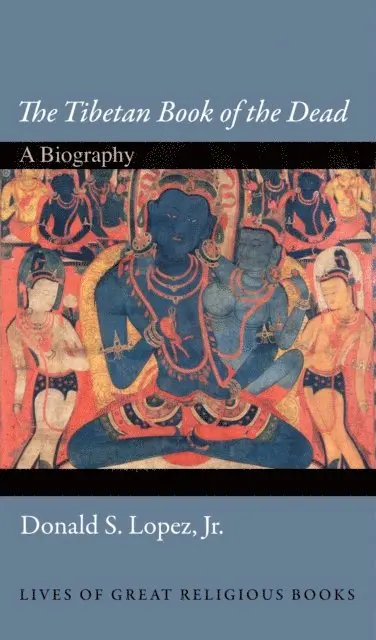
How an eccentric spiritualist from Trenton, New Jersey, helped create the most famous text of Tibetan BuddhismThe Tibetan Book of the Dead is the most famous Buddhist text in the West, having sold more than a million copies since it was first published in English in 1927. Carl Jung wrote a commentary on it, Timothy Leary redesigned it as a guidebook for an acid trip, and the Beatles quoted Leary''s version in their song "Tomorrow Never Knows." More recently, the book has been adopted by the hospice movement, enshrined by Penguin Classics, and made into an audiobook read by Richard Gere. Yet, as acclaimed writer and scholar of Buddhism Donald Lopez writes, "The Tibetan Book of the Dead is not really Tibetan, it is not really a book, and it is not really about death." In this compelling introduction and short history, Lopez tells the strange story of how a relatively obscure and malleable collection of Buddhist texts of uncertain origin came to be so revered—and so misunderstood—in the West.The central character in this story is Walter Evans-Wentz (1878-1965), an eccentric scholar and spiritual seeker from Trenton, New Jersey, who, despite not knowing the Tibetan language and never visiting the country, crafted and named The Tibetan Book of the Dead. In fact, Lopez argues, Evans-Wentz''s book is much more American than Tibetan, owing a greater debt to Theosophy and Madame Blavatsky than to the lamas of the Land of Snows. Indeed, Lopez suggests that the book''s perennial appeal stems not only from its origins in magical and mysterious Tibet, but also from the way Evans-Wentz translated the text into the language of a very American spirituality.
826 kr
Läs direkt efter köp
The most comprehensive and authoritative dictionary of Buddhism ever produced in EnglishWith more than 5,000 entries totaling over a million words, this is the most comprehensive and authoritative dictionary of Buddhism ever produced in English. It is also the first to cover terms from all of the canonical Buddhist languages and traditions: Sanskrit, Pali, Tibetan, Chinese, Japanese, and Korean. Unlike reference works that focus on a single Buddhist language or school, The Princeton Dictionary of Buddhism bridges the major Buddhist traditions to provide encyclopedic coverage of the most important terms, concepts, texts, authors, deities, schools, monasteries, and geographical sites from across the history of Buddhism. The main entries offer both a brief definition and a substantial short essay on the broader meaning and significance of the term covered. Extensive cross-references allow readers to find related terms and concepts. An appendix of Buddhist lists (for example, the four noble truths and the thirty-two marks of the Buddha), a timeline, six maps, and two diagrams are also included.Written and edited by two of today''s most eminent scholars of Buddhism, and more than a decade in the making, this landmark work is an essential reference for every student, scholar, or practitioner of Buddhism and for anyone else interested in Asian religion, history, or philosophy.
The most comprehensive dictionary of Buddhism ever produced in EnglishMore than 5,000 entries totaling over a million wordsThe first dictionary to cover terms from all of the canonical Buddhist languages and traditions—Sanskrit, Pali, Tibetan, Chinese, Japanese, and KoreanDetailed entries on the most important terms, concepts, texts, authors, deities, schools, monasteries, and geographical sites in the history of BuddhismCross-references and appendixes that allow readers to find related terms and look up equivalent terms in multiple Buddhist languagesIncludes a list of Buddhist lists, a timeline, and mapsAlso contains selected terms and names in Thai, Burmese, Vietnamese, Lao, Khmer, Sinhalese, Newar, and Mongolian602 kr
Läs direkt efter köp
This anthology, first published in 1995, illustrates the vast scope of Buddhist practice in Asia, past and present. Re-released now in a slimmer but still extensive edition, Buddhism in Practice presents a selection of thirty-five translated texts--each preceded by a substantial introduction by its translator. These unusual sources provides the reader with a sense of the remarkable diversity of the practices of persons who over the course of 2,500 years have been identified, by themselves or by others, as Buddhists. Demonstrating the many continuities among the practices of Buddhist cultures widely separated by both history and geography, Buddhism in Practice continues to provide an ideal introduction to Buddhism and a source of new insights for scholars.
334 kr
Läs direkt efter köp
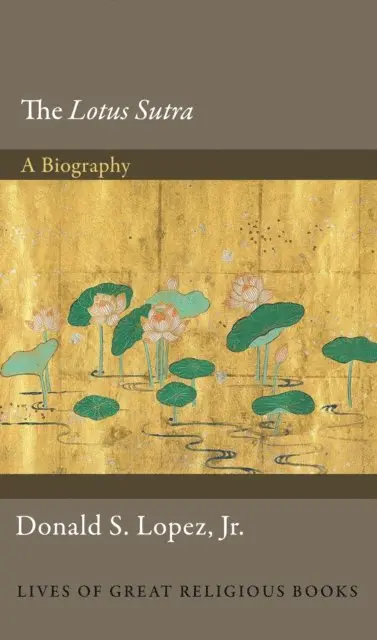
A concise and accessible introduction to the classic Buddhist textThe Lotus Sutra is arguably the most famous of all Buddhist scriptures. Composed in India in the first centuries of the Common Era, it is renowned for its inspiring message that all beings are destined for supreme enlightenment. Here, Donald Lopez provides an engaging and accessible biography of this enduring classic.Lopez traces the many roles the Lotus Sutra has played in its travels through Asia, Europe, and across the seas to America. The story begins in India, where it was one of the early Mahayana sutras, which sought to redefine the Buddhist path. In the centuries that followed, the text would have a profound influence in China and Japan, and would go on to play a central role in the European discovery of Buddhism. It was the first Buddhist sutra to be translated from Sanskrit into a Western language—into French in 1844 by the eminent scholar Eugène Burnouf. That same year, portions of the Lotus Sutra appeared in English in The Dial, the journal of New England''s Transcendentalists. Lopez provides a balanced account of the many controversies surrounding the text and its teachings, and describes how the book has helped to shape the popular image of the Buddha today. He explores how it was read by major literary figures such as Henry David Thoreau and Gustave Flaubert, and how it was used to justify self-immolation in China and political extremism in Japan.Concise and authoritative, this is the essential introduction to the life and afterlife of a timeless masterpiece.
695 kr
Läs direkt efter köp
The Heart Sutra is perhaps the most famous Buddhist text, traditionally regarded as a potent expression of emptiness and of the Buddha''s perfect wisdom. This brief, seemingly simple work was the subject of more commentaries in Asia than any other sutra. In Elaborations on Emptiness, Donald Lopez explores for the first time the elaborate philosophical and ritual uses of the Heart Sutra in India, Tibet, and the West. Included here are full translations of the eight extant Indian commentaries. Interspersed with the translations are six essays that examine the unusual roles the Heart Sutra has played: it has been used as a mantra, an exorcism text, a tantric meditation guide, and as the material for comparative philosophy. Taken together, the translations and essays that form Elaborations on Emptiness demonstrate why commentary is as central to modern scholarship on Buddhism as it was for ancient Buddhists. Lopez reveals unexpected points of instability and contradiction in the Heart Sutra, which, in the end, turns out to be the most malleable of texts, where the logic of commentary serves as a tool of both tradition and transgression.