Jr. Everett L. Worthington – författare
869 kr
Läs direkt efter köp
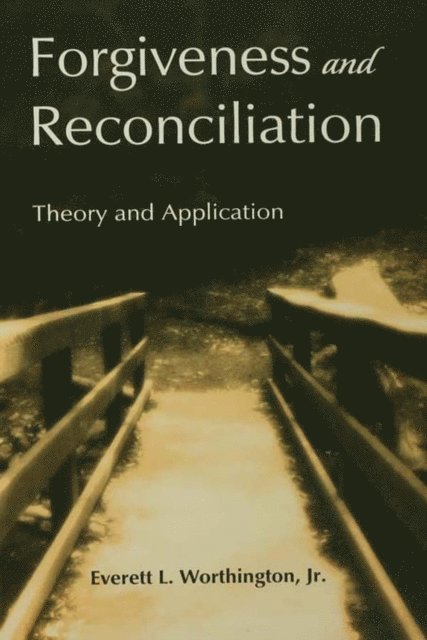
To be unforgiving is harmful. The inability to come to terms with one’s anger or strife often can lead to stress disorders, mental health disorders, and relationship problems. Forgiveness is a personal decision. Forgiveness and Reconciliation focuses on individual experiences with forgiveness, aiming to create a theory of what forgiveness is and connect it to a clinical theory of how to promote forgiveness. Dr. Worthington creates an evidence-based approach that is applicable for individuals and relationships, and even for society. He also describes an evidence-based method of reconciliation - restoring trust in damaged relationships.
Dr. Worthington hopes that this theory will inform scientific research and improve intervention strategies. Showing that forgiveness transforms personality, Worthington describes ways a clinician can promote (but not force) forgiveness of others and self. He provides research-based theory and applications and discusses the role of emotion and specific personality traits as related to forgiveness. Forgiveness and reconciliation might not be cures, but, as Worthington shows, they are tools for transforming both the self and the world.
869 kr
Läs direkt efter köp
To be unforgiving is harmful. The inability to come to terms with one’s anger or strife often can lead to stress disorders, mental health disorders, and relationship problems. Forgiveness is a personal decision. Forgiveness and Reconciliation focuses on individual experiences with forgiveness, aiming to create a theory of what forgiveness is and connect it to a clinical theory of how to promote forgiveness. Dr. Worthington creates an evidence-based approach that is applicable for individuals and relationships, and even for society. He also describes an evidence-based method of reconciliation - restoring trust in damaged relationships.
Dr. Worthington hopes that this theory will inform scientific research and improve intervention strategies. Showing that forgiveness transforms personality, Worthington describes ways a clinician can promote (but not force) forgiveness of others and self. He provides research-based theory and applications and discusses the role of emotion and specific personality traits as related to forgiveness. Forgiveness and reconciliation might not be cures, but, as Worthington shows, they are tools for transforming both the self and the world.
1 921 kr
Läs direkt efter köp
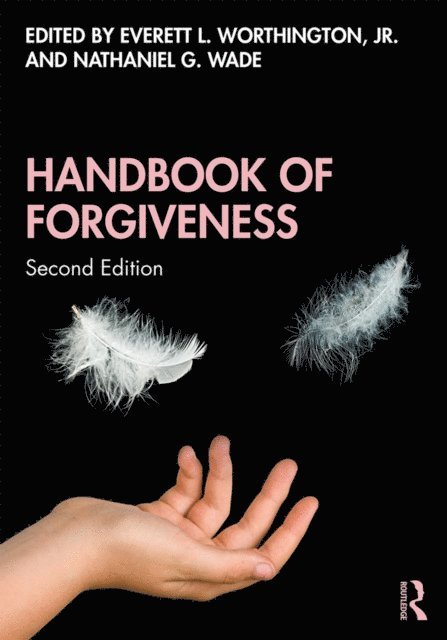
The Handbook of Forgiveness, Second Edition consolidates research from a wide range of disciplines and offers an in-depth review of the science of forgiveness.
This new edition considers forgiveness in a diverse range of contexts and presents a research agenda for future directions in the field. Chapters approach forgiveness from a variety of perspectives, drawing on related work in areas including biology, personality, social psychology, clinical/counseling psychology, developmental psychology, philosophy, and neuroscience, as well as considering international and political implications. The Handbook provides comprehensive treatment of the topic, integrating theoretical considerations, methodological discussions, and practical intervention strategies that will appeal to researchers, clinicians, and practitioners.
Reflecting the increased precision with which forgiveness has been understood, theorized, and assessed during the last 14 years of research, this updated edition of the Handbook of Forgiveness remains the authoritative resource on the field of forgiveness.
1 921 kr
Läs direkt efter köp
The Handbook of Forgiveness, Second Edition consolidates research from a wide range of disciplines and offers an in-depth review of the science of forgiveness.
This new edition considers forgiveness in a diverse range of contexts and presents a research agenda for future directions in the field. Chapters approach forgiveness from a variety of perspectives, drawing on related work in areas including biology, personality, social psychology, clinical/counseling psychology, developmental psychology, philosophy, and neuroscience, as well as considering international and political implications. The Handbook provides comprehensive treatment of the topic, integrating theoretical considerations, methodological discussions, and practical intervention strategies that will appeal to researchers, clinicians, and practitioners.
Reflecting the increased precision with which forgiveness has been understood, theorized, and assessed during the last 14 years of research, this updated edition of the Handbook of Forgiveness remains the authoritative resource on the field of forgiveness.