Jr. Robert C. Mainfort – författare
Visar alla böcker från författaren Jr. Robert C. Mainfort. Handla med fri frakt och snabb leverans.
2 produkter
2 produkter
E-bok
Engelska, 2009639 kr
Läs direkt efter köp
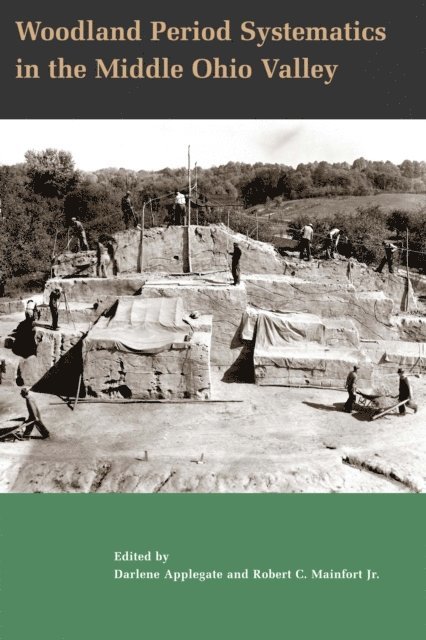
This collection provides a comprehensive vocabulary for defining the cultural manifestation of the term “Woodland” The Middle Ohio Valley is an archaeologically rich region that stretches from southeastern Indiana, across southern Ohio and northeastern Kentucky, and into northwestern West Virginia. In this area are some of the most spectacular and diverse Woodland Period archaeological sites in North America, but these sites and their rich cultural remains do not fit easily into the traditional Southeastern classification system. This volume, with contributions by most of the senior researchers in the field, represents an important step toward establishing terminology and taxa that are more appropriate to interpreting cultural diversity in the region. The important questions are diverse. What criteria are useful in defining periods and cultural types, and over what spatial and temporal boundaries do those criteria hold? How can we accommodate regional variation in the development and expression of traits used to delineate periods and cultural types? How does the concept of tradition relate to periods and cultural types? Is it prudent to equate culture types with periods? Is it prudent to equate archaeological cultures with ethnographic cultures? How does the available taxonomy hinder research? Contributing authors address these issues and others in the context of their Middle Ohio Valley Woodland Period research
639 kr
Läs direkt efter köp
Combines recent research with insights from anthropology, historiography, and oral tradition to examine the cultural landscape preceding and immediately following the arrival of Europeans After establishing the distribution of prehistoric and historic populations from the northeastern Appalachian forests to the southern trans-Mississippian prairies, the contributors consider the archaeological and cultural record of several specific groups, including Mohawk and Onondaga, Monacan, Coosa, and Calusa. For each, they present new evidence of cultural changes prior to European contact, including populations movements triggered by the Little Ice Age (AD 1550–1770), shifting exchange and warfare networks, geological restriction of effective maize subsistence, and use of empty hunting territories as buffers between politically unstable neighbors. The contributors also trace European influences, including the devastation caused by European-introduced epidemics and the paths of European trade goods that transformed existing Native American-exchange networks. While the profound effects of European explorers, missionaries, and traders on Eastern Woodlands tribes cannot be denied, the archaeological evidence suggests that several indigenous societies were already in the process of redefinition prior to European contact. The essays gathered here show that, whether formed in response to natural or human forces, cultural change may be traced through archaeological artifacts, which play a critical role in answering current questions regarding cultural persistence.