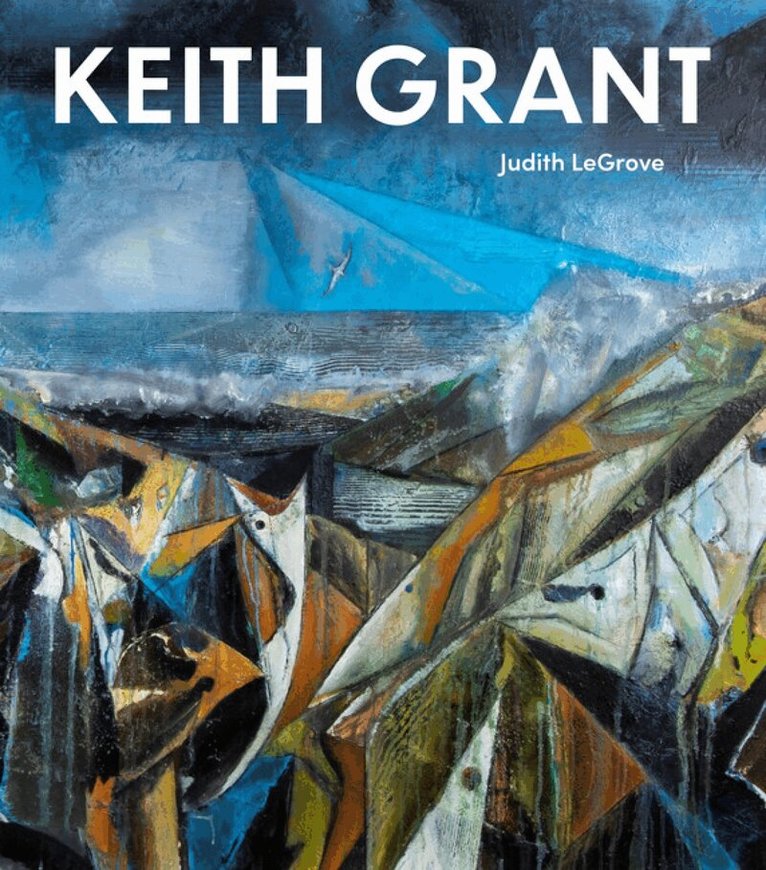
Having travelled extensively throughout his life, Grant has drawn inspiration from landscapes from Antarctica to the tropics, While attracted to northerly territories (he has lived in Norway since 1996), the subject matter of Grant's bold images varies from marine volcanoes and rainforests to icebergs and glaciers. Dynamic and vital, elemental palettes conjure up abstracted fiery drama to figurative icy stillness. Seen collectively, the work reveals a creative energy that finds many forms of expression. This translates into an original visual language that questions and probes how we see the world around us. Much more than images, Grant's remarkable artistic contribution not only provides paintings that capture the world's beauty, but also extend our understanding of the environment, climate and the fundamental importance of nature.
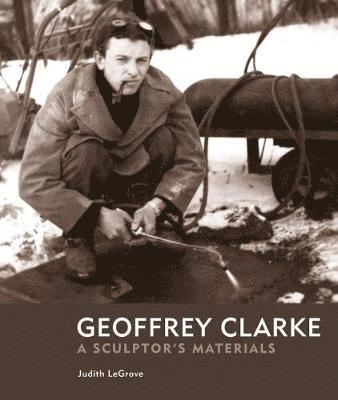
Geoffrey Clarke: a sculptor’s materials is the first monograph to address the full range of this artist’s work, from stained glass to sculpture, jewellery to textiles, land art to medals. Initially trained in stained glass, Geoffrey Clarke (1924–2014) came to international recognition in 1952, as one of the young British sculptors who exhibited at the Venice Biennale. He rapidly became one of the most frequently commissioned architectural sculptors of the mid-twentieth century, developing an innovative casting technique using aluminium and establishing his own foundry at his home in Suffolk. Clarke’s versatility secured him commissions from banks, offices, universities and cathedrals (most notably, Coventry), which he approached with characteristic verve. Many of these works, sadly neglected, are now finding new audiences: Spirit of Electricity (1958–61) and Spiral Nebula (1962) were both listed Grade II by Historic England in 2016.Judith LeGrove draws widely on new research, much of it from the sculptor’s archive, to illuminate Clarke’s working processes and place them in the context of not only his contemporaries but the broader history of the materials themselves. Clarke’s wide-ranging practice involved him in numerous prestigious commissions, competitions and exhibitions during a career of over fifty years. Geoffrey Clarke: a sculptor’s materials will be a significant contribution to understanding the making, exhibition and reception of twentieth-century art.This highly readable book will appeal to all those interested in post-war British art and design. It complements Judith LeGrove’s survey of Clarke’s graphic work, Geoffrey Clarke: a sculptor’s prints (Sansom, 2012).
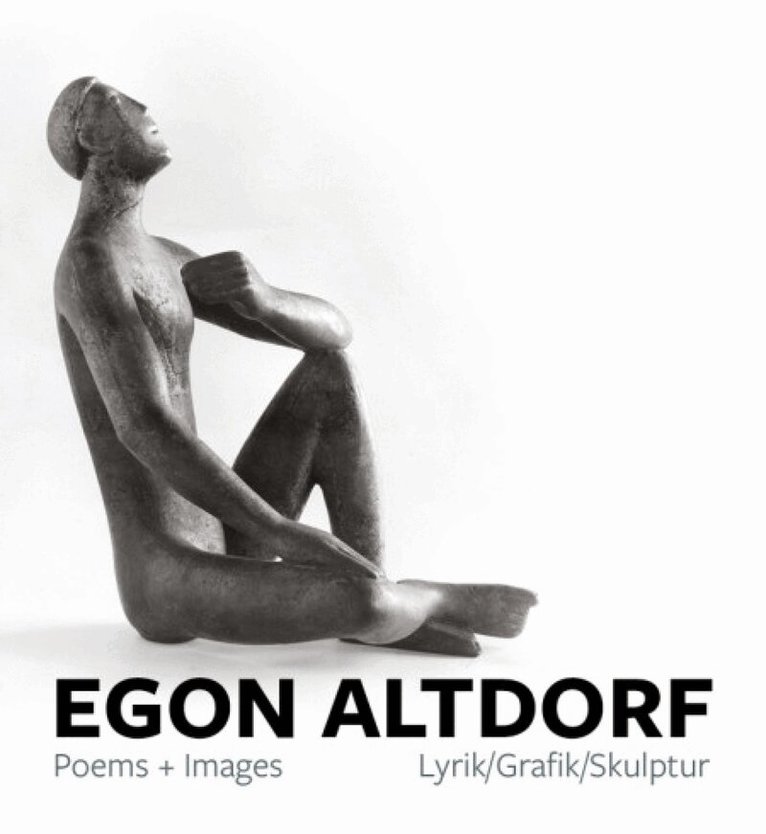
Altdorf’s earliest poems, written during military service and as a prisoner of war, reflected on nature, poetry and art. Beginning a new life, post-war, as an artist, Altdorf explored how the human figure might be depicted through increasingly abstract representations. Similarly, he refined his poetry to create ‘a new, free, melodic’ language’ with ‘a simple, song-like beauty’. Presenting Altdorf’s poetry alongside his art reveals a powerfully interconnected vision shaped but not defined by war: a humanitarian outlook informed by a profound spiritual belief.
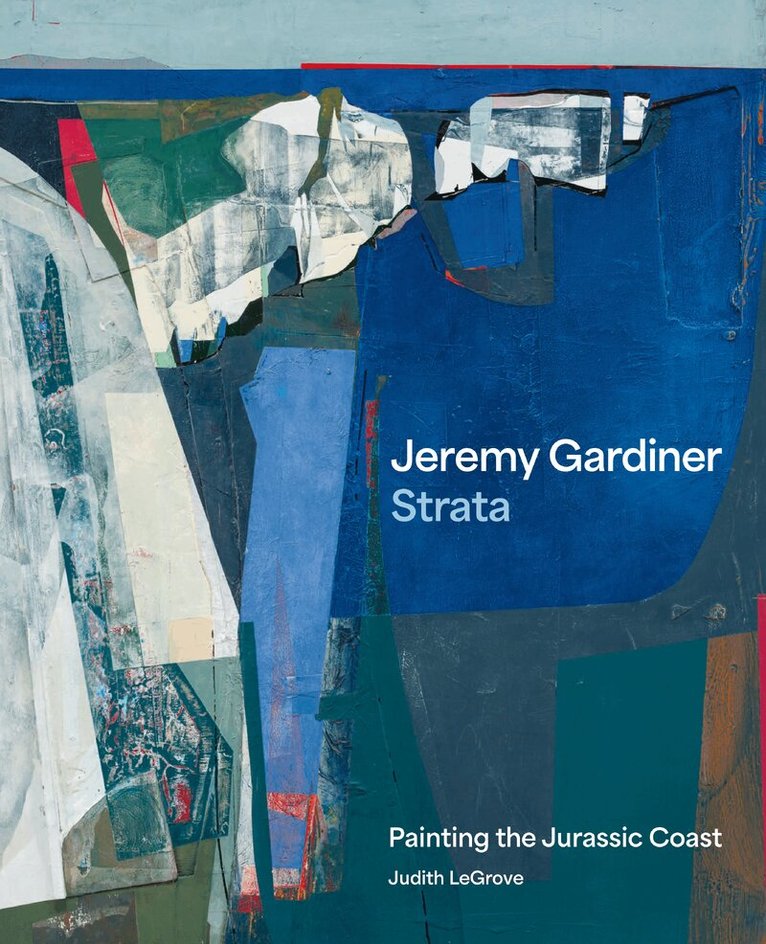
Strata, a series of 20 paintings on poplar panel and 80 on handmade paper by landscape artist Jeremy Gardiner (b.1957), celebrates the Jurassic Coast on the 25th anniversary of its designation as a UNESCO World Heritage Site. Gardiner has studied this coast for decades, constantly developing techniques to depict its changing textures. He revisited twenty locations every year from 2018 to 2022, painting in different seasons and weather conditions. Just as landfalls alter the coast, Gardiner combined subtractive and additive processes, cutting, scraping and chiselling, marbling, pouring, distressing, sanding then repainting the works’ surfaces to reflect the passage of geological time. The resulting paintings break new ground through their conceptual rigour and assimilation of techniques informed by science, geomorphology and digital mapping. At a time when Earth’s environment is increasingly threatened, Strata provides a record of this unique, precious coastline.