
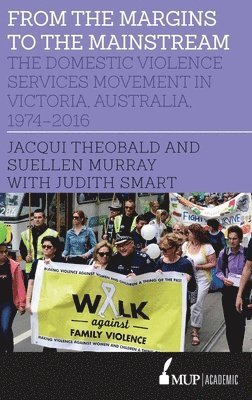
In the aftermath of the 2015 Victorian royal commission, billions of dollars of government funds have been committed to improving responses to women and children experiencing domestic violence. Such attention was unimaginable forty years ago when feminists in Victoria and across Australia first established women's refuges. At that time, domestic violence was not publicly acknowledged or tackled in any coherent way at a Commonwealth or state government policy level. While services that provided accommodation to women and children in crisis had certainly existed for a long time, the refuge movement of the 1970s made explicit the link between domestic violence and the need for refuge, framing domestic violence as a manifestation of gender inequality and an imbalance of power between men and women. This book illuminates how the women's domestic violence services movement in Victoria emerged, how members organised amidst diversity and worked towards achieving their goals, made sense of their experiences and dealt with the obstacles they encountered while undertaking action to create significant change for women.
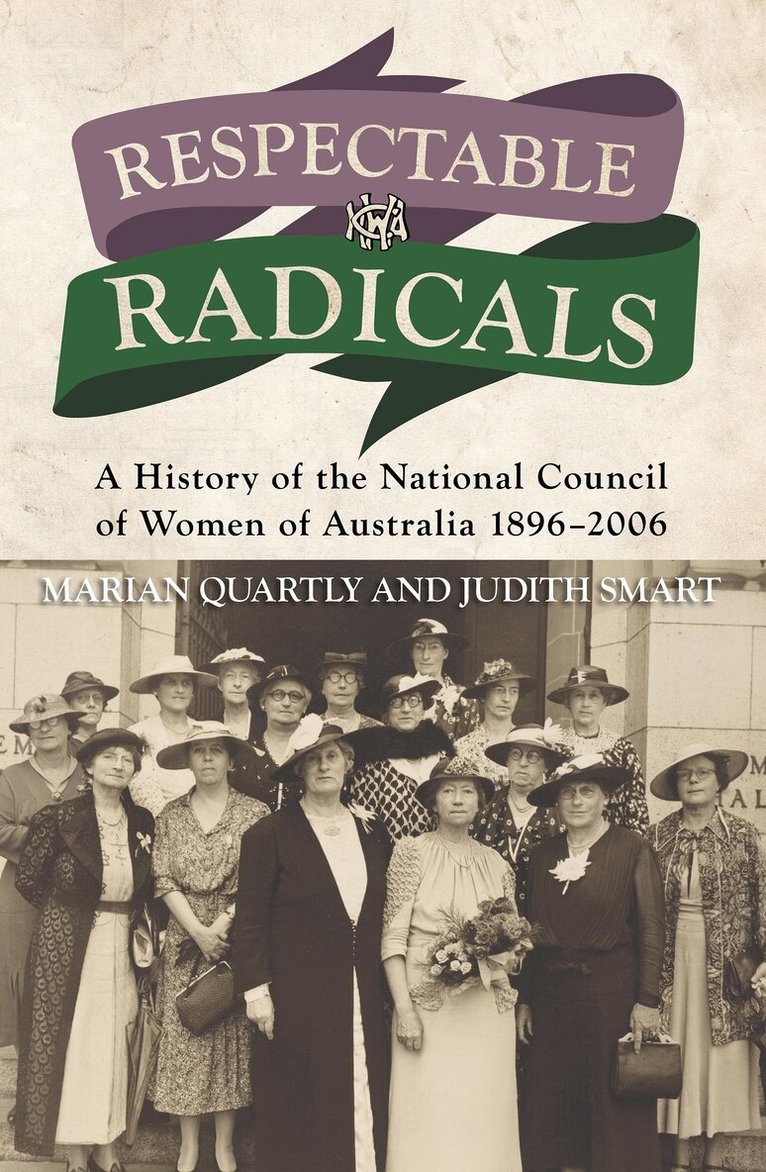
For much of the twentieth century, the National Council of Women of Australia was the peak body representing women to government in Australia, and through the International Council of Women, to the world. This history of NCWA tells the story of mainstream feminism in Australia, of the long struggle for equality at home and at work which is still far from achieved. In these days when women can no longer be imagined as speaking with one voice, and women as a group have no ready access to government, we still need something of the optimistic vision of the leaders of NCWA. Respectable in hat and gloves, the women of NCWA politely persisted with the truly radical idea that women around the world should be equal with men.
In the aftermath of the 2015 Victorian royal commission, billions of dollars of government funds have been committed to improving responses to women and children experiencing domestic violence. Such attention was unimaginable forty years ago when feminists in Victoria and across Australia first established women's refuges. At that time, domestic violence was not publicly acknowledged or tackled in any coherent way at a Commonwealth or state government policy level. While services that provided accommodation to women and children in crisis had certainly existed for a long time, the refuge movement of the 1970s made explicit the link between domestic violence and the need for refuge, framing domestic violence as a manifestation of gender inequality and an imbalance of power between men and women. This book illuminates how the women's domestic violence services movement in Victoria emerged, how members organised amidst diversity and worked towards achieving their goals, made sense of their experiences and dealt with the obstacles they encountered while undertaking action to create significant change for women.
For much of the twentieth century, the National Council of Women of Australia was the peak body representing women to government in Australia, and through the International Council of Women, to the world. This history of NCWA tells the story of mainstream feminism in Australia, of the long struggle for equality at home and at work which is still far from achieved. In these days when women can no longer be imagined as speaking with one voice, and women as a group have no ready access to government, we still need something of the optimistic vision of the leaders of NCWA. Respectable in hat and gloves, the women of NCWA politely persisted with the truly radical idea that women around the world should be equal with men.