Judith Tick - Böcker
Visar alla böcker från författaren Judith Tick. Handla med fri frakt och snabb leverans.
9 produkter
9 produkter
1 702 kr
Skickas inom 5-8 vardagar
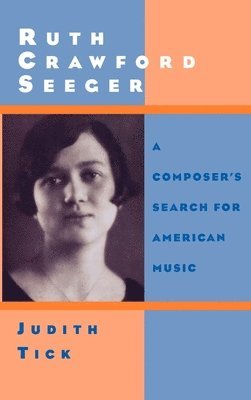
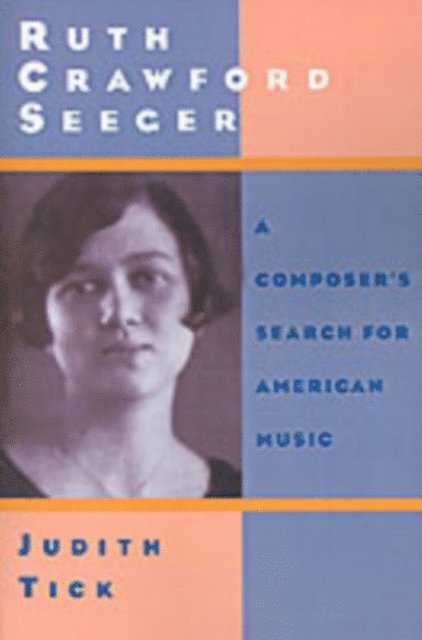
Ruth Crawford Seeger (1901-1953) is frequently considered the most significant American female composer in this century. Joining Aaron Copland and Henry Cowell as a key member of the 1920s musical avant-garde, she went on to study with modernist theorist and future husband Charles Seeger, writing her masterpiece, String Quartet 1931, not long after. But her legacy extends far beyond the cutting edge of modern music. Collaborating with poet Carl Sandburg on folk song arrangements in the twenties, and with the famous folk-song collectors John and Alan Lomax in the 1930s, she emerged as a central figure in the American folk music revival, issuing several important books of adaptations (transcriptions and arrangements) and pioneering the use of American folk songs in children's music education. Radicalized by the Depression, she spent much of the ensuing two decades working aggressively for social change with her husband and stepson, the folksinger Pete Seeger.This engrossing new biography emphasizes the choices Crawford Seeger made in her roles as composer, activist, teacher, wife and mother. The first woman to win a Guggenheim Foundation Fellowship in music composition, Crawford Seeger nearly gave up writing music as the demands of family, politics, and the folk song movement intervened. It was only at the very end of her life, with cancer sapping her strength, that she returned to composing. Written with unique insight and compassion, this book offers the definitive treatment of a fascinating twentieth-century figure.
427 kr
Skickas inom 5-8 vardagar
Ruth Crawford Seeger (1901-1953) is frequently considered the most significant American female composer in this century. Joining Aaron Copland and Henry Cowell as a key member of the 1920s musical avant-garde, she went on to study with modernist theorist and future husband Charles Seeger, writing her masterpiece, String Quartet 1931, not long after. But her legacy extends far beyond the cutting edge of modern music. Collaborating with poet Carl Sandburg on folk song arrangements in the twenties, and with the famous folk-song collectors John and Alan Lomax in the 1930s, she emerged as a central figure in the American folk music revival, issuing several important books of adaptations (transcriptions and arrangements) and pioneering the use of American folk songs in children's music education. Radicalized by the Depression, she spent much of the ensuing two decades working aggressively for social change with her husband and stepson, the folksinger Pete Seeger.This engrossing new biography emphasizes the choices Crawford Seeger made in her roles as composer, activist, teacher, wife and mother. The first woman to win a Guggenheim Foundation Fellowship in music composition, Crawford Seeger nearly gave up writing music as the demands of family, politics, and the folk song movement intervened. It was only at the very end of her life, with cancer sapping her strength, that she returned to composing. Written with unique insight and compassion, this book offers the definitive treatment of a fascinating twentieth-century figure.
2 572 kr
Skickas inom 5-8 vardagar
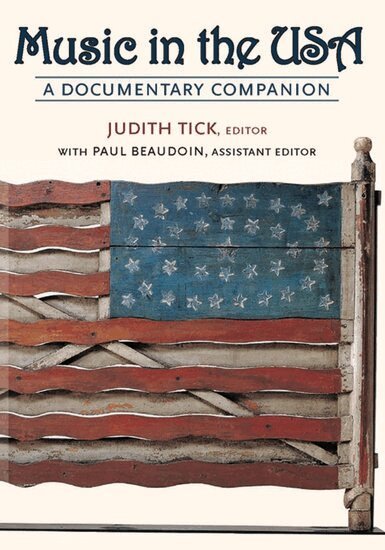
Music in the USA: A Documentary Companion charts a path through American music and musical life using as guides the words of composers, performers, writers and the rest of us ordinary folks who sing, dance, and listen. The anthology of primary sources contains about 160 selections from 1540 to 2000. Sometimes the sources are classics in the literature around American music, for example, the Preface to the Bay Psalm Book, excerpts from Slave Songs of the United States, and Charles Ives extolling Emerson. But many other selections offer uncommon sources, including a satirical story about a Yankee music teacher; various columns from 19th-century German American newspapers; the memoirs of a 19th-century diva; Lottie Joplin remembering her husband Scott; a little-known reflection of Copland about Stravinsky; an interview with Muddy Waters from the Chicago Defender; a letter from Woody Guthrie on the "spunkfire" attitude of a folk song; a press release from the Country Music Association; and the Congressional testimony around "Napster." "Sidebar" entries occasionally bring a topic or an idea into the present, acknowledging the extent to which revivals of many kinds of music play a role in American contemporary culture. This book focuses on the connections between theory and practice to enrich our understanding of the diversity of American musical experiences. Designed especially to accompany college courses which survey American music as a whole, the book is also relevant to courses in American history and American Studies.
724 kr
Skickas inom 5-8 vardagar
Music in the USA: A Documentary Companion charts a path through American music and musical life using as guides the words of composers, performers, writers and the rest of us ordinary folks who sing, dance, and listen. The anthology of primary sources contains about 160 selections from 1540 to 2000. Sometimes the sources are classics in the literature around American music, for example, the Preface to the Bay Psalm Book, excerpts from Slave Songs of the United States, and Charles Ives extolling Emerson. But many other selections offer uncommon sources, including a satirical story about a Yankee music teacher; various columns from 19th-century German American newspapers; the memoirs of a 19th-century diva; Lottie Joplin remembering her husband Scott; a little-known reflection of Copland about Stravinsky; an interview with Muddy Waters from the Chicago Defender; a letter from Woody Guthrie on the "spunkfire" attitude of a folk song; a press release from the Country Music Association; and the Congressional testimony around "Napster." "Sidebar" entries occasionally bring a topic or an idea into the present, acknowledging the extent to which revivals of many kinds of music play a role in American contemporary culture. This book focuses on the connections between theory and practice to enrich our understanding of the diversity of American musical experiences. Designed especially to accompany college courses which survey American music as a whole, the book is also relevant to courses in American history and American Studies.
292 kr
Skickas
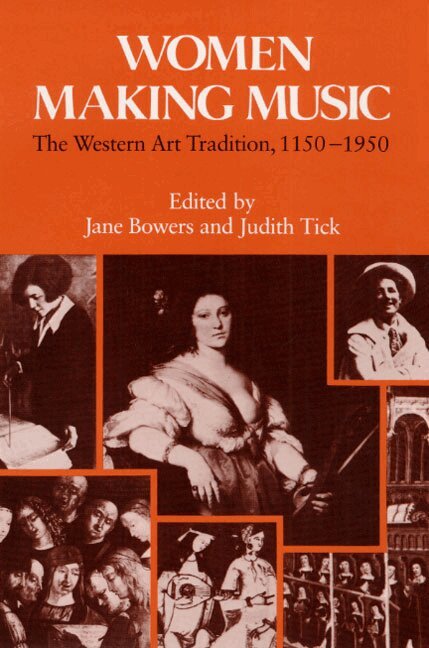
"Do look after my music!" Irene Wienawska Polowski exclaimed before her death in 1932. And from the urgency of that sentiment the authors here have taken their cue to reveal and "look after" the previously neglected contributions of women throughout the history of Western art music. The first work of its kind, Women Making Music presents biographies of outstanding performers and composers, as well as analyses of women musicians as a class, and provides examples of music from all periods including medieval chant, Renaissance song, Baroque opera, German lieder, and twentieth-century composition. Unlike most standard historical surveys, the book not only sheds light upon the musical achievements of women, it also illuminates the historical contexts that shaped and defined those achievements.
381 kr
Skickas inom 7-10 vardagar
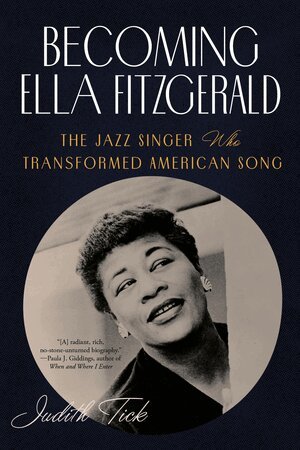
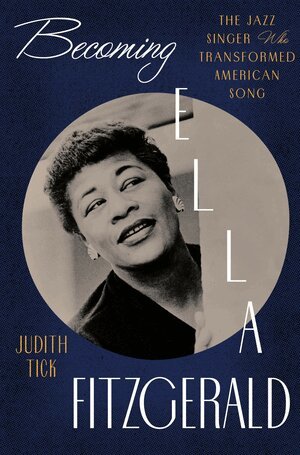
Ella Fitzgerald (1917–1996) possessed one of the twentieth century’s most astonishing voices. In this first major biography since Fitzgerald’s death, music historian Judith Tick draws on deep archival research, family interviews and newly available recordings and concert footage to show how Fitzgerald fused a Black vocal aesthetic with mainstream popular repertoire to revolutionise American music. From Fitzgerald’s first audition at the Apollo Theatre to swing-era success at the Savoy, Tick shows how this “girl singer” broke new ground: as a female bandleader, as a groundbreaking bebop improviser and as the arbiter of the American canon with her Song Book recordings. Yet even as she electrified concert halls and sold millions of records, jazz critics belittled her as “naïve”. Tick reveals instead an ambitious risk-taker with a stunningly diverse repertoire, whose exceptional musical spontaneity (often radically different on stage than in the studio) made her a transformational artist.
466 kr
Skickas inom 7-10 vardagar
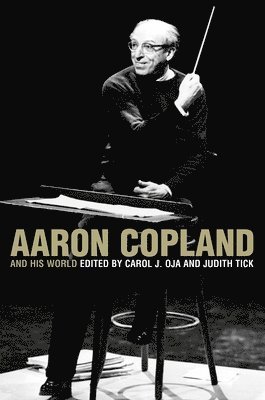
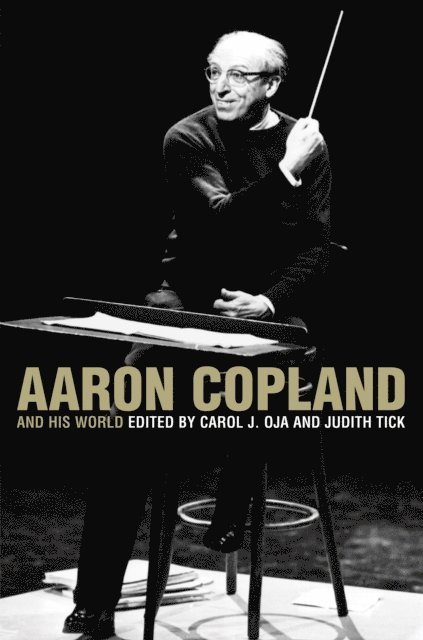
Aaron Copland and His World reassesses the legacy of one of America's best-loved composers at a pivotal moment--as his life and work shift from the realm of personal memory to that of history. This collection of seventeen essays by distinguished scholars of American music explores the stages of cultural change on which Copland's long life (1900 to 1990) unfolded: from the modernist experiments of the 1920s, through the progressive populism of the Great Depression and the urgencies of World War II, to postwar political backlash and the rise of serialism in the 1950s and the cultural turbulence of the 1960s. Continually responding to an ever-changing political and cultural panorama, Copland kept a firm focus on both his private muse and the public he served. No self-absorbed recluse, he was very much a public figure who devoted his career to building support systems to help composers function productively in America. This book critiques Copland's work in these shifting contexts.The topics include Copland's role in shaping an American school of modern dance; his relationship with Leonard Bernstein; his homosexuality, especially as influenced by the writings of Andre Gide; and explorations of cultural nationalism. Copland's rich correspondence with the composer and critic Arthur Berger, who helped set the parameters of Copland's reception, is published here in its entirety, edited by Wayne Shirley. The contributors include Emily Abrams, Paul Anderson, Elliott Antokoletz, Leon Botstein, Martin Brody, Elizabeth Crist, Morris Dickstein, Lynn Garafola, Melissa de Graaf, Neil Lerner, Gail Levin, Beth Levy, Vivian Perlis, Howard Pollack, and Larry Starr.
219 kr
Skickas inom 7-10 vardagar
Ella Fitzgerald (1917–1996) possessed one of the twentieth century’s most astonishing voices. In this first major biography since Fitzgerald’s death, music historian Judith Tick draws on deep archival research, family interviews and newly available recordings and concert footage to show how Fitzgerald fused a Black vocal aesthetic with mainstream popular repertoire to revolutionise American music. From Fitzgerald’s first audition at the Apollo Theatre to swing-era success at the Savoy, Tick shows how this “girl singer” broke new ground: as a female bandleader, as a ground-breaking bebop improviser and as the arbiter of the American canon with her Song Book recordings. Yet even as she electrified concert halls and sold millions of records, jazz critics belittled her as “naïve”. Tick reveals instead an ambitious risk-taker with a stunningly diverse repertoire, whose exceptional musical spontaneity (often radically different on stage than in the studio) made her a transformational artist.
350 kr
Skickas inom 10-15 vardagar
First study of American women composers and attitudes towards women musicians in the nineteenth century.Early American women composers are barely represented in standard reference works, yet their output constitutes a significant proportion of the bound sheet music in the collections in the New York Public Library, Yale University,Boston Public Library, and the New York Historical Society that form the basis of this study. Beginning with the first sheet music published by a woman in America, in the 1790s, the book goes on to examine music by mid-nineteenthcentury composers, including brief biographies of five prominent women active in the 1850s and 60s.Judith Tick is Professor of Music at Northeastern University, Boston, Massachusetts.