JUERGENSMEYER - Böcker
Visar alla böcker från författaren JUERGENSMEYER. Handla med fri frakt och snabb leverans.
2 produkter
2 produkter
1 757 kr
Skickas inom 5-8 vardagar
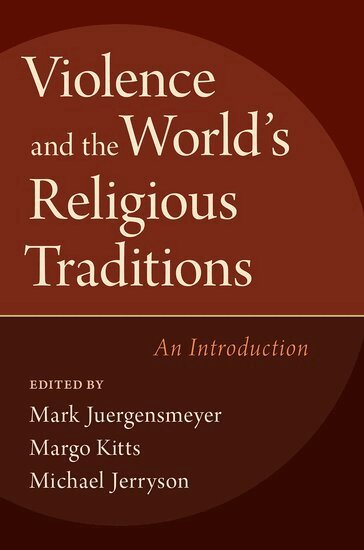
Though much has been written about particular forms of violence related to religion, such as sacrificial rites and militant martyrdom, there have been few efforts to survey the phenomena in all of the world's major religious traditions, historically and in the present, viewing the subject in personal as well as social dimensions, and covering both literary themes and political conflicts. This compact collection of essays provides such an overview. Each of the essays explores the ways in which violence is justified within the literary and theological foundation of the tradition, how it is used symbolically and in ritual practice, and how social acts of vengeance and warfare have been justified by religious ideas.The nature of the connection between violence and faith has always been a topic of heated debate, especially as acts of violence performed in the name of religion have erupted onto the global stage. Some scholars argue that these acts of violence are not really religious at all, but symptomatic of other elements of society or human nature. Others however point to the fact that often the perpetrators of these acts cite the faith's own foundational texts as their inspiration-and that the occurrence of violence in the name of religion exists across all faith traditions. Is violence, then, the rare exception in religious traditions or is it one of the rules? The contributors to this volume explore many possible approaches to this question and myriad others. How is religion defined? Must a religion be centered on supernatural beings? Does the term refer to social behavior or private? Is dogma or practice the key to its essence? Is it a philosophical system or a poetic structure? And how should violence be defined? From whose perspective and at what point is an act to be deemed violent? What act cannot be construed as violent in some way? For instance, are we talking only about war and genocide, or psychological coercion, social restrictions and binding categorizations?Collectively, the essays in this volume reflect the complex and contested meanings of both religion and violence, providing overviews of engagements with violence in Hindu, Buddhist, Chinese, Sikh, Jewish, Christian, Islamic, African, and Pacific Island religious traditions. By shedding light on the intersection of violence with faith, this volume does much to expand the understanding of the nature of religion itself, and the diverse forms it may take.
877 kr
Skickas inom 5-8 vardagar
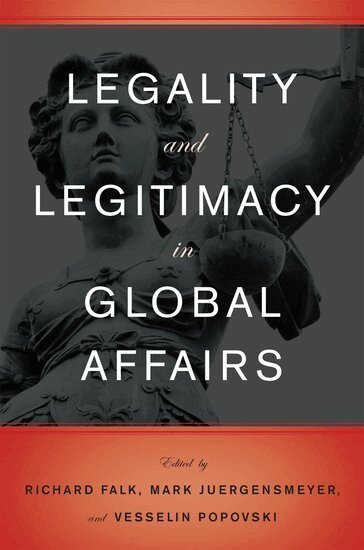
Legality and Legitimacy in Global Affairs focuses on the problematic relationship between legality and legitimacy when a nation (or nations) intervene in the work of other nations. Edited by Mark Juergensmeyer, Richard Falk, and Vesselin Popovski, this volume brings together a wide range of contributors with a broad set of cases that consider when such intervention is legitimate even if it isn't legal--and vice versa. Chapters cover humanitarian intervention, nuclear nonproliferation, military intervention, international criminal tribunals, interventions driven by environmental concerns, and the export of democracy. The book argues that while some interventions may not be technically legal, they may well be legitimate (e.g. Kosovo), and also concentrates on establishing the grounds for legitimate intervention. Some cases, like Iraq, fail the test. Transnational intervention by states and international institutions has increased since the globalization wave of the of the 1990's and especially since 9/11. This book, by focusing on a diverse array of cases, establishes a clear framework for judging the legitimacy of such actions.