Juha Herkman – författare
Visar alla böcker från författaren Juha Herkman. Handla med fri frakt och snabb leverans.
4 produkter
4 produkter
2 113 kr
Skickas inom 10-15 vardagar
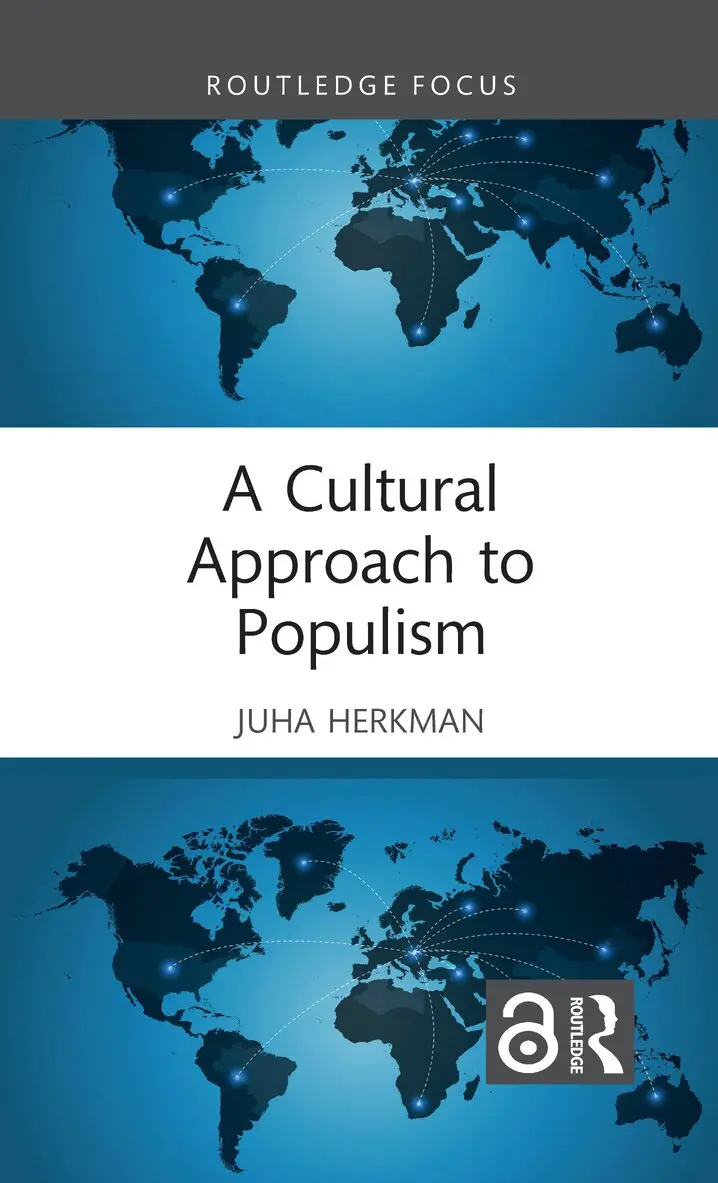
This book is a critical introduction of theorisations and research on contemporary political populism emphasising the cultural perspective. It introduces the basic theories and analyses the cultural construction of populism regarding radical democratic theory and empirical studies.Applying Ernesto Laclau’s and Chantal Mouffe’s theories, the author builds a bridge between radical democratic and ideational approaches on populism with examples and studies that emphasise European radical right populism, alongside the United States, Latin American and Asian cases. Special attention is paid to relationships between populism and democracy and between populism and media. The contemporary appeal of populism is linked to current developments in welfare states and in global economic and cultural trends. The future of populism is discussed in regard to COVID-19 pandemic and Donald Trump’s fall in the US presidential elections in 2020 that together with abovementioned global megatrends and with the development of media and communication environment set conditions for the 2020s populism.Scholars and students of political science, media and communication studies, cultural studies and social sciences will find this a unique and novel approach.
618 kr
Skickas inom 10-15 vardagar
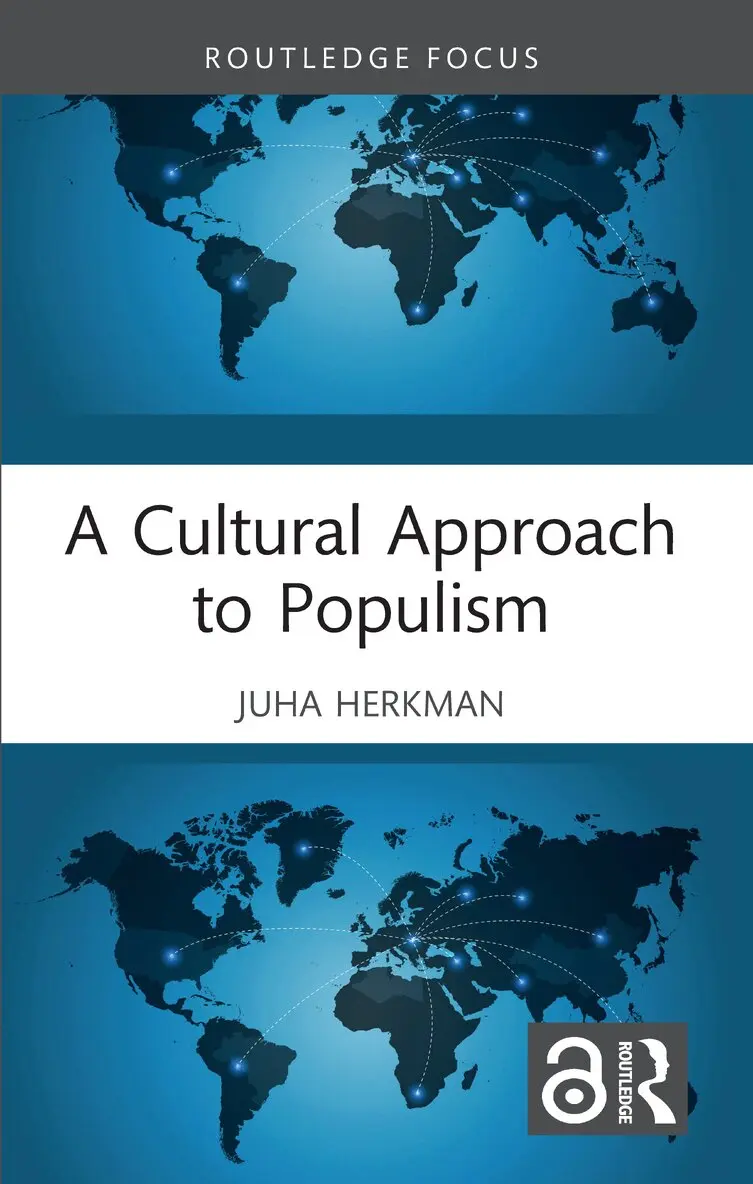
This book is a critical introduction of theorisations and research on contemporary political populism emphasising the cultural perspective. It introduces the basic theories and analyses the cultural construction of populism regarding radical democratic theory and empirical studies.Applying Ernesto Laclau’s and Chantal Mouffe’s theories, the author builds a bridge between radical democratic and ideational approaches on populism with examples and studies that emphasise European radical right populism, alongside the United States, Latin American and Asian cases. Special attention is paid to relationships between populism and democracy and between populism and media. The contemporary appeal of populism is linked to current developments in welfare states and in global economic and cultural trends. The future of populism is discussed in regard to COVID-19 pandemic and Donald Trump’s fall in the US presidential elections in 2020 that together with abovementioned global megatrends and with the development of media and communication environment set conditions for the 2020s populism.Scholars and students of political science, media and communication studies, cultural studies and social sciences will find this a unique and novel approach.
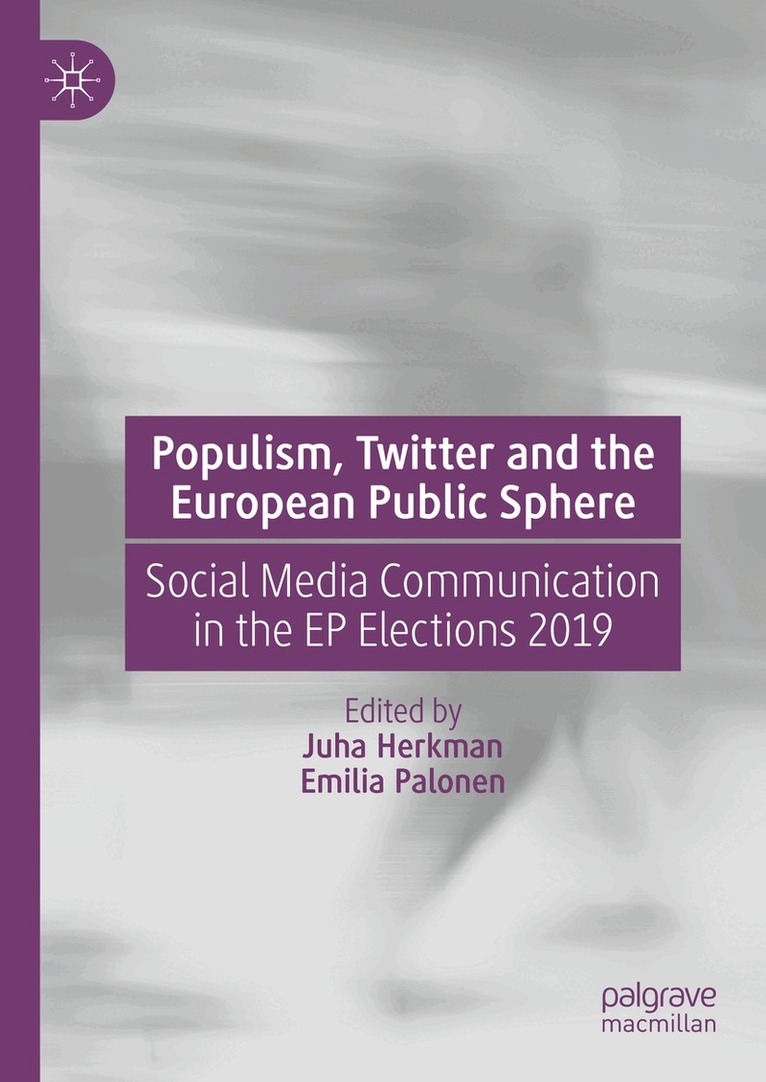
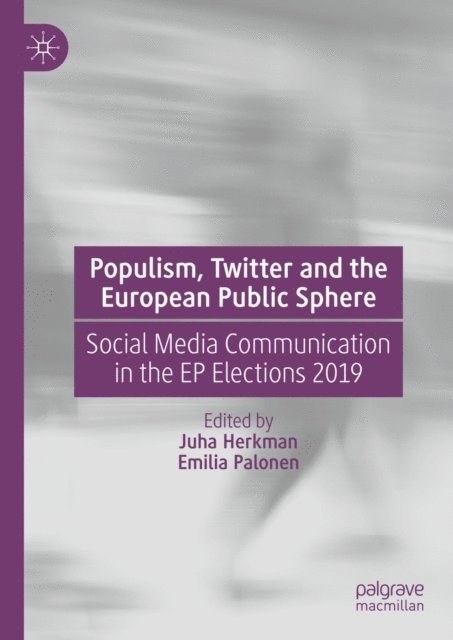
Populism, Twitter and the European Public Sphere
Social Media Communication in the EP Elections 2019
Inbunden, Engelska, 2024
1 273 kr
Skickas inom 10-15 vardagar
This volume approaches the relationship between European public sphere and political communication in the framework of establishing populism and social media. The empirical analysis focuses on the comparison between different EU countries during the 2019 EP elections campaign. The data for the analysis was collected real time from Twitter in the Netherlands, Germany, Finland, Italy, Spain, Ireland and the UK. during a month period and are analyzed with both computerized quantitative and manual qualitative methods.The book introduces a new perspective in conceptualizing populism in comparative analysis, in which populism is understood rather as an antagonist logic of political identity formation than pre-defined political ideologies, movements or party cleavages. We approach implications of populist construction of ‘us’ and ‘not us’ in national contexts of 2019 EP election campaigns to find out the relationality between different political actors and parties. A special attention is paid to national/transnational and European/Eurosceptic tendencies in campaign rhetoric. By using a unique idea of ‘hashtag publics’ we approach the common Twitter discussions around the elections and ask: what particular topics and themes did different political actors distribute over Twitter during the 2019 EP elections, how were various topics and actors linked to each other, and how were campaign agendas and actors linked to populism?Chapter-No.1,Chapter-No.4 and Chapter-No. 8 are available open access under a Creative Commons Attribution 4.0 International License via link.springer.com.
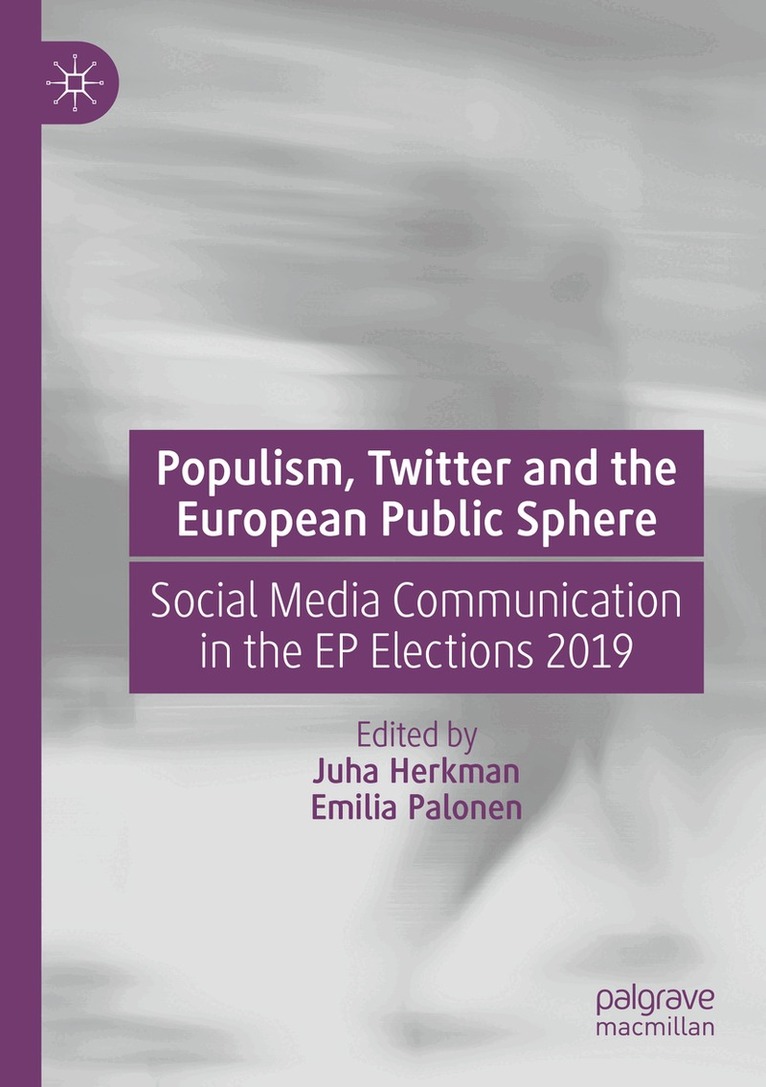
Populism, Twitter and the European Public Sphere
Social Media Communication in the EP Elections 2019
Häftad, Engelska, 2025
1 273 kr
Skickas inom 10-15 vardagar
This volume approaches the relationship between European public sphere and political communication in the framework of establishing populism and social media. The empirical analysis focuses on the comparison between different EU countries during the 2019 EP elections campaign. The data for the analysis was collected real time from Twitter in the Netherlands, Germany, Finland, Italy, Spain, Ireland and the UK. during a month period and are analyzed with both computerized quantitative and manual qualitative methods.The book introduces a new perspective in conceptualizing populism in comparative analysis, in which populism is understood rather as an antagonist logic of political identity formation than pre-defined political ideologies, movements or party cleavages. We approach implications of populist construction of ‘us’ and ‘not us’ in national contexts of 2019 EP election campaigns to find out the relationality between different political actors and parties. A special attention is paid to national/transnational and European/Eurosceptic tendencies in campaign rhetoric. By using a unique idea of ‘hashtag publics’ we approach the common Twitter discussions around the elections and ask: what particular topics and themes did different political actors distribute over Twitter during the 2019 EP elections, how were various topics and actors linked to each other, and how were campaign agendas and actors linked to populism?Chapter-No.1,Chapter-No.4 and Chapter-No. 8 are available open access under a Creative Commons Attribution 4.0 International License via link.springer.com.