Julia A. Lamm – författare
Visar alla böcker från författaren Julia A. Lamm. Handla med fri frakt och snabb leverans.
6 produkter
6 produkter
672 kr
Skickas inom 5-8 vardagar
German theologian F. D. E. Schleiermacher's doctrine of God-the first to be developed in the post-Kantian era-fundamentally changed the course of Christian theology. The degree to which his doctrine of God was influenced by the philosophy of Benedict de Spinoza remains in dispute, however. This study examines the ways in which Schleiermacher actively adopted elements of Spinoza's thought in the development of his own theological doctrine of God. Julia Lamm's analysis of little-known but seminal essays by Schleiermacher reveals his young creative genius in daring to go beyond the neo-Spinozism of Herder and the post-Kantianism of Fichte by developing his own post-Kantian Spinozism. Schleiermacher's unique simultaneous appropriation of Kant and Spinoza is characterized by four themes: an organic monism, an ethical determinism, a critical realism, and a nonanthropomorphic view of God, which Lamm traces through his two major theological works, On Religion: Speeches to Its Cultured Despisers and The Christian Faith. Ultimately, Lamm finds that Schleiermacher departs from Spinoza in significant ways. Most notably, he talks about "the living God" who is best expressed through the divine attributes of love and wisdom. This living God is what Schleiermacher refers to as the "third alternative" to, on the one hand, the anthropomorphized God of orthodox Protestantism and, on the other hand, Spinoza's natura naturans.
548 kr
Skickas inom 3-6 vardagar
God's Kinde Love book is the first first full-scale study of Julian of Norwich's doctrine of grace. The thesis of the book is that Julian of Norwich developed a sophisticated, multifaceted doctrine of grace that reflected a profound knowledge of the theological tradition; at the same time, Julian resisted the dominant theological tradition and its established socio-political alignments, and she offered instead a new theological paradigm: that of God's kinde love. Through a close reading of the Long Text, and in particular through an analysis of Julian's use of the word grace, Lamm identifies three distinctive, interrelated facets of Julian's doctrine of grace. Julian's theological brilliance and artistry comes through as she develops these three facets by means of kinetic imagery that Julian develops thematically. These three facets of her doctrine of grace are so intricately bound up with the most important theological discussions that Julian had added in the Long Text that those additions cannot be fully understood apart from her theology of grace. To date, scholars have not noted the exponential increase in Julian's use of the term grace in the later editions of her book, Showings. The reason for this increase was evidently twenty years of prayerful reflection on the meaning of her original revelations in light of scripture; a secondary revelation she received that "Love" was the meaning; and, Lamm suggests, the socio-political context of a post-Revolt England. This is where the vernacular, and in particular the range of associations of the Middle English kinde enter into the discussion.
495 kr
Skickas inom 5-8 vardagar
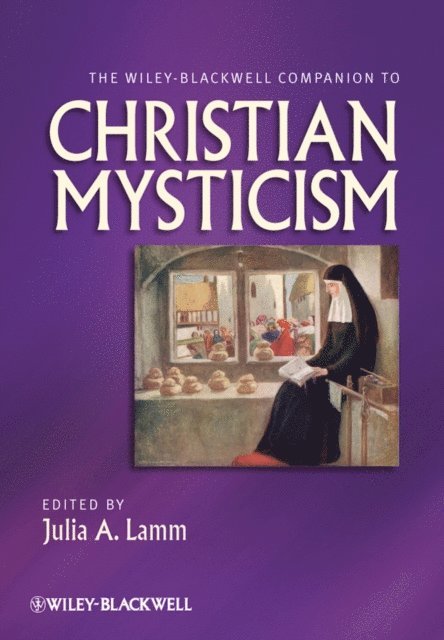
The Wiley-Blackwell Companion to Christian Mysticism brings together a team of leading international scholars to explore the origins, evolution, and contemporary debates relating to Christian mystics, texts, and the movements they inspired. Provides a comprehensive and engaging account of Christian mysticism, from its origins right up to the present dayDraws on the best of current scholarship by bringing together a collection of newly-commissioned readings by leading scholarsConsiders examples of mysticism in both Eastern and Western ChristianityOffers a brilliant synthesis of the key figures and historical periods of mysticism; its core themes, such as heresy, gender, or aesthetics; and its theoretical considerations, including theological, literary, social scientific, and philosophical approachesFeatures chapters on current debates such as neuroscience and mystical experience, and inter-religious dialogue
Del 64 - Wiley Blackwell Companions to Religion
Wiley-Blackwell Companion to Christian Mysticism
Inbunden, Engelska, 2012
2 157 kr
Skickas inom 5-8 vardagar
The Wiley-Blackwell Companion to Christian Mysticism brings together a team of leading international scholars to explore the origins, evolution, and contemporary debates relating to Christian mystics, texts, and the movements they inspired. Provides a comprehensive and engaging account of Christian mysticism, from its origins right up to the present dayDraws on the best of current scholarship by bringing together a collection of newly-commissioned readings by leading scholarsConsiders examples of mysticism in both Eastern and Western ChristianityOffers a brilliant synthesis of the key figures and historical periods of mysticism; its core themes, such as heresy, gender, or aesthetics; and its theoretical considerations, including theological, literary, social scientific, and philosophical approachesFeatures chapters on current debates such as neuroscience and mystical experience, and inter-religious dialogue
1 293 kr
Skickas inom 5-8 vardagar
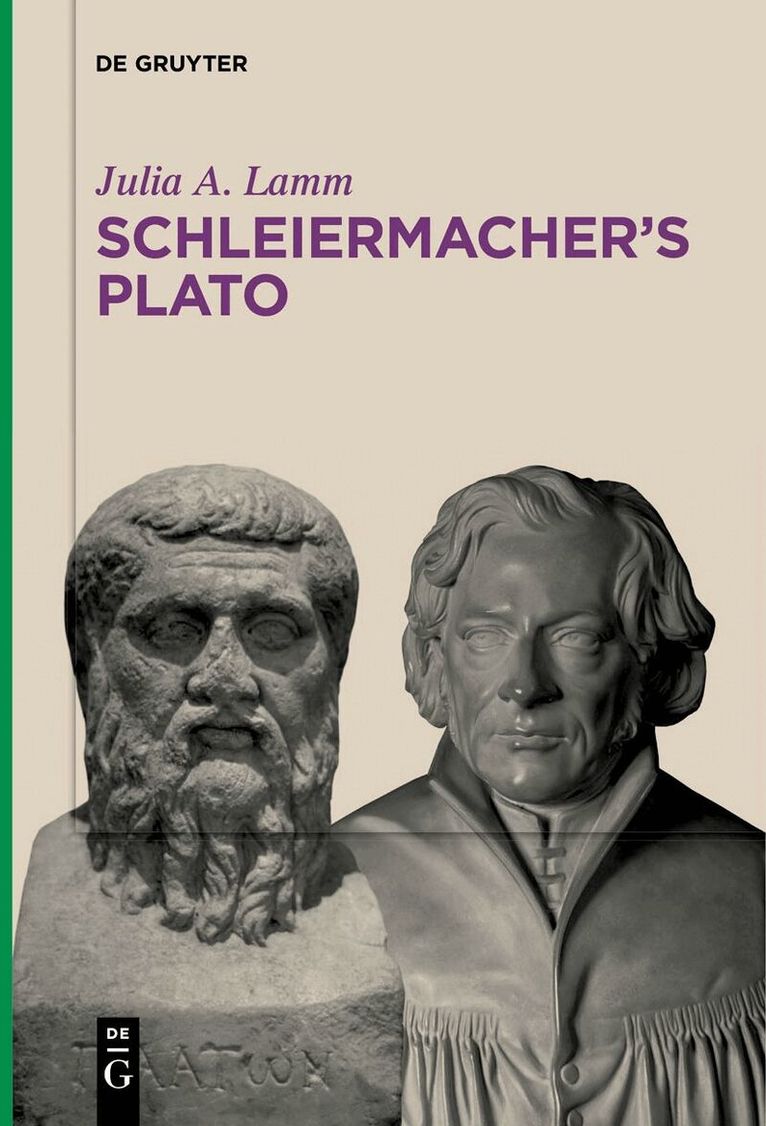
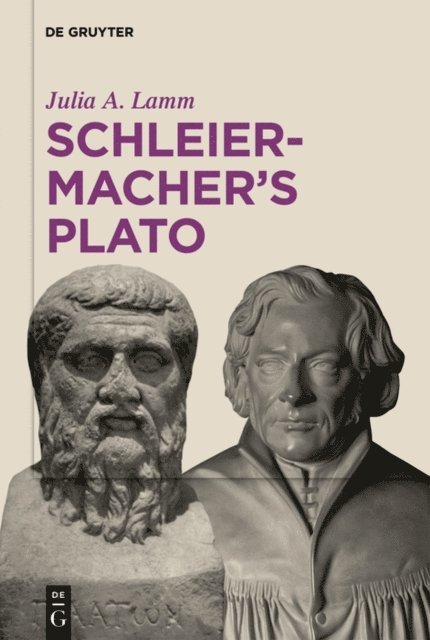
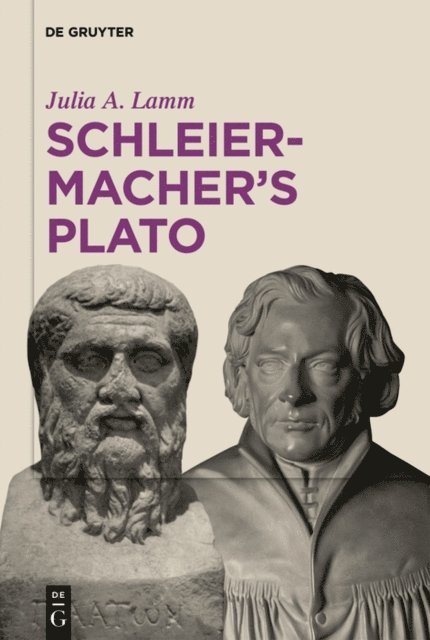
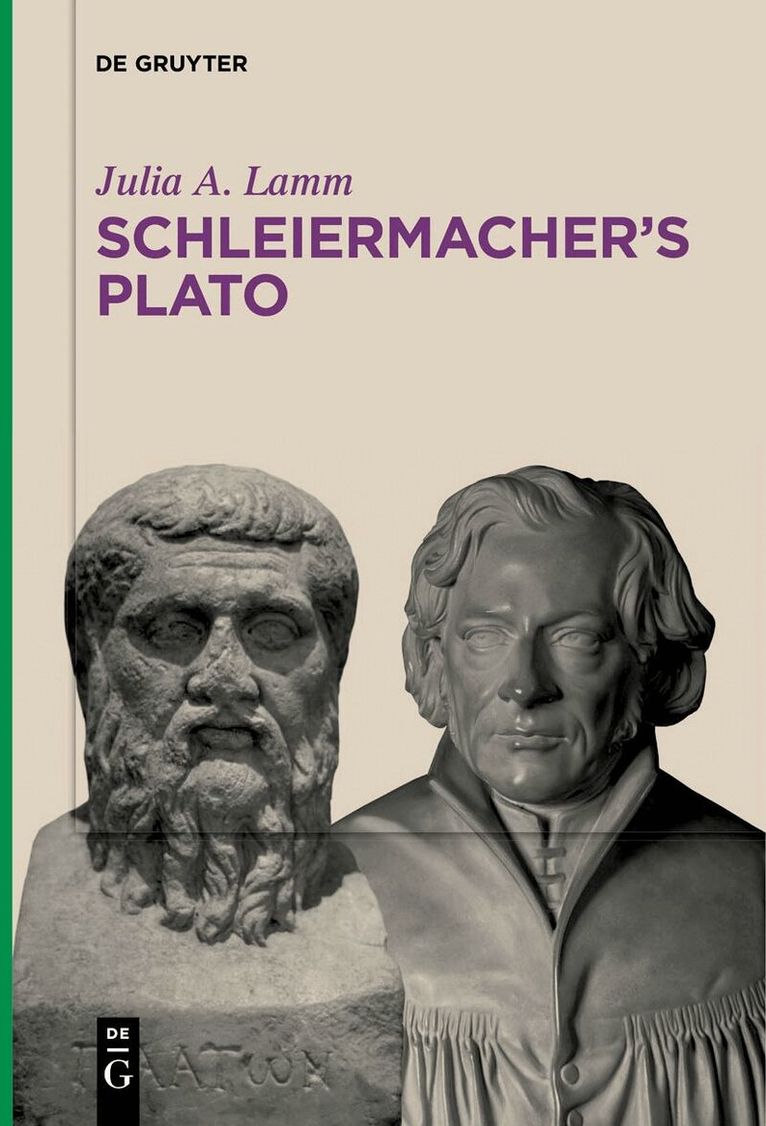
Friedrich Schleiermacher’s Platons Werke (1804–28) changed how we understand Plato. His translation of Plato’s dialogues remained the authoritative one in the German-speaking world for two hundred years, but it was his interpretation of Plato and the Platonic corpus, set forth in his Introductions to the dialogues, that proved so revolutionary for classicists and philosophers worldwide. Schleiermacher created a Platonic question for the modern world. Yet, in Schleiermacher studies, surprisingly little is known about Schleiermacher’s deep engagement with Plato. Schleiermacher’s Plato is the first book-length study of the topic. It addresses two basic questions: How did Schleiermacher understand Plato? In what ways was Schleiermacher’s own thought influenced by Plato? Lamm argues that Schleiermacher’s thought was profoundly influenced by Plato, or rather by his rather distinctive understanding of Plato. This is true not only of Schleiermacher’s philosophy (Hermeneutics, Dialectics) but also of his thinking about religion and Christian faith during the first decade of the nineteenth century (Christmas Dialogue, Speeches on Religion). Schleiermacher’s Plato should be of interest to classicists, philosophers, theologians, and scholars of religion.
262 kr
Skickas inom 3-6 vardagar
Friedrich Schleiermacher’s Platons Werke (1804–28) changed how we understand Plato. His translation of Plato’s dialogues remained the authoritative one in the German-speaking world for two hundred years, but it was his interpretation of Plato and the Platonic corpus, set forth in his Introductions to the dialogues, that proved so revolutionary for classicists and philosophers worldwide. Schleiermacher created a Platonic question for the modern world. Yet, in Schleiermacher studies, surprisingly little is known about Schleiermacher’s deep engagement with Plato. Schleiermacher’s Plato is the first book-length study of the topic. It addresses two basic questions: How did Schleiermacher understand Plato? In what ways was Schleiermacher’s own thought influenced by Plato? Lamm argues that Schleiermacher’s thought was profoundly influenced by Plato, or rather by his rather distinctive understanding of Plato. This is true not only of Schleiermacher’s philosophy (Hermeneutics, Dialectics) but also of his thinking about religion and Christian faith during the first decade of the nineteenth century (Christmas Dialogue, Speeches on Religion). Schleiermacher’s Plato should be of interest to classicists, philosophers, theologians, and scholars of religion.