Julia Herschensohn - Böcker
Visar alla böcker från författaren Julia Herschensohn. Handla med fri frakt och snabb leverans.
6 produkter
6 produkter
1 286 kr
Skickas inom 7-10 vardagar
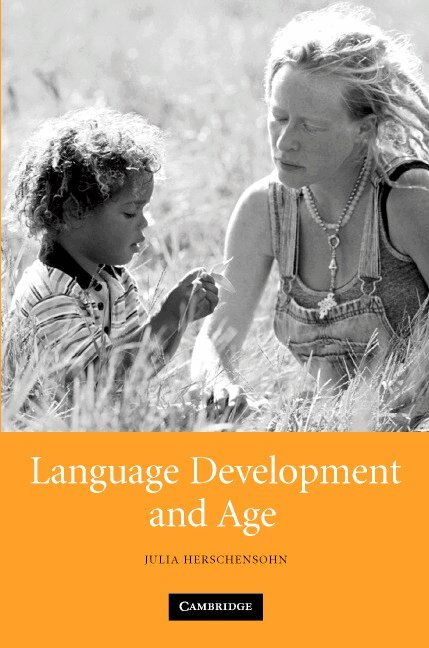
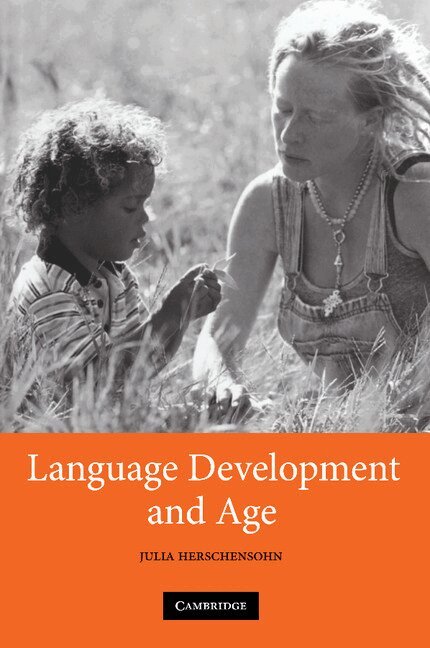
The anecdotal view of language acquisition is that children learn language with apparent ease, no instruction and in very little time, while adults find learning a new language to be cognitively challenging, labour intensive and time-consuming. In this book Herschensohn examines whether early childhood is a critical period for language acquisition after which individuals cannot learn a language as native speakers. She argues that a first language is largely susceptible to age constraints, showing major deficits past the age of twelve. Second-language acquisition also shows age effects, but with a range of individual differences. The competence of expert adult learners, the unequal achievements of child learners of second languages, and the lack of consistent evidence for a maturational cut-off, all cast doubt on a critical period for second-language acquisition.
650 kr
Kommande
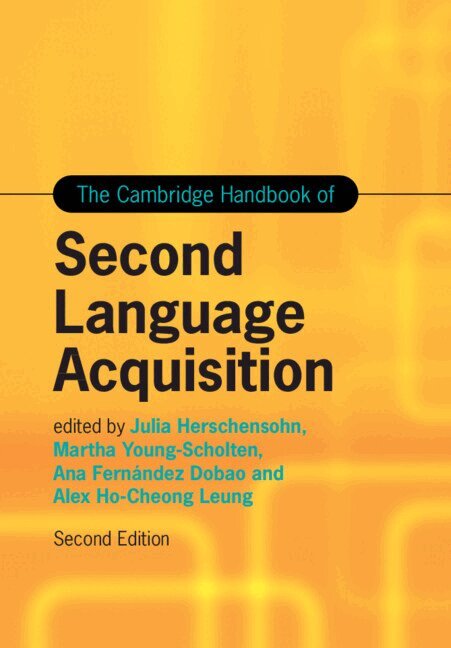
Now in its second edition, this Handbook is a current overview of Second Language (L2) research, providing state-of-the-art synopses of recent developments in each sub-area of the field, and bringing together contributions by emerging scholars and experts in Second Language Acquisition (SLA). Since the first edition, broad socio-political movements, alternative views of bilingualism, emergence of global markets, vast expansion of electronic resources, the development of social media, and the availability of big data have transformed the discipline, and this edition has been thoroughly updated to address these changes. It is divided into six main parts: Part I situates SLA in terms of research and practice; Part II explores individual cognitive, age-related and neurolinguistic similarities and differences; Part III outlines external, sociocultural, and interactive factors; Part IV presents profiles of bilinguals who take differing paths of acquisition; Part V describes interlanguage properties; and Part VI comprises clear models of L2 development.
2 001 kr
Kommande
Now in its second edition, this Handbook is a current overview of Second Language (L2) research, providing state-of-the-art synopses of recent developments in each sub-area of the field, and bringing together contributions by emerging scholars and experts in Second Language Acquisition (SLA). Since the first edition, broad socio-political movements, alternative views of bilingualism, emergence of global markets, vast expansion of electronic resources, the development of social media, and the availability of big data have transformed the discipline, and this edition has been thoroughly updated to address these changes. It is divided into six main parts: Part I situates SLA in terms of research and practice; Part II explores individual cognitive, age-related and neurolinguistic similarities and differences; Part III outlines external, sociocultural, and interactive factors; Part IV presents profiles of bilinguals who take differing paths of acquisition; Part V describes interlanguage properties; and Part VI comprises clear models of L2 development.
1 933 kr
Skickas inom 7-10 vardagar
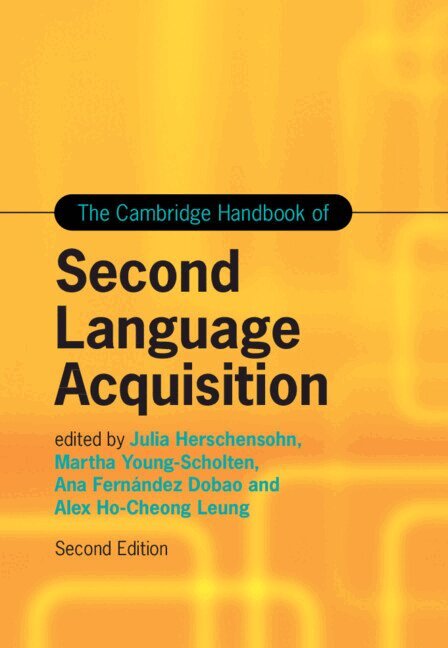
What is language and how can we investigate its acquisition by children or adults? What perspectives exist from which to view acquisition? What internal constraints and external factors shape acquisition? What are the properties of interlanguage systems? This comprehensive 31-chapter handbook is an authoritative survey of second language acquisition (SLA). Its multi-perspective synopsis on recent developments in SLA research provides significant contributions by established experts and widely recognized younger talent. It covers cutting-edge and emerging areas of enquiry not treated elsewhere in a single handbook, including third language acquisition, electronic communication, incomplete first language acquisition, alphabetic literacy and SLA, affect and the brain, discourse, and identity. Written to be accessible to newcomers as well as experienced scholars of SLA, the Handbook is organised into six thematic sections, each with an editor-written introduction.
532 kr
Skickas inom 7-10 vardagar
The anecdotal view of language acquisition is that children learn language with apparent ease, no instruction and in very little time, while adults find learning a new language to be cognitively challenging, labour intensive and time-consuming. In this book Herschensohn examines whether early childhood is a critical period for language acquisition after which individuals cannot learn a language as native speakers. She argues that a first language is largely susceptible to age constraints, showing major deficits past the age of twelve. Second-language acquisition also shows age effects, but with a range of individual differences. The competence of expert adult learners, the unequal achievements of child learners of second languages, and the lack of consistent evidence for a maturational cut-off, all cast doubt on a critical period for second-language acquisition.
608 kr
Skickas inom 7-10 vardagar
What is language and how can we investigate its acquisition by children or adults? What perspectives exist from which to view acquisition? What internal constraints and external factors shape acquisition? What are the properties of interlanguage systems? This comprehensive 31-chapter handbook is an authoritative survey of second language acquisition (SLA). Its multi-perspective synopsis on recent developments in SLA research provides significant contributions by established experts and widely recognized younger talent. It covers cutting-edge and emerging areas of enquiry not treated elsewhere in a single handbook, including third language acquisition, electronic communication, incomplete first language acquisition, alphabetic literacy and SLA, affect and the brain, discourse, and identity. Written to be accessible to newcomers as well as experienced scholars of SLA, the Handbook is organised into six thematic sections, each with an editor-written introduction.