Julia Hoffmann – författare
2 316 kr
Skickas inom 10-15 vardagar
665 kr
Skickas inom 10-15 vardagar
763 kr
Läs direkt efter köp
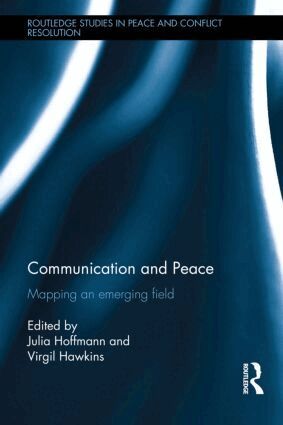
This book analyses the use of communication in resolving conflicts, with a focus on de-escalation and processes of peacebuilding and peace formation.
From the employment of hate radio in the Rwanda genocide, to the current conflict between Russia and the Ukraine following events in the Crimea, communication and the media are widely recognized as powerful tools in conflicts and war. Although there has been significant academic attention on the relationship between the media, conflict and war, academic efforts to understand this relationship have tended to focus primarily on the links between communication and conflict, rather than on communication and peace.
In order to make sense of peace it is essential to look at communication in its many facets, mediated or not. This is true within many of the diverse strands that make up the field of communication and peace, but it is also true in the sense that a holistic and interdisciplinary approach is missing from the literature. This book addresses this widely acknowledged lacuna by providing an interdisciplinary perspective on the field, bringing together relevant, but so far largely isolated, streams of research. In doing so, it aims to provide a platform for further reflection of the meaning of, and requirements for, peace in our contemporary world with a focus on de-escalation, conflict transformation, reconciliation and processes of peacebuilding – as opposed to conflict escalation or crisis intervention.
This volume will be of much interest to students of peace and conflict studies, peacebuilding, media and communication studies, security studies and IR in general.
763 kr
Läs direkt efter köp
This book analyses the use of communication in resolving conflicts, with a focus on de-escalation and processes of peacebuilding and peace formation.
From the employment of hate radio in the Rwanda genocide, to the current conflict between Russia and the Ukraine following events in the Crimea, communication and the media are widely recognized as powerful tools in conflicts and war. Although there has been significant academic attention on the relationship between the media, conflict and war, academic efforts to understand this relationship have tended to focus primarily on the links between communication and conflict, rather than on communication and peace.
In order to make sense of peace it is essential to look at communication in its many facets, mediated or not. This is true within many of the diverse strands that make up the field of communication and peace, but it is also true in the sense that a holistic and interdisciplinary approach is missing from the literature. This book addresses this widely acknowledged lacuna by providing an interdisciplinary perspective on the field, bringing together relevant, but so far largely isolated, streams of research. In doing so, it aims to provide a platform for further reflection of the meaning of, and requirements for, peace in our contemporary world with a focus on de-escalation, conflict transformation, reconciliation and processes of peacebuilding – as opposed to conflict escalation or crisis intervention.
This volume will be of much interest to students of peace and conflict studies, peacebuilding, media and communication studies, security studies and IR in general.
232 kr
Skickas inom 3-6 vardagar
728 kr
Skickas inom 5-8 vardagar
800 kr
Skickas inom 3-6 vardagar
312 kr
Skickas inom 3-6 vardagar
386 kr
Skickas inom 3-6 vardagar
311 kr
Skickas inom 3-6 vardagar
342 kr
Skickas inom 3-6 vardagar
311 kr
Skickas inom 3-6 vardagar
342 kr
Skickas inom 3-6 vardagar
352 kr
Skickas inom 3-6 vardagar
502 kr
Skickas inom 3-6 vardagar
988 kr
Läs direkt efter köp
Für den Gesetzesvollzug im Umweltrecht sind untergesetzliche Maßstäbe unerlässlich. Neue Erkenntnisse finden aber nicht schnell genug Eingang in das geltende Recht und informelle Vorschriften gewinnen zunehmend an Bedeutung. Hierzu gehören die Papiere der Arbeitsgemeinschaften der Umweltministerkonferenz, die als verwaltungskooperative Normen kategorisiert werden können. Ausgehend von der Untersuchung ihrer materiellen Konkretisierungswirkung überwindet die Arbeit das Argument der bloß faktischen Wirkweise. So gelingen eine rechtsdogmatische Einhegung und das Ausloten der (verfassungs-)rechtlichen Grenzen informeller Gesetzeskonkretisierung.